

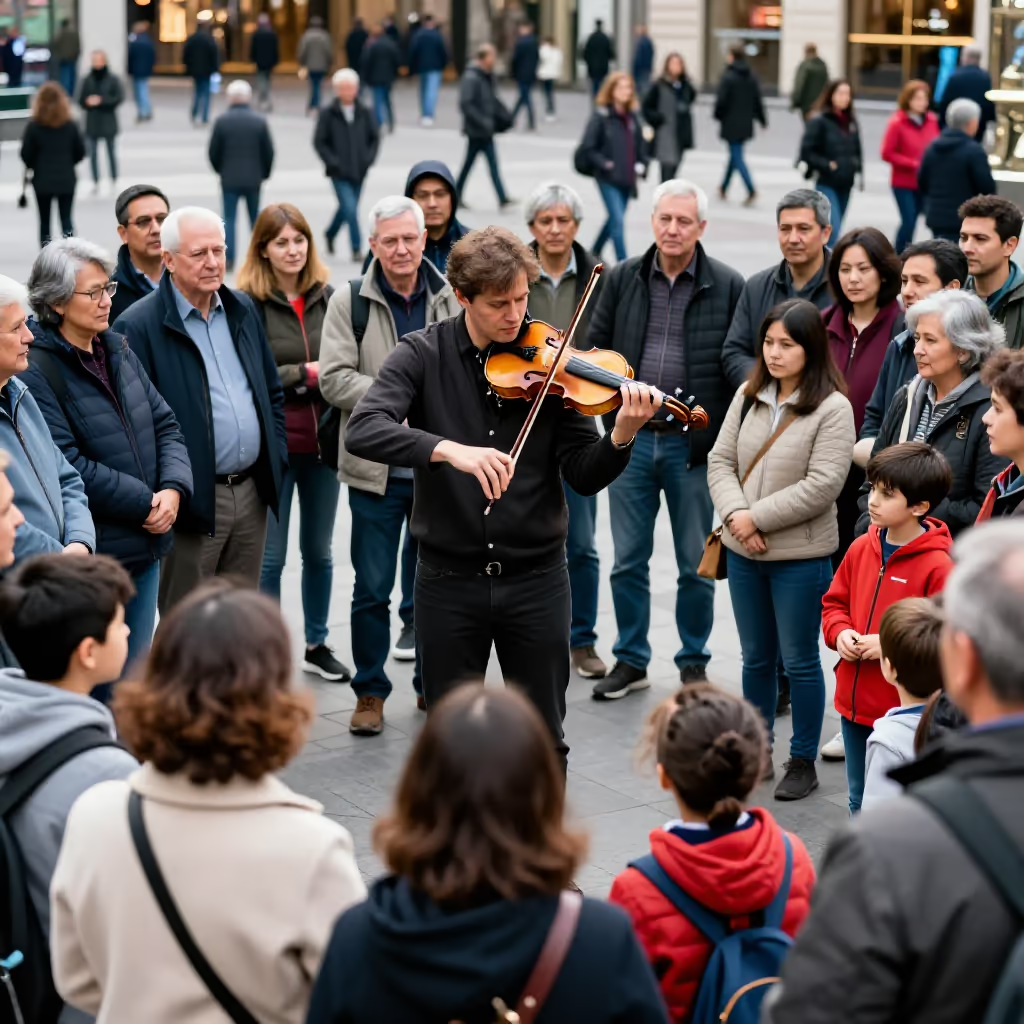
To position oneself in a circle around someone or something and enclose them or it.
example
Nach dem Konzert umringten die Fans den Sänger auf dem Weg zu seinem Auto.
After the concert, the fans surrounded the singer on his way to his car.

Usage tips
Inseparable verb
Unlike many other verbs with the prefix 'um-', 'umringen' (to surround) is inseparable. The prefix always stays attached to the verb and is not stressed.
EXAMPLE
Die Polizei umringte das Gebäude schnell.
The police quickly surrounded the building.
Common mistake
A typical mistake is trying to separate this verb. A phrase like 'Die Fans ringen den Sänger um' is wrong. The prefix 'um-' always stays at the beginning of the verb.
EXAMPLE
Die Journalisten umringten den Politiker sofort nach der Pressekonferenz.
The journalists surrounded the politician immediately after the press conference.
Sentence structure and object
The verb 'umringen' (to surround) always needs a direct accusative object. This object is the person or thing standing in the middle of the circle.
EXAMPLE
Eine große Menschenmenge umringte den Brunnen auf dem Marktplatz.
A large crowd surrounded the fountain in the marketplace.
Compare with
near_synonym
umringen vs umgeben
to surround
'umgeben' and 'umringen' both describe something or someone being enclosed from all sides. 'umgeben' is more general and calmer: a house can be surrounded by trees, or a person can be standing in an environment. 'umringen' fits better when people or animals actively position themselves in a circle around someone or something. It sounds more lively and often somewhat closer. For landscapes, buildings, or things, 'umgeben' is usually more natural; for a group gathering around a person, 'umringen' fits better.
umringen
Nach dem Konzert umringten viele Fans die Sängerin.
After the concert, many fans surrounded the singer.
umgeben
Das kleine Dorf ist von hohen Bergen umgeben.
The small village is surrounded by high mountains.