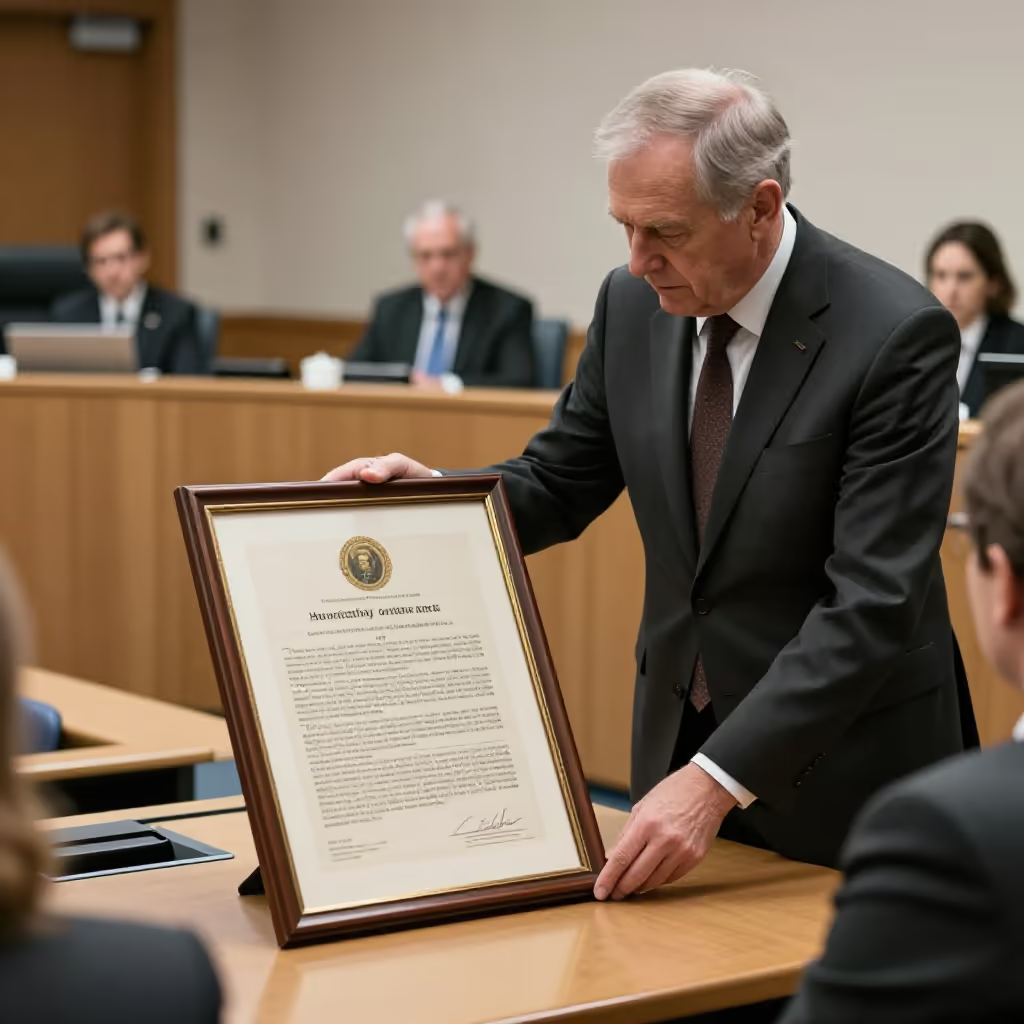
Something that must not be violated, impaired, or called into question. Often used in connection with rights, dignity, or principles.
example
Die Würde des Menschen ist laut Grundgesetz unantastbar.
According to the Basic Law, human dignity is inviolable.

Usage tips
Word structure
The word is clearly structured: 'un-' (not) + 'antasten' (to touch, to violate) + '-bar' (possibility). Literally, it means that something cannot be violated or called into question.
EXAMPLE
Seine Entscheidung in dieser Sache war für alle unantastbar.
His decision in this matter was untouchable for everyone.
Typical collocations
This meaning is often connected with abstract, high values. Typical combinations are 'unantastbare Würde' (inviolable dignity), 'unantastbare Rechte' (inviolable rights), or 'unantastbare Prinzipien' (inviolable principles).
EXAMPLE
Die Pressefreiheit ist ein unantastbares Gut in einer Demokratie.
Freedom of the press is an inviolable good in a democracy.
Cultural context
The sentence 'Die Würde des Menschen ist unantastbar' (Human dignity is inviolable) is the first article of the German Basic Law. For this reason, the word has a very strong legal and philosophical meaning in Germany.
EXAMPLE
Dieser Grundsatz ist die Basis vieler Gesetze.
This principle is the basis of many laws.
Context clue
You can recognize this figurative meaning by the fact that it refers to a person and their social status. It is not about a right, but about someone seeming to be protected from criticism because of power or success.
EXAMPLE
Nach dem großen Erfolg schien der Firmengründer für eine Weile unantastbar.
After the great success, the company founder seemed untouchable for a while.
Compare with
near_synonym · confusable
unantastbar vs heilig
holy / sacred
'heilig' and 'unantastbar' can both mean that something should not be criticized, violated, or changed. 'heilig' often sounds more personal or emotional: something is very important to someone. 'unantastbar' sounds stronger and often more formal, especially with rights, dignity, or fixed principles. It can also describe a person whom seemingly no one is allowed to criticize. The words can be confused when you want to say that something must not be called into question. 'heilig' fits better with personal values, while 'unantastbar' fits better with rules, rights, or power.