

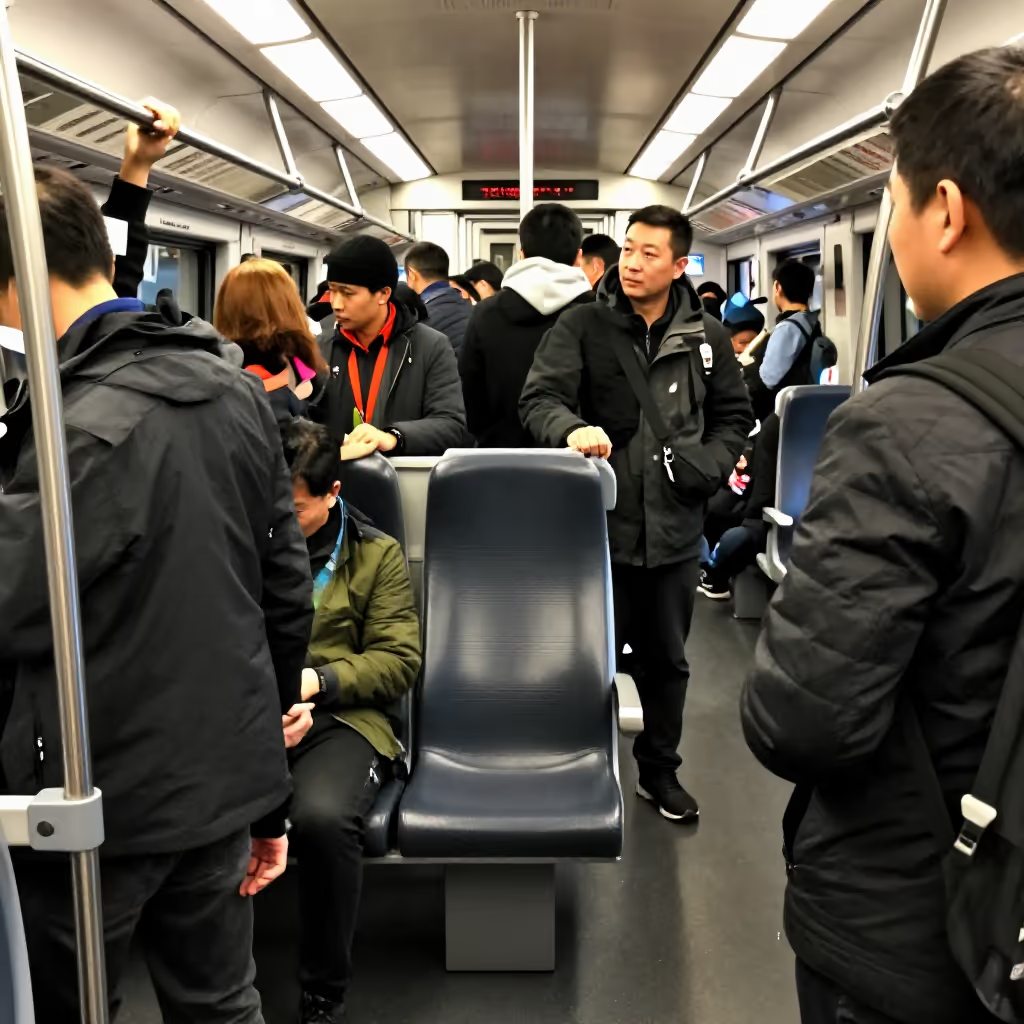
unbesetzt
unoccupied
Describes a place, seat, or room that is not currently being used by a person and is therefore free.
EXAMPLE
Entschuldigung, ist dieser Stuhl hier noch unbesetzt?
Excuse me, is this chair still unoccupied?
vacant / unoccupied
Loading your saved state.
unoccupied
Describes a place, seat, or room that is not currently being used by a person and is therefore free.
Entschuldigung, ist dieser Stuhl hier noch unbesetzt?
Excuse me, is this chair still unoccupied?
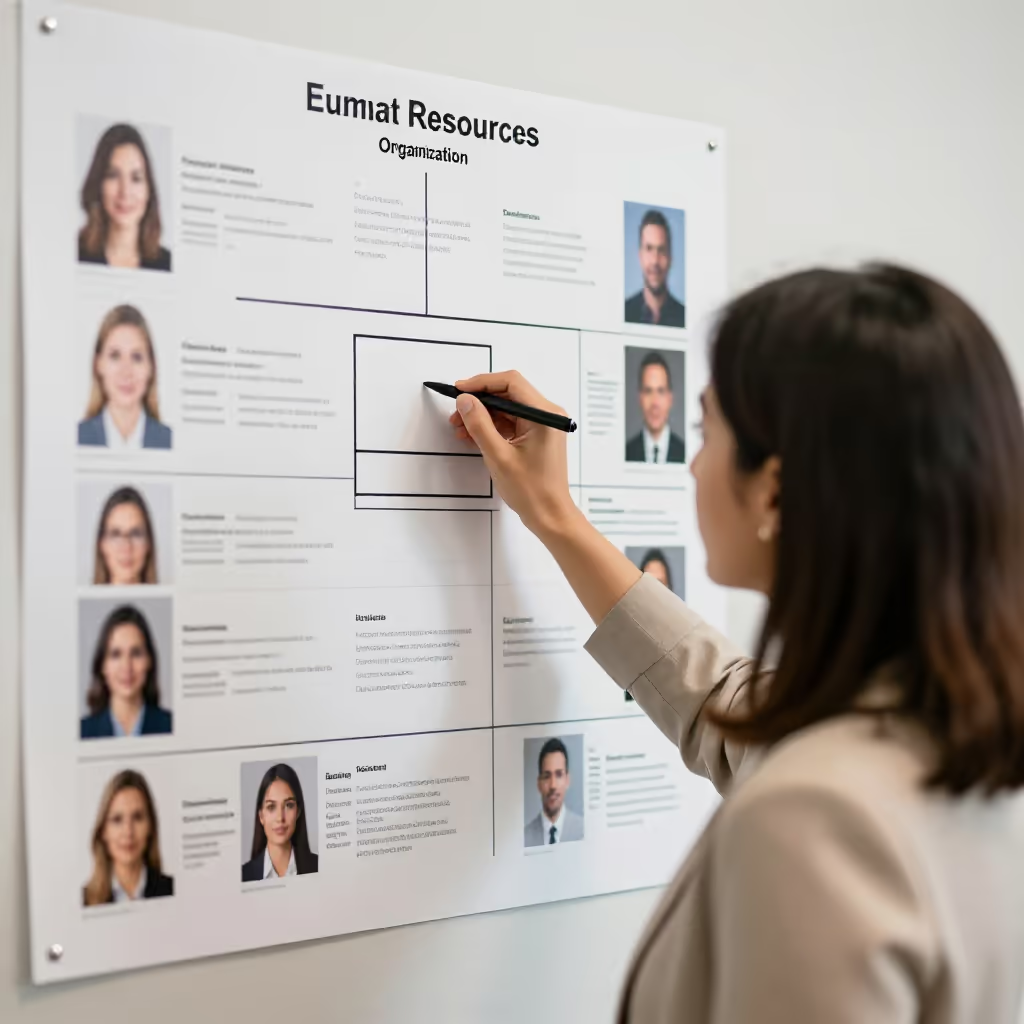
vacant
Refers to a job, position, or office for which no candidate has yet been found or hired.
Die Stelle des Abteilungsleiters ist seit drei Monaten unbesetzt.
The department head position has been vacant for three months.
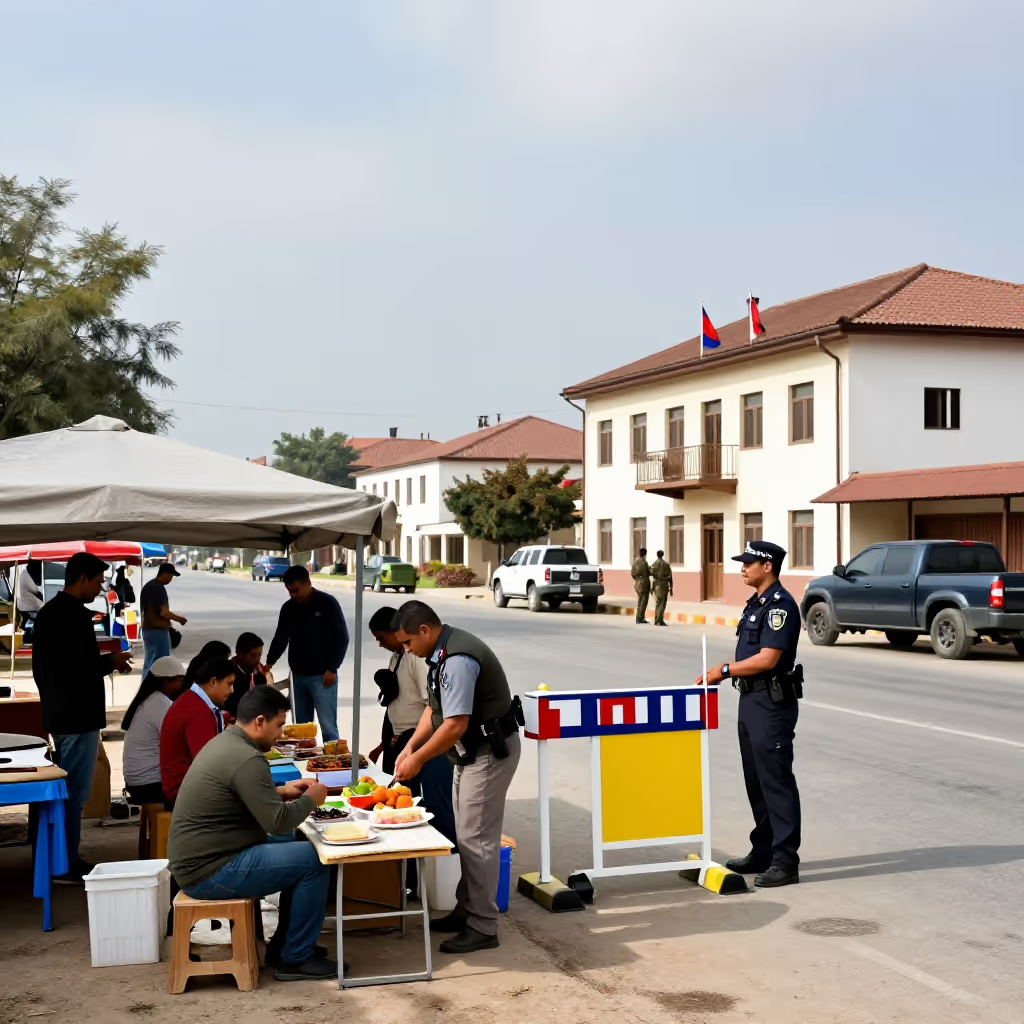
unoccupied
Describes an area or country that is not controlled or occupied by foreign military troops.
Während des Krieges blieb die kleine Insel unbesetzt.
During the war, the small island remained unoccupied.
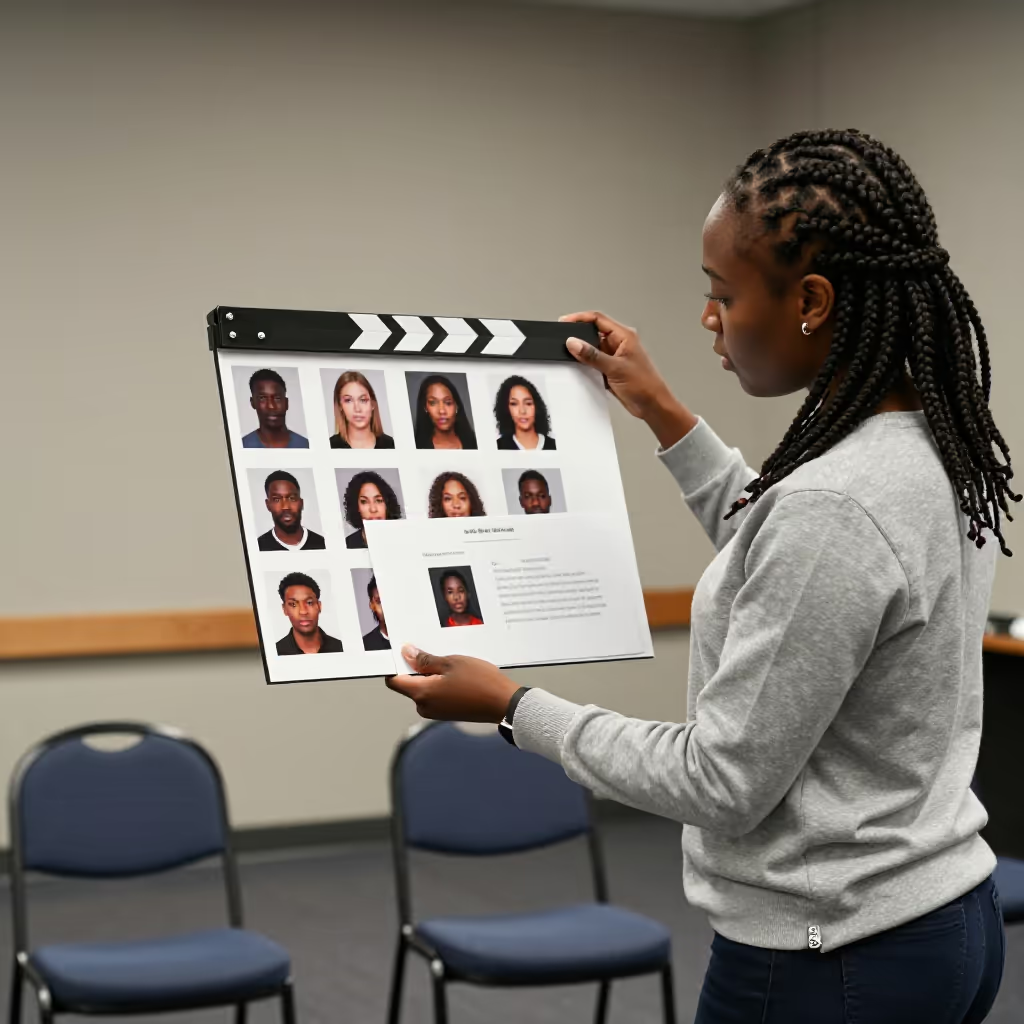
uncast
Refers to a role in a film or play for which no actor or actress has yet been chosen.
Die Hauptrolle in dem neuen Film ist immer noch unbesetzt.
The lead role in the new film is still uncast.
The word has a simple structure: the prefix 'un-' negates the adjective 'besetzt' (occupied/taken). 'besetzt' means 'taken' or 'occupied', so 'unbesetzt' literally means 'not occupied' or 'not taken'.
In der letzten Reihe waren noch einige Plätze unbesetzt.
There were still a few seats unoccupied in the last row.
The exact meaning of 'unbesetzt' (vacant/unoccupied) always depends on the noun it describes. An 'unbesetzter Stuhl' (unoccupied chair) is free, an 'unbesetzte Stelle' (vacant position) is an open job, and an 'unbesetzte Rolle' (uncast role) has not yet been assigned.
Die Firma sucht dringend einen neuen Mitarbeiter, da die Position seit Wochen unbesetzt ist.
The company is urgently looking for a new employee because the position has been vacant for weeks.
The adjective is often combined with the verb 'bleiben' (to remain) to express that a state continues. A seat, a position, or a role can 'unbesetzt bleiben' (remain vacant/unoccupied/uncast).
Es ist erstaunlich, dass diese wichtige Position so lange unbesetzt geblieben ist.
It is astonishing that this important position has remained vacant for so long.
In everyday life, the question 'Entschuldigung, ist hier noch unbesetzt?' (Excuse me, is this still free?) is a very common and polite way to ask whether a seat on public transport, in a café, or in a waiting room is available.
Der Mann zeigte auf den Stuhl neben mir und fragte: „Ist hier noch unbesetzt?“
The man pointed to the chair next to me and asked, 'Is this still free?'
free
Frei and unbesetzt can both describe a seat that no one is currently sitting in. Frei usually also indicates that the seat is available. Unbesetzt merely states that no one is currently using it; for example, it may still be intended for someone.
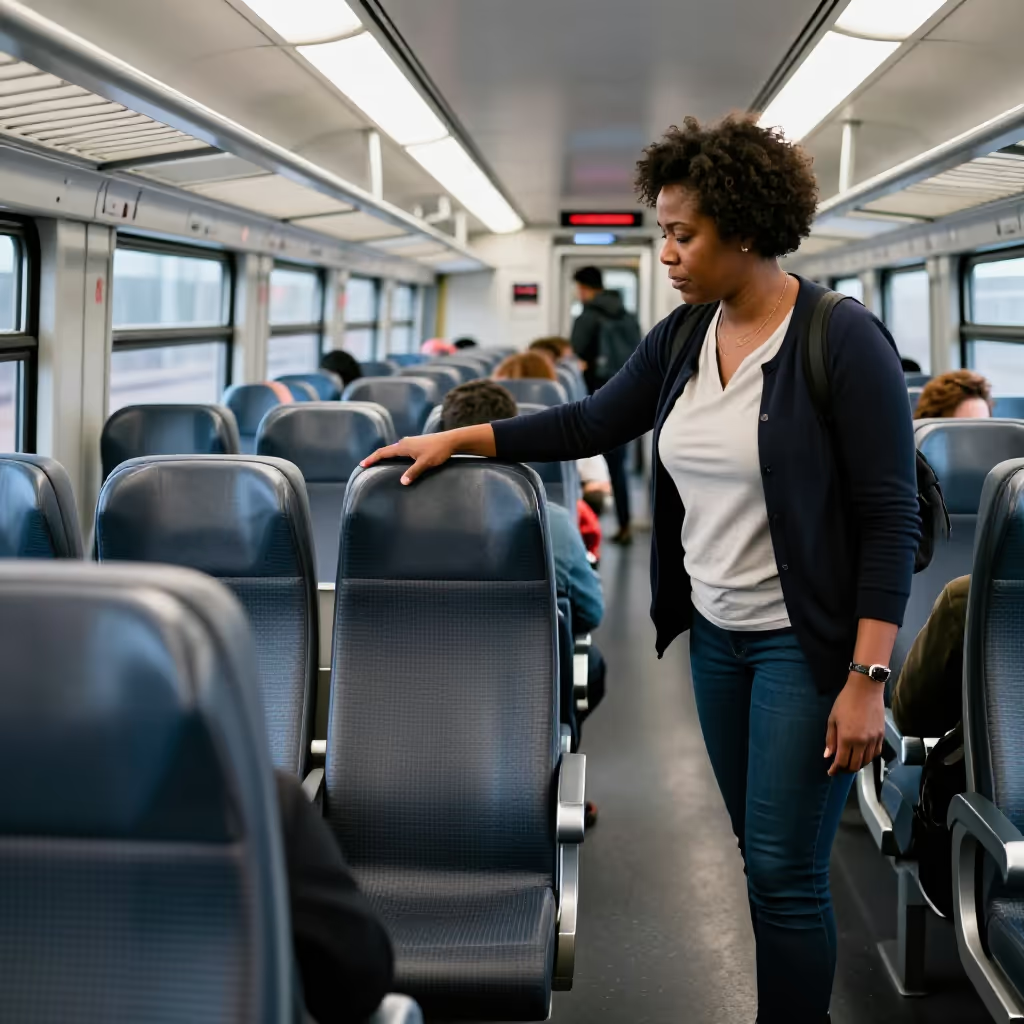
Der Platz am Fenster ist gerade unbesetzt, weil meine Freundin kurz hinausgegangen ist.
The window seat is currently unoccupied because my friend has stepped outside for a moment.
Der Platz am Fenster ist frei, deshalb können Sie sich dort hinsetzen.
The window seat is free, so you can sit there.