

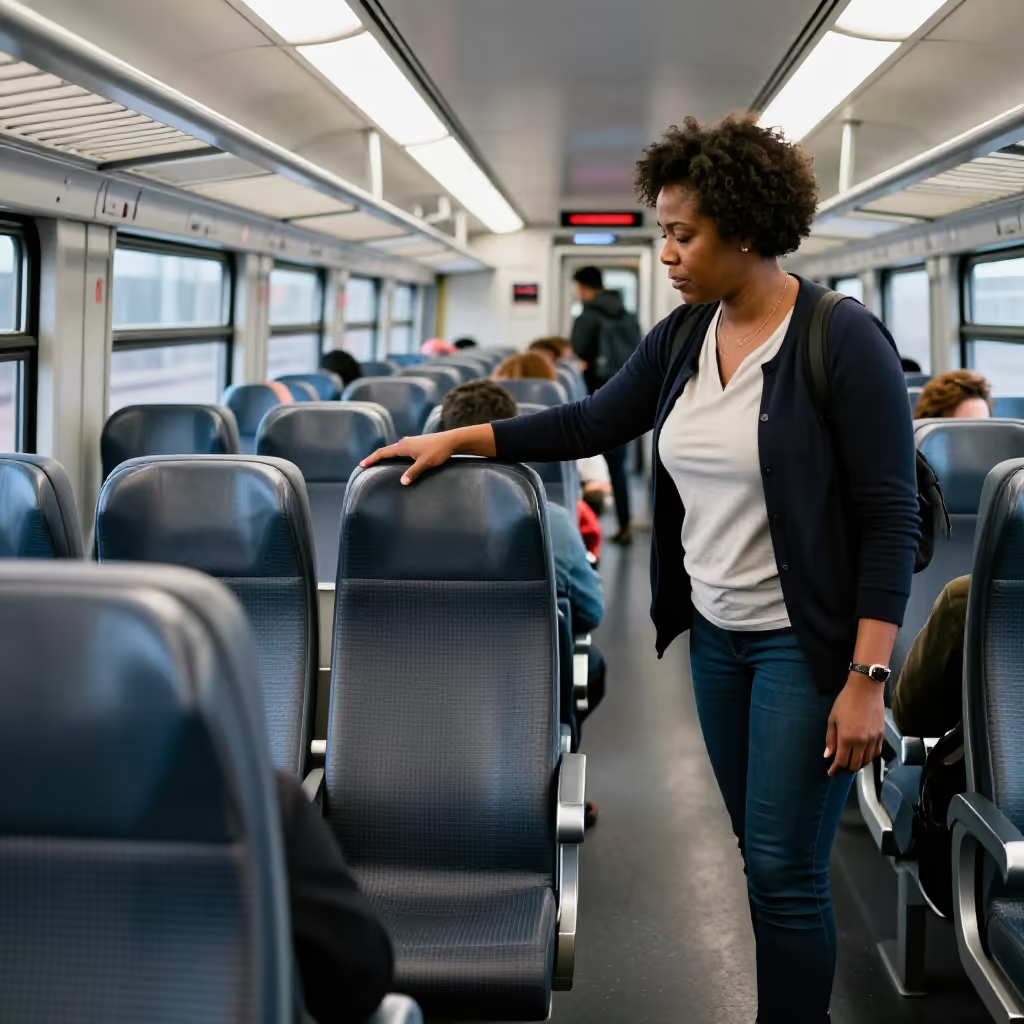
frei
available
Not occupied, taken, or reserved; available.
EXAMPLE
Entschuldigung, ist dieser Stuhl noch frei?
Excuse me, is this chair still available?
free
Loading your saved state.
available
Not occupied, taken, or reserved; available.
Entschuldigung, ist dieser Stuhl noch frei?
Excuse me, is this chair still available?

to have off
Not to have work or other obligations, such as school.
Nächsten Freitag habe ich frei, da könnten wir uns treffen.
I have next Friday off, so we could meet then.
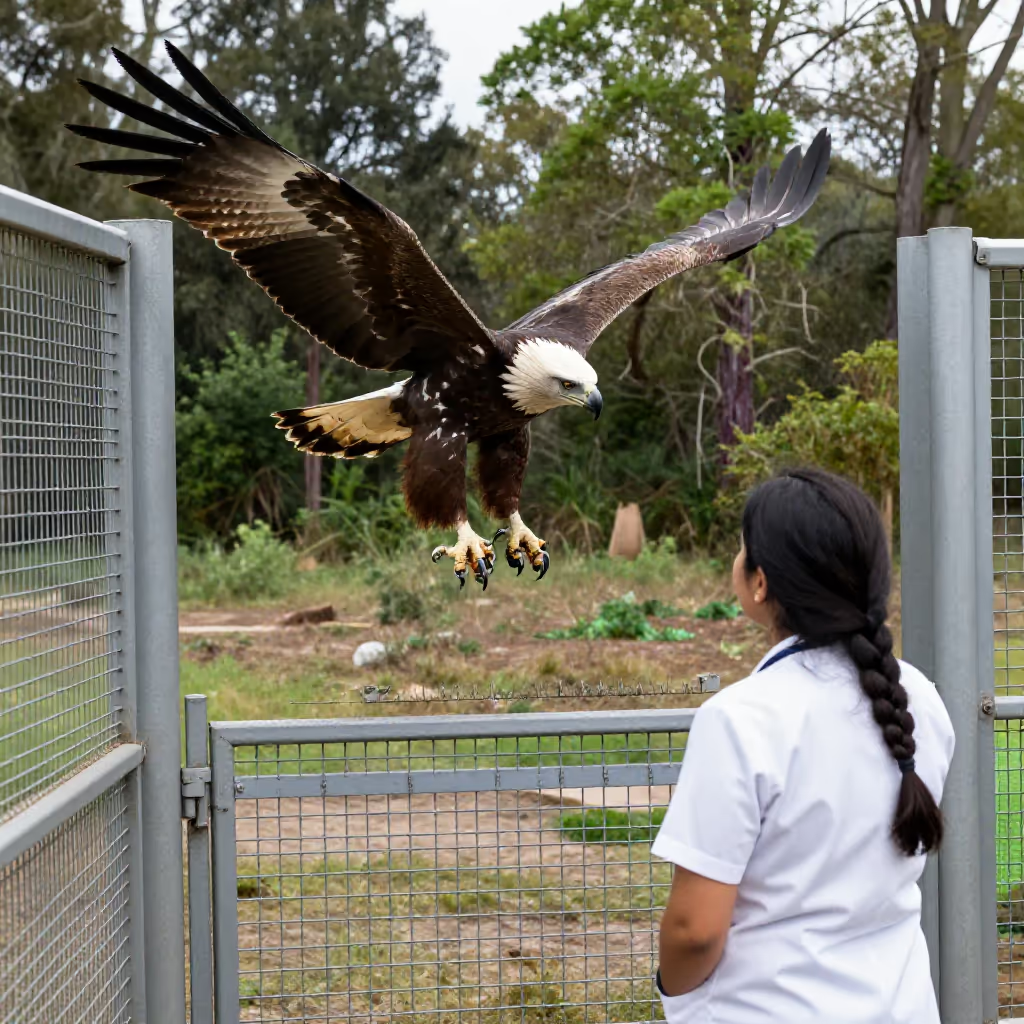
free
Not captured, locked up, or restricted in one's movement.
Der Vogel ist aus dem Käfig entkommen und fliegt jetzt frei herum.
The bird escaped from the cage and is now flying around freely.
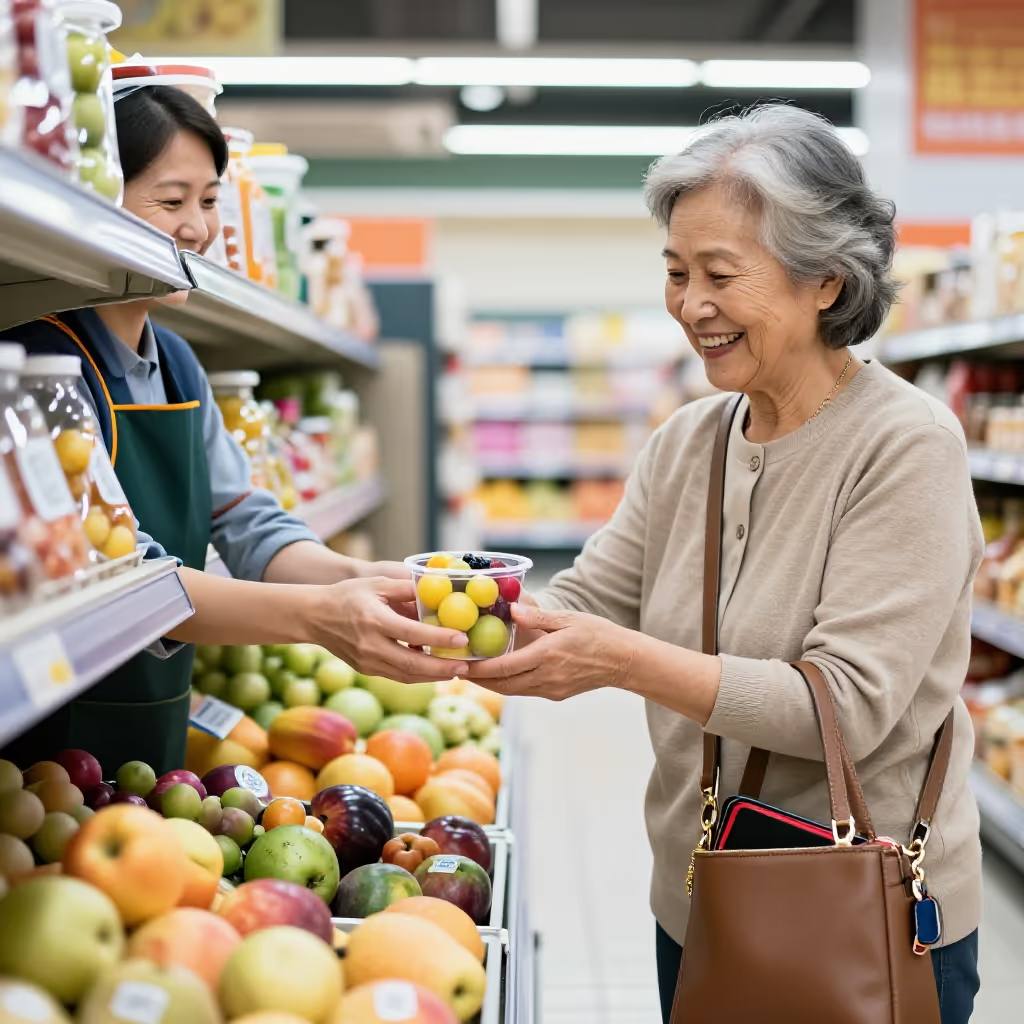
free of charge
Free of charge; without having to pay for it.
Für Kinder unter sechs Jahren ist der Eintritt frei.
Admission is free for children under six.

free
Independent and not determined by coercion, rules, or external influences.
Jeder Mensch sollte das Recht haben, seine Entscheidungen frei zu treffen.
Every person should have the right to make their decisions freely.
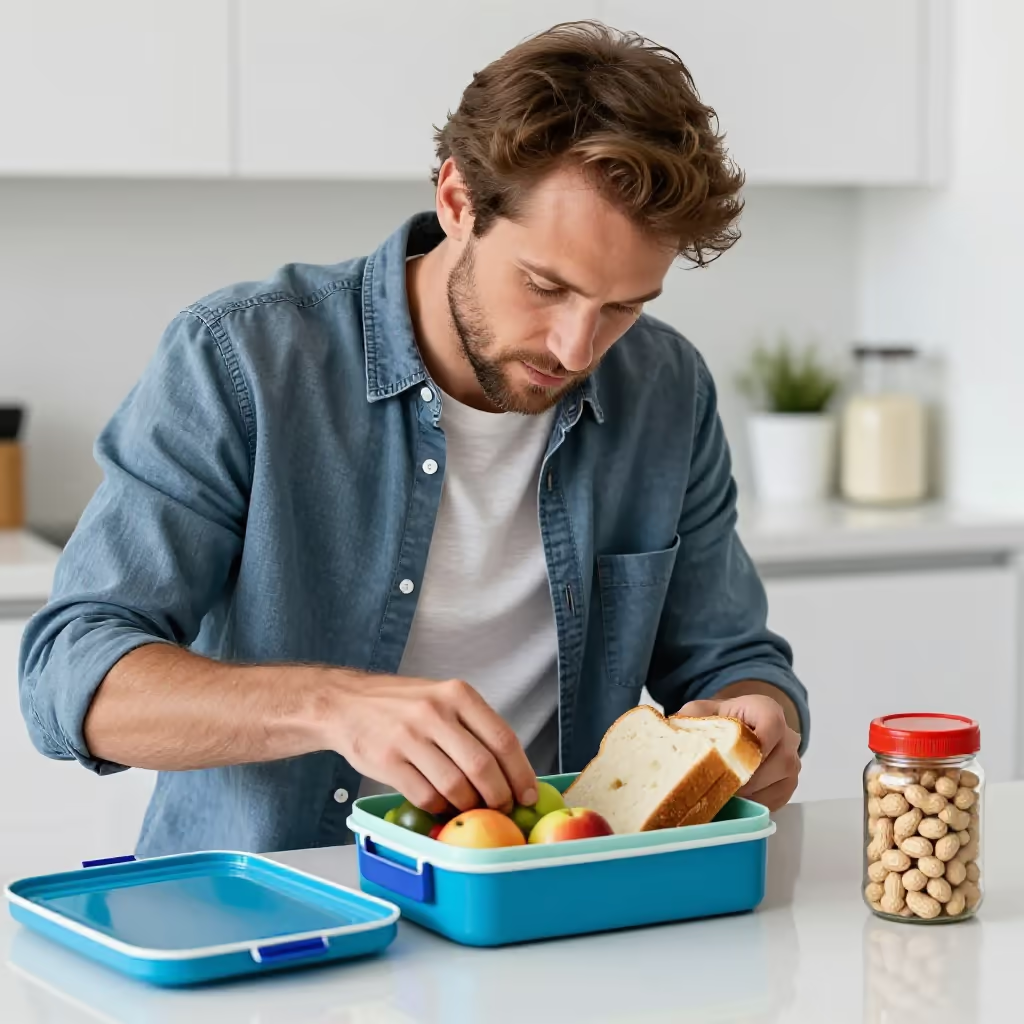
free of
Not containing something or not being burdened by it.
Dieser Joghurt ist frei von Zucker und künstlichen Aromen.
This yogurt is free of sugar and artificial flavors.

outdoors
Outside, in the fresh air; not in an enclosed space.
Bei dem schönen Wetter machen wir ein Picknick im Freien.
With this beautiful weather, we're having a picnic outdoors.
completely made up
Not based on facts; completely invented.
Seine abenteuerliche Ausrede war offensichtlich frei erfunden.
His adventurous excuse was obviously completely made up.
The word family of 'frei' includes 'die Freiheit' (freedom), the verb 'befreien' (to free/liberate), and the noun 'der Freiraum' (free space or personal freedom).
Die Gefangenen wurden nach vielen Jahren befreit.
The prisoners were freed after many years.
The word 'frei' is often used as an ending in compound adjectives and then means 'without' or 'free of'. Examples are 'zuckerfrei' (sugar-free), 'alkoholfrei' (alcohol-free), or 'fehlerfrei' (error-free).
Ich trinke am liebsten alkoholfreies Bier.
I prefer drinking non-alcoholic beer.
These two expressions are often confused. A seat or an appointment 'ist frei' (is available). A person 'hat frei' (has time off/does not have to work).
Der Platz neben mir ist noch frei.
The seat next to me is still available.
The expression 'frei haben' (to have off) always refers to a break from regular obligations such as work or school. The subject is always a person.
Die Schüler haben nächste Woche wegen eines Feiertags frei.
The students have next week off because of a public holiday.
In the meaning 'kostenlos' (free of charge), 'frei' is often found on signs, in advertisements, or in official offers. A typical phrase is 'Eintritt frei' (free admission).
Die Lieferung ist ab einem Bestellwert von 50 Euro frei.
Delivery is free for orders over 50 euros.
The construction 'frei von' + noun in the dative means that something is not present. It is often used for ingredients or abstract things like worries.
Das Produkt ist frei von künstlichen Farbstoffen.
The product is free of artificial colorings.
The expression 'im Freien' is a fixed phrase and means 'outside' or 'in the fresh air'. 'Freien' is a nominalized adjective in the dative here.
Lass uns heute Abend im Freien essen.
Let's eat outdoors this evening.
The combination 'frei erfunden' (completely made up) is a fixed expression. It describes a story or claim that is completely invented and not true.
Die ganze Geschichte von seinem Lottogewinn war nur frei erfunden.
The whole story about his lottery win was just completely made up.
go / loose
When referring to an animal, “los” and “frei” can mean that it is no longer being held. “Los” often suggests that the animal has escaped or that the situation is unwanted, while “frei” more often expresses permitted freedom of movement. Use “los” when an animal escapes and “frei” when it is deliberately released.

Nach dem Spaziergang ließ die Besitzerin den Hund im Garten frei.
After the walk, the owner let the dog run free in the garden.
Als die Tür offen blieb, war der Hund plötzlich los.
When the door was left open, the dog suddenly got loose.