


untypisch
untypical
Not corresponding to the usual or expected characteristics; deviating from the norm.
EXAMPLE
Für einen Novembertag war das Wetter untypisch warm und sonnig.
For a November day, the weather was untypically warm and sunny.
untypical
Loading your saved state.
untypical
Not corresponding to the usual or expected characteristics; deviating from the norm.
Für einen Novembertag war das Wetter untypisch warm und sonnig.
For a November day, the weather was untypically warm and sunny.
The adjective is very clearly structured. The prefix 'un-' is used to negate the base word 'typisch' (typical). So the meaning 'not typical' can be derived directly from its parts.
Sein plötzlicher Wutausbruch war völlig untypisch.
His sudden outburst of anger was completely untypical.
'Untypisch' (untypical) is very often used in the construction 'untypisch für + accusative'. This expresses for whom or what a certain characteristic is not typical.
Diese Kälte im Mai ist untypisch für die Jahreszeit.
This cold weather in May is untypical for the season.
'Untypisch' (untypical) is often used to describe deviations from a norm. Common combinations are 'untypisches Verhalten' (untypical behavior), 'untypisches Wetter' (untypical weather), or 'untypische Symptome' (untypical symptoms).
Der Arzt war besorgt über die untypischen Symptome des Patienten.
The doctor was concerned about the patient's untypical symptoms.
unusual
Ungewöhnlich emphasizes that something is a rare or conspicuous deviation from what is expected. Untypisch relates the deviation more specifically to the usual characteristics of a particular person, thing, or group. Use ungewöhnlich for an individual event, and untypisch when comparing something with the behavior that is otherwise typical.
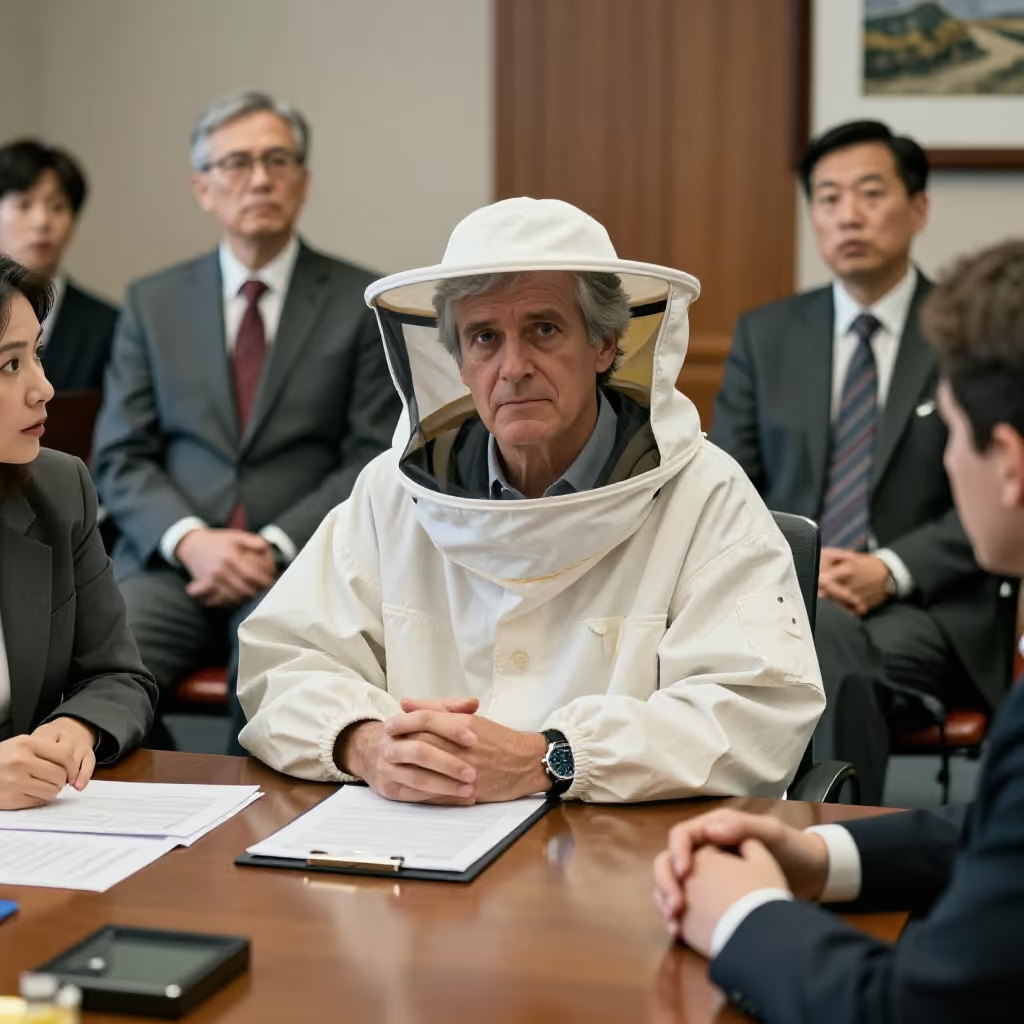
Dass Lea bei dem Treffen kein Wort sagte, war für ihre offene Art untypisch.
Lea not saying a word at the meeting was untypical of her outgoing nature.
Es war ungewöhnlich, dass Lea bei dem Treffen kein Wort sagte.
It was unusual for Lea not to say a word at the meeting.