

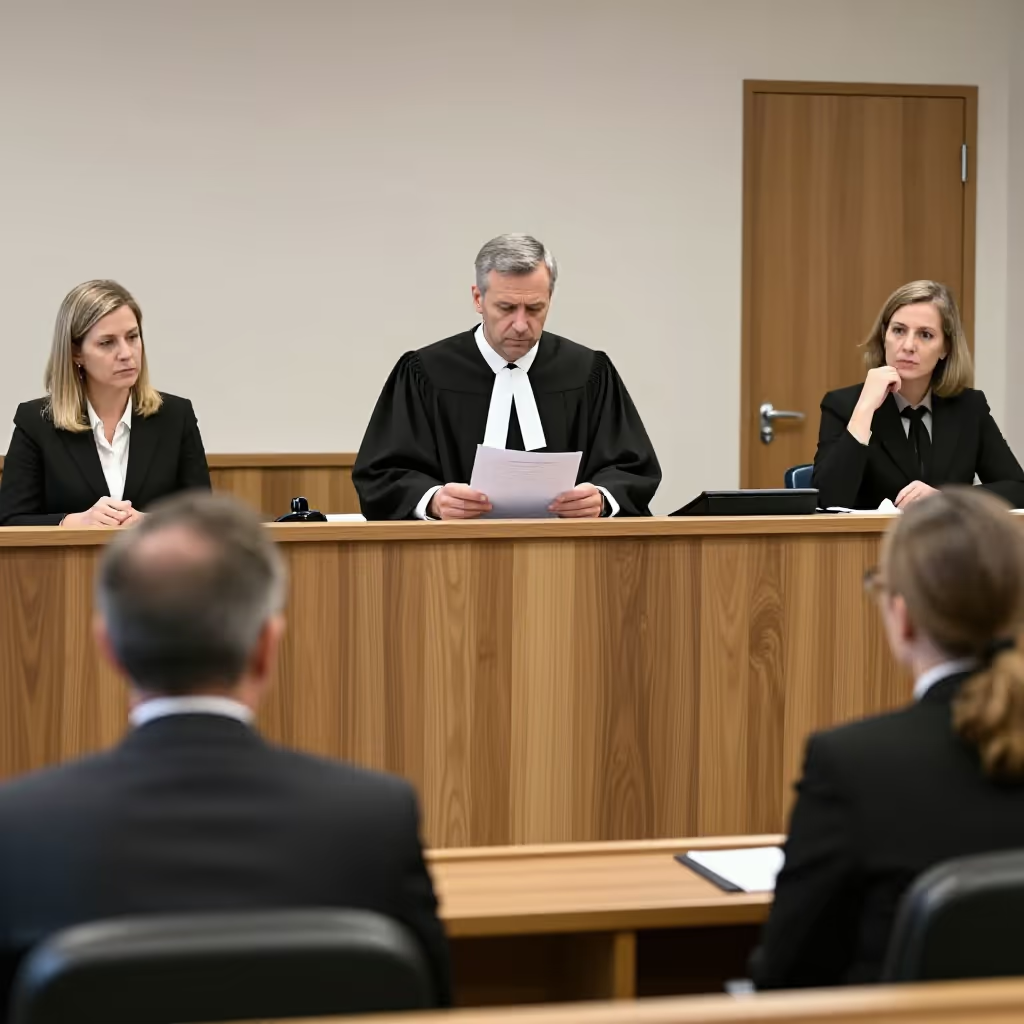
das Urteil
verdict
The formal, legal decision of a court at the end of a trial.
EXAMPLE
Das Gericht wird morgen sein Urteil verkünden.
The court will announce its verdict tomorrow.
judgment / verdict
Loading your saved state.
verdict
The formal, legal decision of a court at the end of a trial.
Das Gericht wird morgen sein Urteil verkünden.
The court will announce its verdict tomorrow.

judgment
A personal opinion or assessment about a person, thing, or situation.
Ich möchte mir erst alle Fakten ansehen, bevor ich mir ein Urteil bilde.
I want to look at all the facts first before I form a judgment.
The word 'Urteil' (judgment/verdict) is related to the verb 'urteilen' (to judge). You should not judge other people too hastily, meaning you should not form an opinion too quickly.
Es ist leicht, über andere zu urteilen, ohne die ganze Geschichte zu kennen.
It is easy to judge others without knowing the whole story.
You can often recognize the meaning of 'Urteil' (judgment/verdict) from the verb. In a legal context, a verdict is 'gefällt' (passed/given) or 'gesprochen' (pronounced). A personal opinion as a judgment, on the other hand, is 'gebildet' (formed) or 'abgegeben' (given/expressed).
Der Richter hat ein mildes Urteil gefällt.
The judge passed a lenient verdict.
In the legal sense, 'Urteil' (verdict) is used with fixed verbs. The most common are 'ein Urteil fällen' (to pass a verdict), 'ein Urteil sprechen' (to pronounce a verdict), and 'ein Urteil verkünden' (to announce a verdict).
Das Urteil wird nächste Woche verkündet.
The verdict will be announced next week.
When 'Urteil' (judgment) means a personal opinion, it often refers to a person or thing. This is connected with the preposition 'über' (about) and the accusative.
Ich kann mir noch kein Urteil über den neuen Kollegen erlauben.
I can't allow myself to form a judgment about the new colleague yet.
opinion
Meinung and Urteil can both express a personal evaluation of a person or thing. Meinung is usually a generally expressed view, whereas Urteil sounds more like a final and reasoned assessment. Use „Meinung“ for a personal perspective and „Urteil“ for a firmer evaluation.

Nach dem Gespräch bildete sich die Lehrerin ein klares Urteil über die Arbeit.
After the conversation, the teacher formed a clear judgment about the work.
Meine Meinung zu dem neuen Film ist noch nicht ganz fest, aber bisher gefällt er mir.
I haven’t fully made up my mind about the new film yet, but so far I like it.