

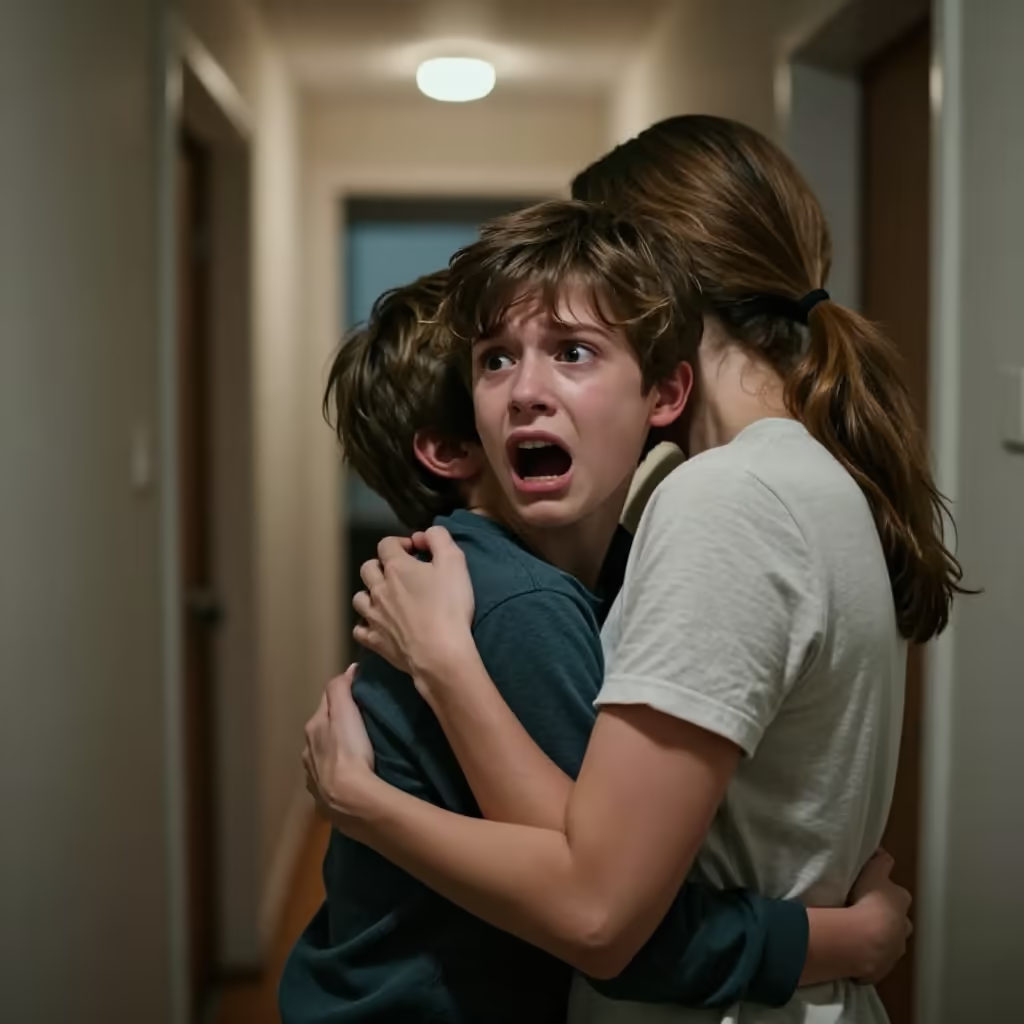
verängstigt
frightened
In a state of fear or anxiety; filled with fear.
EXAMPLE
Das verängstigte Kind versteckte sich hinter seiner Mutter.
The frightened child hid behind his mother.
frightened
Loading your saved state.
frightened
In a state of fear or anxiety; filled with fear.
Das verängstigte Kind versteckte sich hinter seiner Mutter.
The frightened child hid behind his mother.
'Verängstigt' (frightened) is the past participle of the verb 'verängstigen' (to frighten). This verb means 'to make someone afraid.' The adjective therefore describes the state of a person or animal that has been made afraid.
Der laute Knall hat die Vögel verängstigt.
The loud bang frightened the birds.
You can use 'verängstigt' (frightened) in three ways: before a noun ('ein verängstigtes Tier' — a frightened animal), after a verb like 'sein' (to be) or 'wirken' (to seem) ('Das Tier ist verängstigt' — The animal is frightened), or as an adverb describing a verb ('Das Tier schaute verängstigt' — The animal looked frightened).
Ein verängstigter Hund bellte hinter dem Zaun.
A frightened dog barked behind the fence.
The adjective is often used to describe the reaction of living beings to a threatening situation. Common combinations are 'verängstigte Kinder' (frightened children), 'verängstigte Tiere' (frightened animals), 'verängstigt aussehen' (to look frightened), or 'verängstigt wirken' (to seem frightened).
Die Katze saß verängstigt auf dem Baum und traute sich nicht herunter.
The cat sat frightened in the tree and didn't dare come down.
anxious / fearful
In a specific situation, both ängstlich and verängstigt can fit. However, ängstlich can also describe a general tendency to feel anxious. Verängstigt typically describes a state caused by a specific experience or event.

Nach dem lauten Knall ist der Junge verängstigt.
The boy is frightened after the loud bang.
Der Junge ist bei fremden Menschen immer ängstlich.
The boy is always anxious around strangers.