


verblieben
remaining
Used as an adjective to describe something that has been left over after a process or event.
EXAMPLE
Die wenigen verbliebenen Gäste saßen noch am Lagerfeuer.
The few remaining guests were still sitting by the campfire.
remaining
Loading your saved state.
remaining
Used as an adjective to describe something that has been left over after a process or event.
Die wenigen verbliebenen Gäste saßen noch am Lagerfeuer.
The few remaining guests were still sitting by the campfire.
'Verblieben' (remaining/left) is the past participle of the verb 'verbleiben' (to remain). When it is used as an adjective, it describes the result of a process—that is, what has been left over at the end.
Die verbliebenen Reste des alten Schlosses sind heute eine Touristenattraktion.
The remaining ruins of the old castle are now a tourist attraction.
Like the verb 'verbleiben' (to remain), the adjective 'verblieben' (remaining/left) also belongs to formal or elevated language and is mainly used in writing.
Die wenigen verbliebenen Dokumente werden im Archiv aufbewahrt.
The few remaining documents are kept in the archive.
'Verblieben' (remaining/left) is often combined with nouns that refer to a group or quantity of which only a part still exists. Typical phrases are 'die verbliebenen Mitglieder' (the remaining members), 'die verbliebenen Exemplare' (the remaining copies/specimens), or 'die verbliebenen Speisen' (the remaining dishes/food).
Nach dem Sturm zählte man die wenigen verbliebenen Bäume im Park.
After the storm, they counted the few remaining trees in the park.
left over
Übrig is the general and common term for something that is still present after a process. Verblieben sounds more formal and draws more attention to what remains after that process. Übrig is usually more suitable in everyday situations, while verblieben may be more appropriate in a factual description.
Nach der Reparatur ist nur ein kleiner Rest verblieben.
Only a small amount remained after the repair.
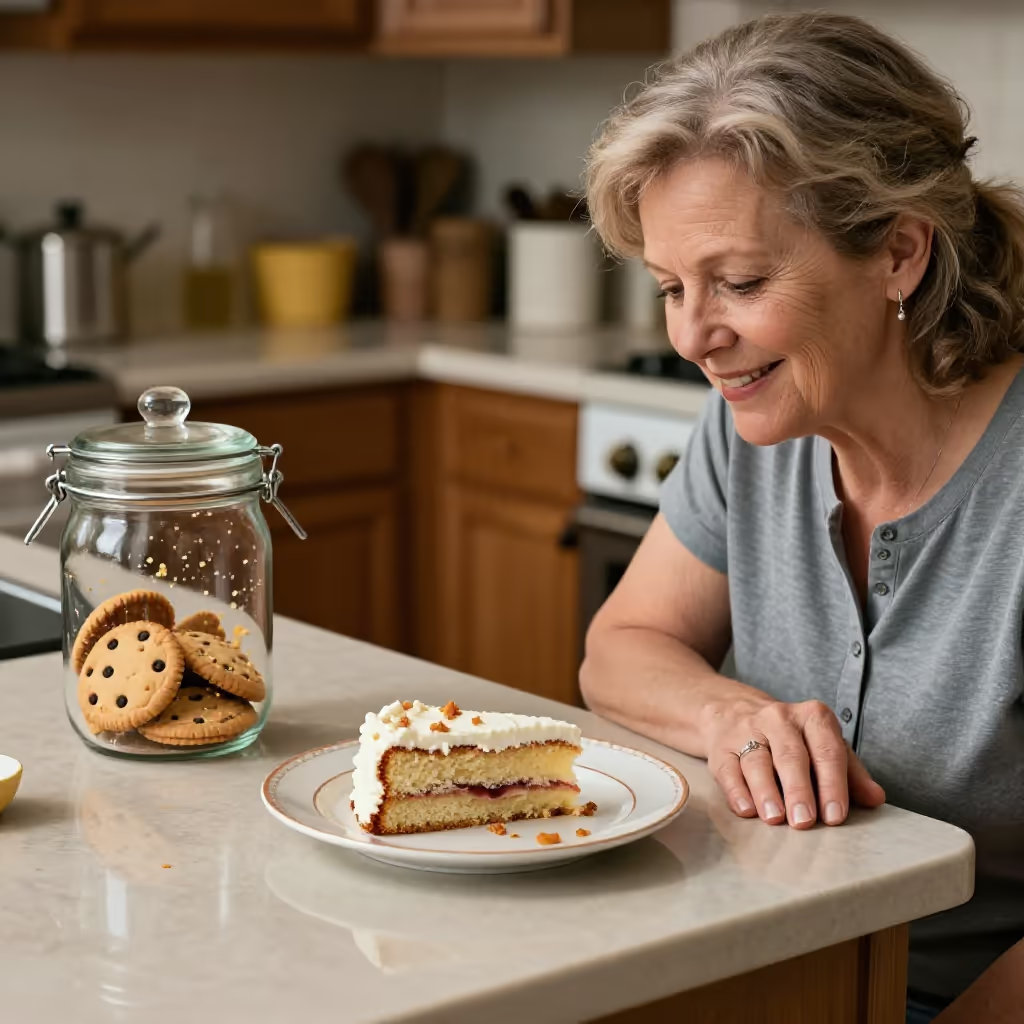
Nach dem Essen ist noch ein Stück Kuchen übrig.
There is still a piece of cake left over after the meal.