

übrig
left over
Describes something that is still present after something else has been used up or distributed; remaining.
EXAMPLE
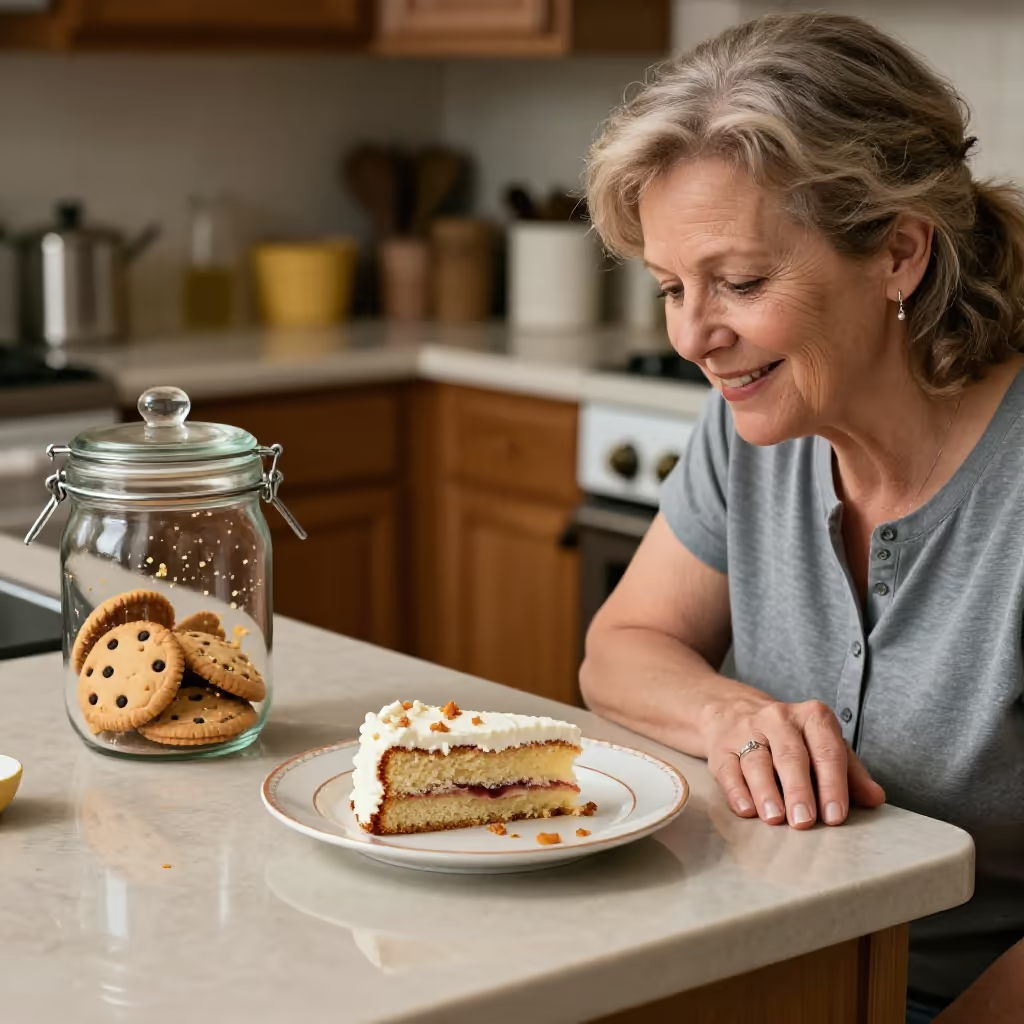
Vom Kuchen ist nur noch ein kleines Stück übrig.
There is only a small piece of cake left over.
left over
Loading your saved state.
left over
Describes something that is still present after something else has been used up or distributed; remaining.
Vom Kuchen ist nur noch ein kleines Stück übrig.
There is only a small piece of cake left over.

to have no choice but
A fixed expression that indicates there is no other possibility or alternative.
Da der letzte Bus weg war, blieb uns nichts anderes übrig, als ein Taxi zu nehmen.
Since the last bus was gone, we had no choice but to take a taxi.

to care for
A fixed expression meaning to feel sympathy, interest, or appreciation for someone or something. It is often used in the negative form.
Für seine arrogante Art habe ich wirklich nichts übrig.
I really don't care for his arrogant manner.
The word 'übrig' (left over) is closely related to 'über' (over). It describes something that is 'over' what was needed or taken—so, the remainder.
Nach der Party sind viele Getränke übrig geblieben.
After the party, a lot of drinks were left over.
In the meaning 'verbleibend' (remaining), 'übrig' is almost always used together with the verbs 'sein' (to be) or 'bleiben' (to remain) at the end of the sentence. So it does not stand directly before the noun.
Ist noch Kaffee übrig?
Is there any coffee left?
The expression 'jemandem bleibt nichts anderes übrig, als ... zu ...' (someone has no choice but to ...) has a fixed structure. The person who has no choice is in the dative. The only option is expressed with an 'als ... zu + infinitive' construction.
Mir blieb nichts anderes übrig, als zu Fuß nach Hause zu gehen.
I had no choice but to walk home.
The expression 'etwas für jemanden/etwas übrig haben' (to care for someone/something; to have sympathy or appreciation for someone/something) always uses the preposition 'für' with the accusative. It is very often used in the negative form 'nichts für ... übrig haben' (to have no time/appreciation for ...; to reject ...), to express disapproval or rejection.
Für solche Ideen habe ich nichts übrig.
I have no appreciation for ideas like that.
other
Übrig refers to people or things that actually remain after something has been used, distributed, or selected. sonstig, on the other hand, means other people or things that have not yet been mentioned and is especially suitable in lists or formal texts. Use übrig for a specific remainder and sonstig for an additional category.

Nach dem Frühstück sind noch drei Brötchen übrig.
There are still three bread rolls left after breakfast.
Bitte tragen Sie sonstige Ausgaben in das Formular ein.
Please enter other expenses on the form.