


verbleibend
remaining
Used as an adjective to describe something that is left over or still present.
EXAMPLE
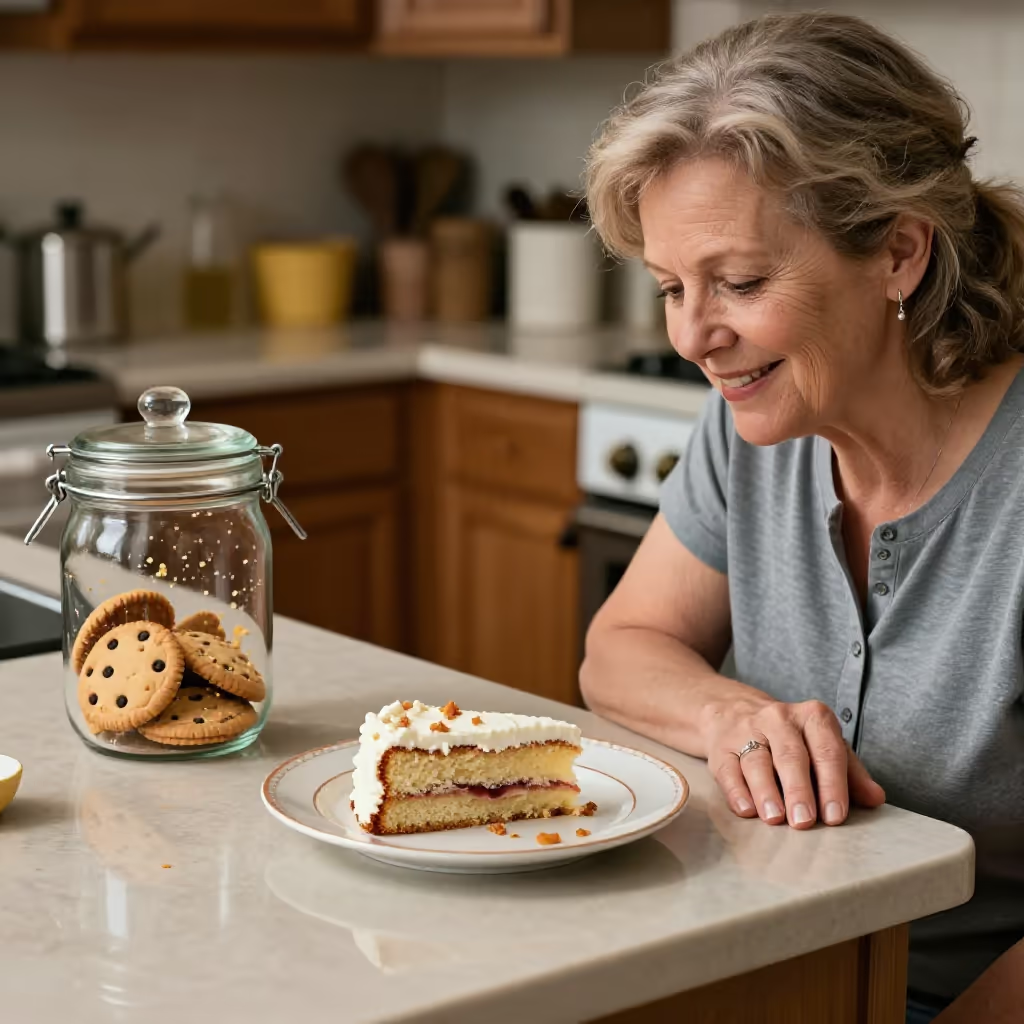
Den verbleibenden Rest des Kuchens heben wir für morgen auf.
We'll save the remaining rest of the cake for tomorrow.
remaining
Loading your saved state.
remaining
Used as an adjective to describe something that is left over or still present.
Den verbleibenden Rest des Kuchens heben wir für morgen auf.
We'll save the remaining rest of the cake for tomorrow.
'Verbleibend' (remaining) is the present participle of the verb 'verbleiben' (to remain). It is used like a normal adjective and describes something that is currently left over or still continuing.
Die verbleibende Arbeit müssen wir morgen erledigen.
We have to finish the remaining work tomorrow.
Since the word is derived from the formal verb 'verbleiben' (to remain), the adjective 'verbleibend' (remaining) also has a rather formal or written character.
Der verbleibende Betrag wird in zwei Raten gezahlt.
The remaining amount will be paid in two installments.
Common nouns combined with 'verbleibend' (remaining) refer to quantities, time, or tasks. Typical phrases are 'der verbleibende Rest' (the remaining remainder), 'die verbleibende Zeit' (the remaining time), or 'die verbleibenden Mittel' (the remaining funds/resources).
Mit der verbleibenden Energie konnte er das Rennen gerade noch beenden.
With his remaining energy, he was just able to finish the race.
left over
Übrig is the common, everyday term for a remainder that is still present. verbleibend basically means the same thing, but sounds more formal and is often used in factual texts. In conversation, übrig is usually more suitable; in a formal description, verbleibend is more appropriate.
Der verbleibende Betrag reicht für die Reparatur aus.
The remaining amount is enough to cover the repair.
Nach dem Essen ist noch etwas Kuchen übrig.
There is still some cake left after the meal.