


restlich
remaining
What is left of something after a part has been used up, removed, or completed.
EXAMPLE
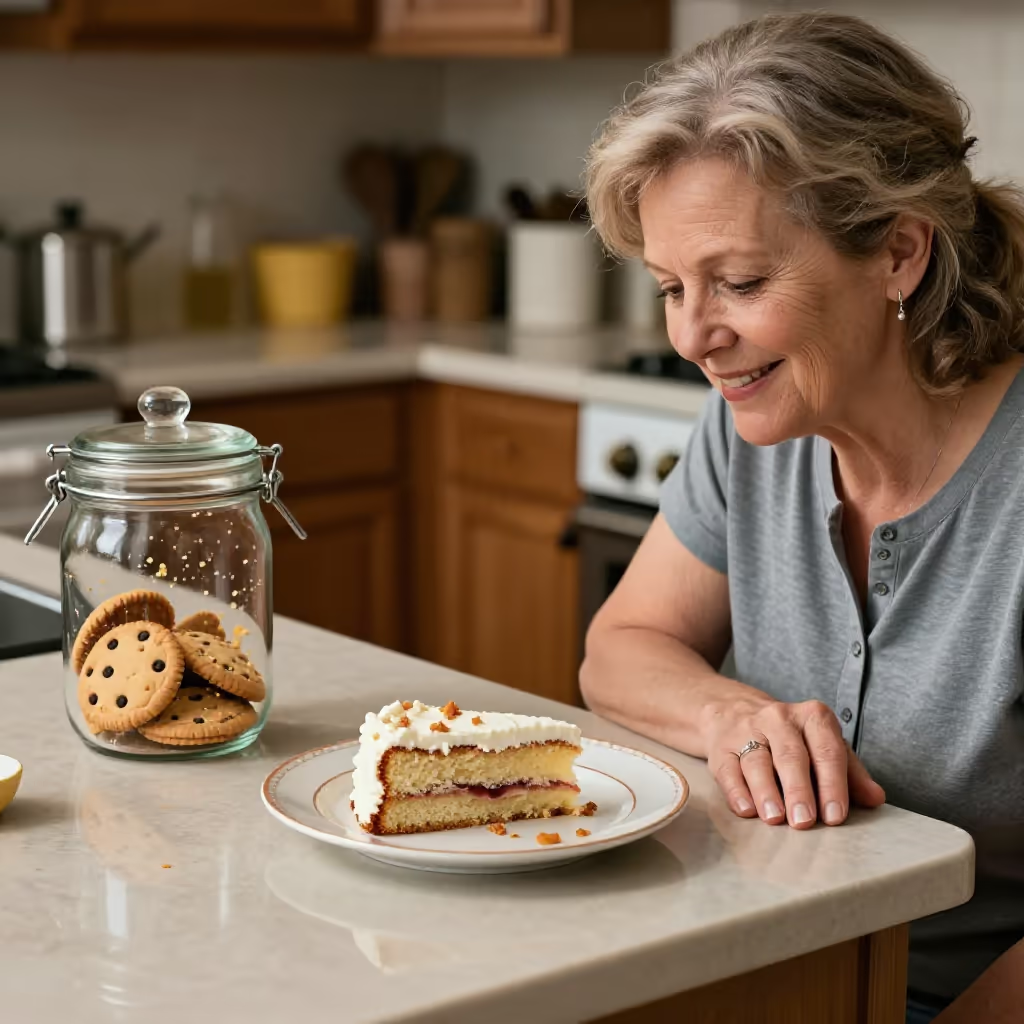
Den restlichen Kuchen können wir morgen essen.
We can eat the remaining cake tomorrow.
remaining
Loading your saved state.
remaining
What is left of something after a part has been used up, removed, or completed.
Den restlichen Kuchen können wir morgen essen.
We can eat the remaining cake tomorrow.
The adjective 'restlich' (remaining) is derived directly from the noun 'der Rest' (the rest, the remainder). If you know 'der Rest', you can easily figure out the meaning of 'restlich'.
Den Rest des Tages möchte ich mich nur noch entspannen.
For the rest of the day, I just want to relax.
'Restlich' (remaining) is used almost exclusively before a noun (attributive use). Using it as a stand-alone adjective after a verb (predicative use) is very uncommon and sounds unnatural.
Die restlichen Studenten warten schon im Seminarraum.
The remaining students are already waiting in the seminar room.
Common everyday combinations are 'der restliche Tag' (the rest of the day), 'das restliche Geld' (the remaining money), and 'die restlichen Aufgaben' (the remaining tasks). It always describes the part that is still left.
Mit dem restlichen Geld können wir uns noch ein Eis kaufen.
With the remaining money, we can still buy ourselves an ice cream.
left over
Übrig refers to something that remains after being used or distributed and can also stand on its own. restlich describes the remaining part of a defined whole and usually comes before a noun. Both words can work, but restlich emphasizes the division of the whole more strongly.
Die restlichen Karten verkaufen wir morgen.
We will sell the remaining tickets tomorrow.
Nach dem Verkauf sind noch drei Karten übrig.
There are still three tickets left after the sale.