

verfeinern
to refine
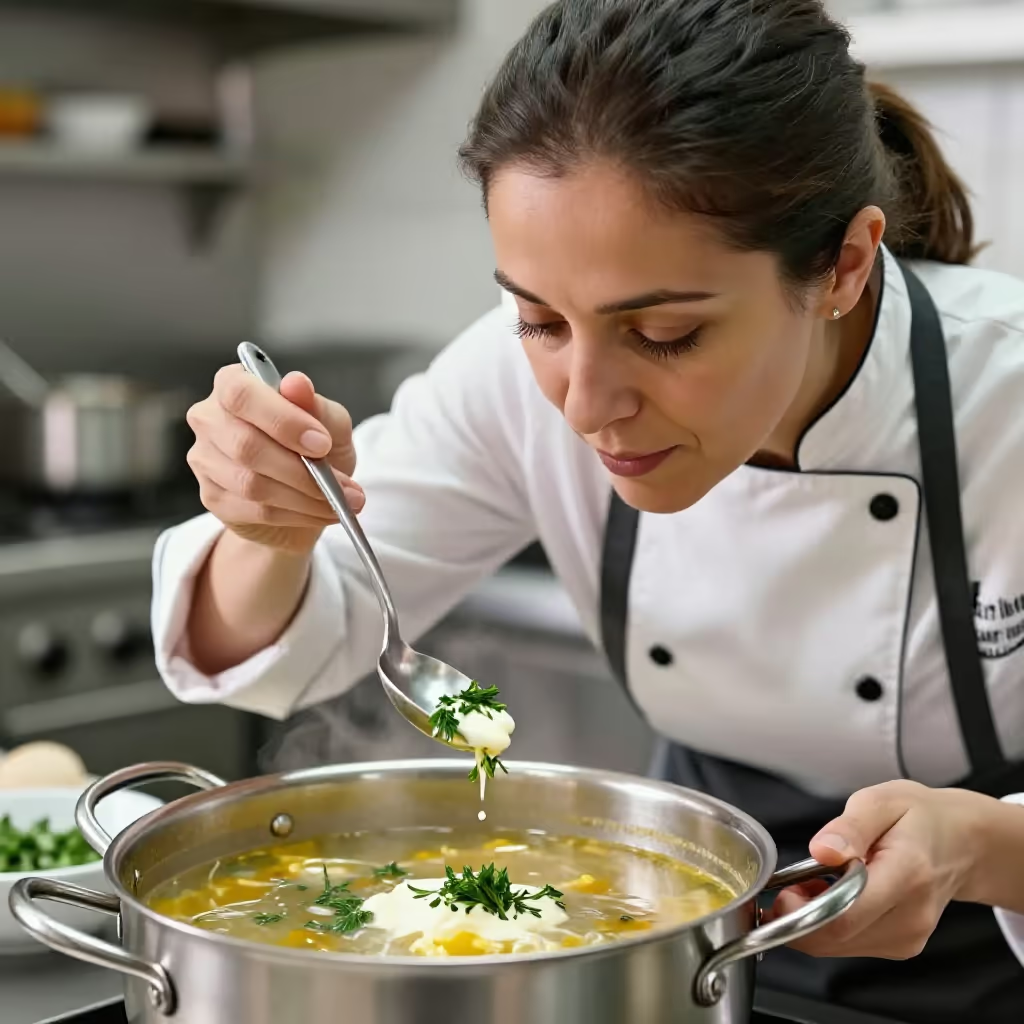
To improve the flavor of a dish or drink by adding spices, herbs, or other ingredients.
Sie verfeinerte die Soße mit einem Schuss Sahne und frischen Kräutern.
She refined the sauce with a splash of cream and fresh herbs.


to refine
Loading your saved state.
to refine
To improve the flavor of a dish or drink by adding spices, herbs, or other ingredients.
Sie verfeinerte die Soße mit einem Schuss Sahne und frischen Kräutern.
She refined the sauce with a splash of cream and fresh herbs.

The verb is derived from the adjective 'fein' (fine). The prefix 'ver-' and the ending '-ern' turn it into a verb meaning 'to make something finer'.
Der Autor verfeinerte den Text, bevor er ihn veröffentlichte.
The author refined the text before publishing it.
'Verfeinern' (to refine) is an inseparable verb. The prefix 'ver-' always stays attached to the stem, including in the past participle 'verfeinert' (refined) and in subordinate clauses.
Ich bin sicher, dass er seine Technik noch weiter verfeinert.
I am sure that he will refine his technique even further.
In the kitchen, 'verfeinern' (to refine) means to improve the flavor. Typically, the ingredient that is added is connected with the preposition 'mit' (with).
Der Koch verfeinert die Suppe mit einem Schuss Weißwein.
The chef refines the soup with a splash of white wine.
Outside the kitchen, 'verfeinern' (to refine) is used for improving methods, techniques, plans, or products. It means making something more precise, more efficient, or more elegant.
Die Wissenschaftler wollen ihre Messmethode weiter verfeinern.
The scientists want to refine their measurement method further.
to improve
'verbessern' and 'verfeinern' can both mean that something is made better. 'verbessern' is the general word and fits when something was not good enough before or is meant to work better. 'verfeinern' more often means making small details nicer, more precise, or more elegant. With food, 'verfeinern' often means improving the flavor with spices or ingredients. Learners may confuse the words because both express a positive change. As a simple guideline: use 'verbessern' for making something better in general, and 'verfeinern' for making details finer and more precise.

Zu Hause hat sie die Suppe mit frischen Kräutern verfeinert.
At home, she refined the soup with fresh herbs.
Der Fahrer verbessert seine Reaktion, weil er regelmäßig trainiert.
The driver improves his reaction time because he trains regularly.