


vergießen
to spill
To accidentally or deliberately let a liquid run out of a container and spill it.
EXAMPLE
Beim Einschenken vergoss sie den Kaffee auf die Tischdecke.
While pouring the coffee, she spilled it on the tablecloth.
to spill / pour / shed
vergießen – vergoss – hat vergossen
Loading your saved state.
to spill
To accidentally or deliberately let a liquid run out of a container and spill it.
Beim Einschenken vergoss sie den Kaffee auf die Tischdecke.
While pouring the coffee, she spilled it on the tablecloth.
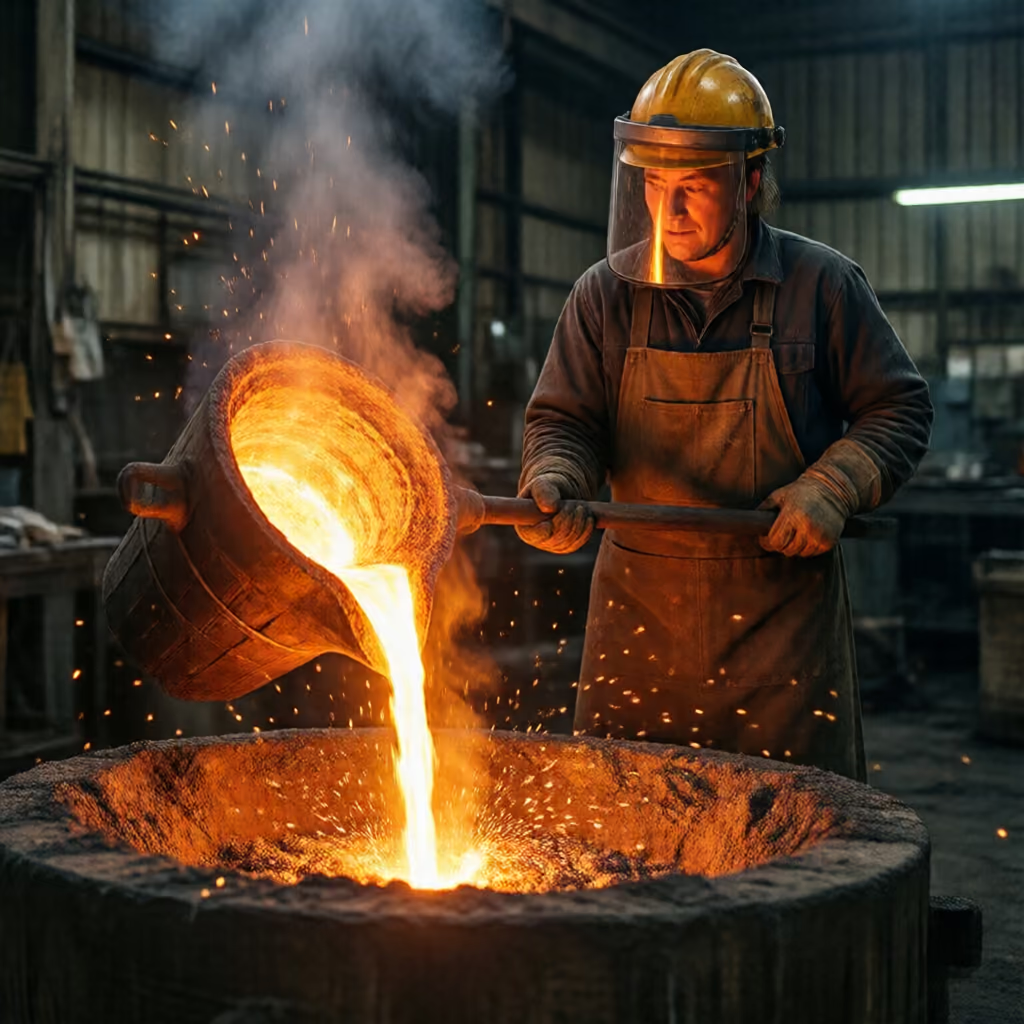
to pour into a mold
To pour a liquid mass, especially molten metal, into a mold.
Die Arbeiter vergießen das flüssige Eisen in große Formen.
The workers pour the molten iron into large molds.

to shed tears
To cry or express one's grief through tears.
Nach dem Abschied vergoss sie viele Tränen.
After the farewell, she shed many tears.

to shed blood
To injure or kill people through violence and thereby cause their blood to flow, especially in war or combat.
In diesem Krieg wurde viel Blut vergossen.
A lot of blood was shed in this war.
| ich | vergieße |
|---|---|
| du | vergießt |
| er/sie/es | vergießt |
| wir | vergießen |
| ihr | vergießt |
| sie | vergießen |
| ich | vergoss |
|---|---|
| du | vergossest vergosst |
| er/sie/es | vergoss |
| wir | vergossen |
| ihr | vergosst |
| sie | vergossen |
| ich | habe vergossen |
|---|---|
| du | hast vergossen |
| er/sie/es | hat vergossen |
| wir | haben vergossen |
| ihr | habt vergossen |
| sie | haben vergossen |
| du | vergieße! vergieß! |
|---|---|
| ihr | vergießt! |
| Sie | vergießen Sie! |
| ich | hatte vergossen |
|---|---|
| du | hattest vergossen |
| er/sie/es | hatte vergossen |
| wir | hatten vergossen |
| ihr | hattet vergossen |
| sie | hatten vergossen |
| ich | werde vergießen |
|---|---|
| du | wirst vergießen |
| er/sie/es | wird vergießen |
| wir | werden vergießen |
| ihr | werdet vergießen |
| sie | werden vergießen |
| ich | vergieße |
|---|---|
| du | vergießest |
| er/sie/es | vergieße |
| wir | vergießen |
| ihr | vergießet |
| sie | vergießen |
Used for reported speech.
| ich | vergösse |
|---|---|
| du | vergössest |
| er/sie/es | vergösse |
| wir | vergössen |
| ihr | vergösset |
| sie | vergössen |
Used for wishes and “would”.
| infinitive | vergießen |
|---|---|
| with zu | zu vergießen |
| present participle | vergießend |
| past participle | vergossen |
'Vergießen' (to spill / pour) has the inseparable prefix 'ver-'. The prefix stays attached to the verb in both main and subordinate clauses; in a subordinate clause, the entire verb appears at the end.
Sie vergoss den Saft auf den Teppich.
She spilled the juice on the carpet.
Er ging, weil er beim Einschenken viel Wasser vergossen hatte.
He left because he had spilled a lot of water while pouring it.
The noun following 'vergießen' (to spill / pour) usually indicates the intended meaning: containers and surfaces point to a spilled liquid, metal and molds to pouring, tears to grief, and blood to violence or war.
Beim Frühstück vergoss er den Orangensaft auf die Zeitung.
At breakfast, he spilled the orange juice on the newspaper.
In der Fabrik vergießt man Aluminium in besondere Formen.
At the factory, aluminum is poured into special molds.
Nach der traurigen Nachricht vergoss sie einige Tränen.
After the sad news, she shed a few tears.
With the meaning 'to spill', the liquid appears as the accusative object. The place onto which the liquid lands is often indicated with 'auf' (onto) and the accusative case.
Der Gast vergoss Rotwein auf das weiße Tischtuch.
The guest spilled red wine onto the white tablecloth.
The meaning of pouring into a mold occurs especially in metalworking and other technical fields. Common collocations include 'Metall vergießen' (to pour metal) and 'Metall in Formen vergießen' (to pour metal into molds).
Die Gießerei vergießt flüssiges Aluminium in sorgfältig vorbereitete Formen.
The foundry pours molten aluminum into carefully prepared molds.
'Tränen vergießen' (to shed tears) is often used with words expressing quantity or evaluation, such as 'viele' (many), 'bittere' (bitter), or 'heiße' (hot). The collocation often appears in emotional or elevated texts.
Bei der Abschiedsfeier vergoss er bittere Tränen.
He shed bitter tears at the farewell celebration.
'Blut vergießen' (to shed blood) is a fixed, figurative collocation and occurs especially in texts about war, violence, or sacrifice. It very often appears in the passive voice when the event, rather than the person acting, is emphasized.
In den Kämpfen wurde auf beiden Seiten viel Blut vergossen.
A lot of blood was shed on both sides during the fighting.