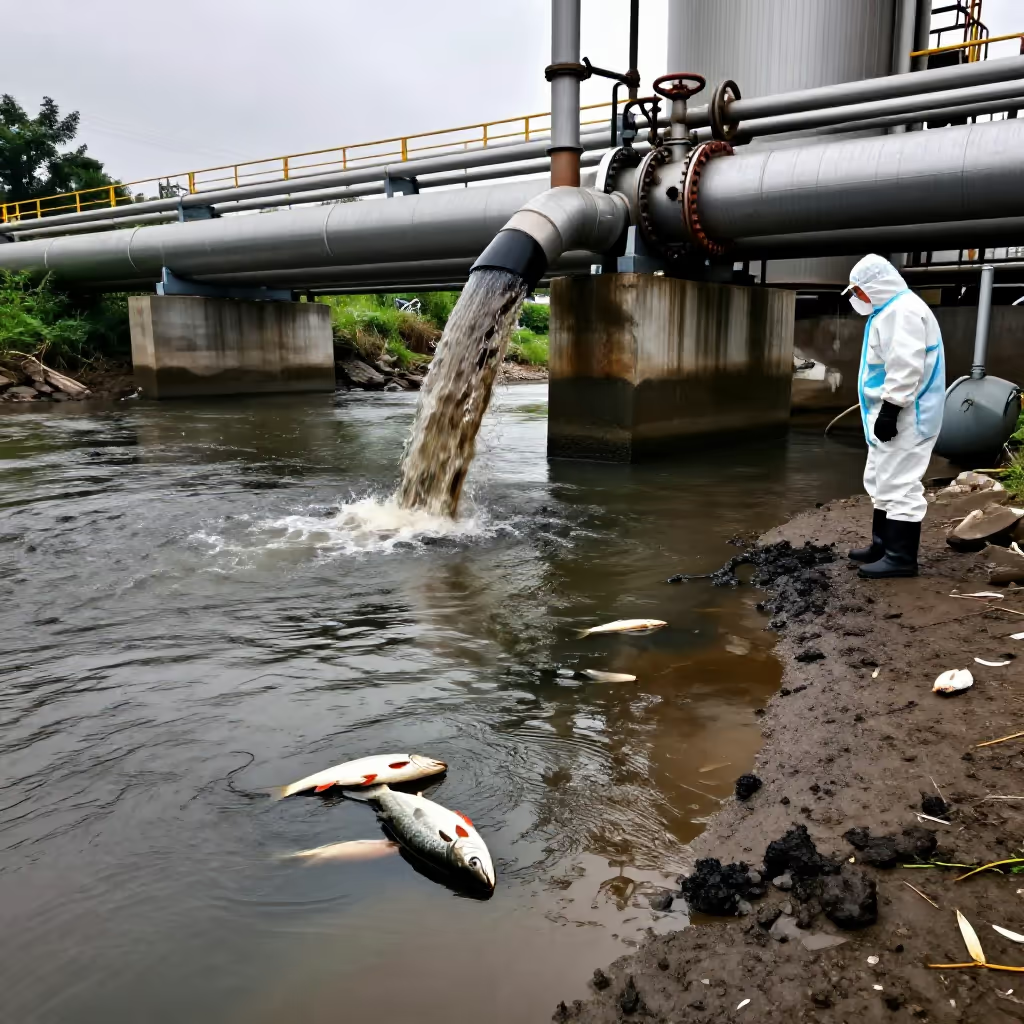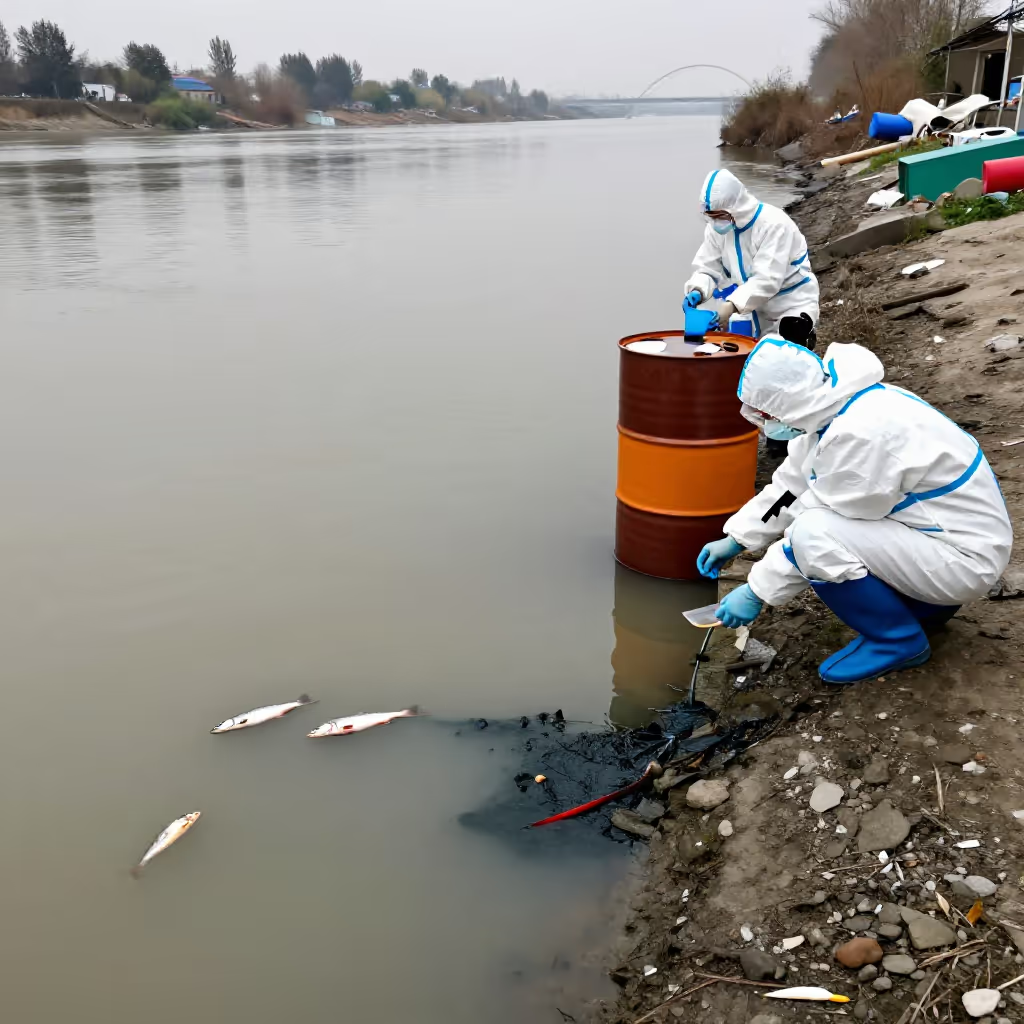
To administer a toxic substance to someone or an animal in order to harm or kill them.
example
Im Krimi versuchte der Mörder, sein Opfer mit einem Pilzgift zu vergiften.
In the crime novel, the murderer tried to poison his victim with a mushroom toxin.

Usage tips
False friend
The verb 'vergiften' (to poison) comes from the German noun 'das Gift', which means 'poison'. It is a well-known false friend of the English word 'gift' (present).
EXAMPLE
Vorsicht, diese Beeren enthalten ein starkes Gift.
Careful, these berries contain a strong poison.
Word structure
The verb is made up of the prefix 'ver-' and the noun 'Gift' (poison). The prefix 'ver-' is inseparable, which means it stays attached to the verb in all sentence forms.
EXAMPLE
Er wurde beschuldigt, den Hund seines Nachbarn vergiftet zu haben.
He was accused of having poisoned his neighbor's dog.
Reflexive or not
Pay attention to the difference: 'jemanden vergiften' (to poison someone) means to give poison to another person. 'Sich vergiften' (to poison oneself) means that you yourself ingest poison, either intentionally or unintentionally.
EXAMPLE
Die Hauptfigur im Film vergiftet ihren Feind.
The main character in the film poisons her enemy.
Correct preposition
When the substance used to poison someone or something is mentioned, German uses the preposition 'mit' followed by the dative.
EXAMPLE
Die Patienten hatten sich mit verdorbenem Fisch vergiftet.
The patients had poisoned themselves with spoiled fish.
Context clue
You can recognize the figurative meaning by the fact that the object is something abstract. You do not poison a person, but rather 'die Atmosphäre' (the atmosphere), 'eine Beziehung' (a relationship), or 'die Stimmung' (the mood).
EXAMPLE
Sein ständiges Misstrauen hat die Arbeitsatmosphäre im Team vergiftet.
His constant mistrust poisoned the working atmosphere in the team.
Compare with
near_synonym
vergiften vs zerstören
to destroy
'zerstören' and 'vergiften' can both describe something being seriously harmed. 'zerstören' is more general and says that something is no longer usable, intact, or alive. 'vergiften' is more specific: it involves poison or harmful substances, for example in water, the environment, or food. In a figurative sense, 'vergiften' can also mean that a mood or relationship becomes worse and worse because of mistrust, hatred, or lies. In that case, it is close to 'zerstören', but 'vergiften' emphasizes the gradual negative influence.
vergiften
Ständige Vorwürfe vergiften die Stimmung im Team.
Constant accusations poison the atmosphere in the team.
zerstören
Die Bauarbeiten zerstören einen Teil des alten Parks.
The construction work is destroying part of the old park.