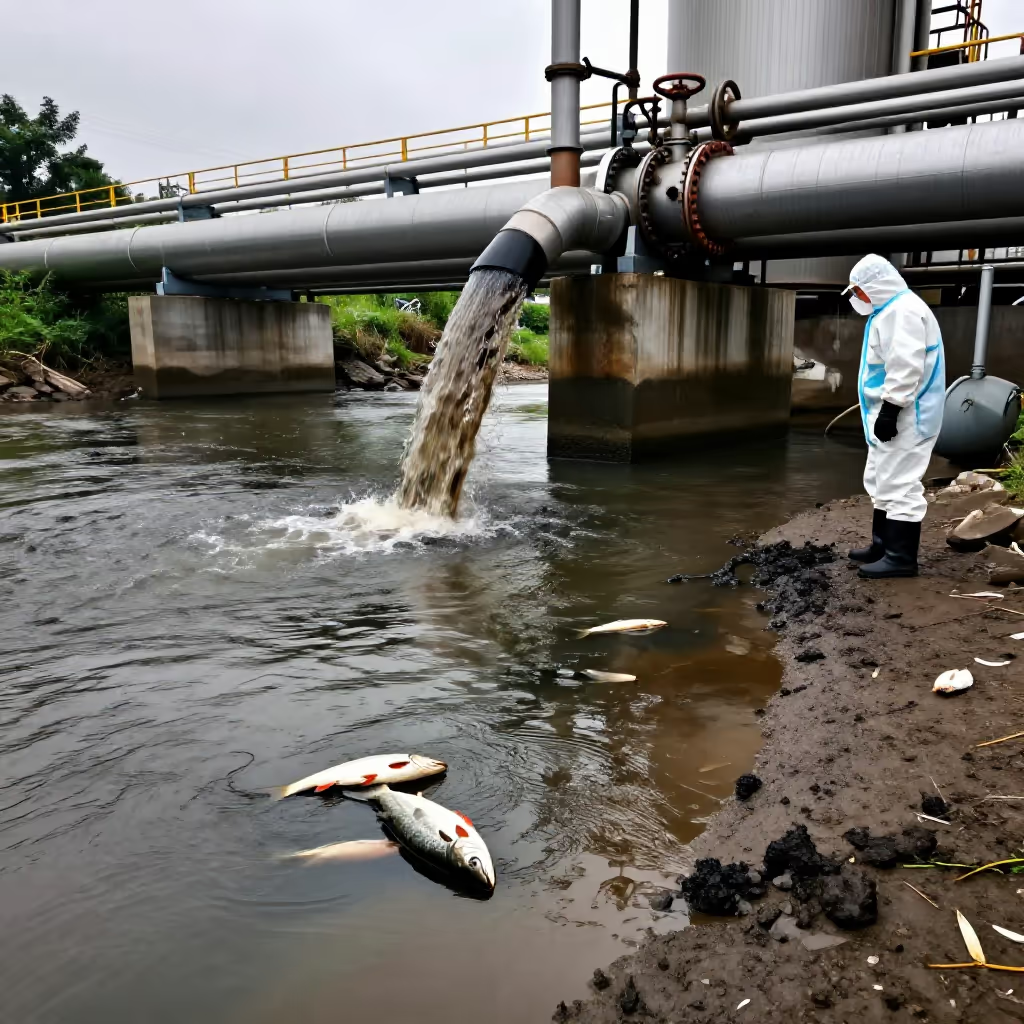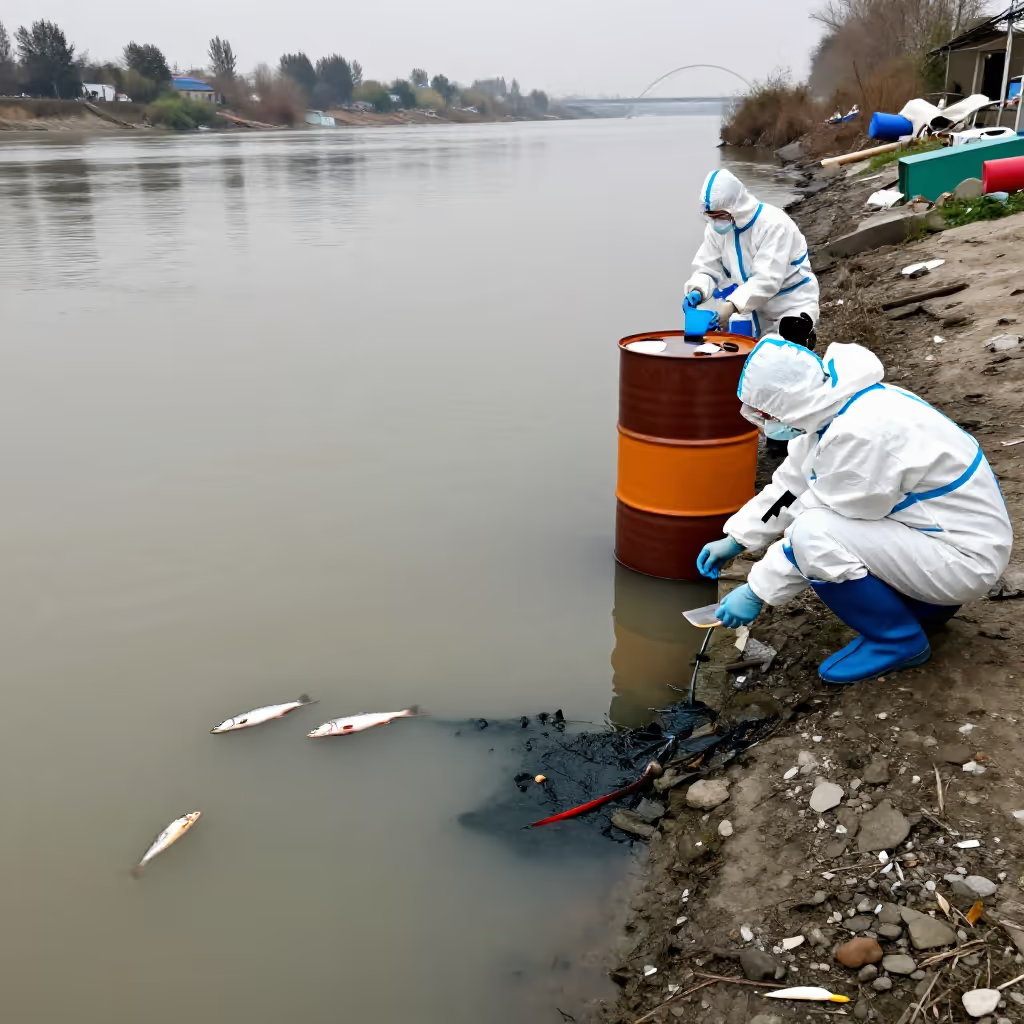
To pollute something with pathogens, poison, or other harmful substances and make it dangerous. This often affects water, soil, or food.
example
Ein Chemieunfall hat das Grundwasser in der gesamten Region verseucht.
A chemical accident contaminated the groundwater throughout the entire region.

Usage tips
Word structure
'Verseuchen' (to contaminate) is an inseparable verb. It is derived from the noun 'die Seuche' (an infectious disease). The prefix 'ver-' describes here a process that changes something negatively—so, to cover something 'with a plague.'
EXAMPLE
Die Fabrik hat den Fluss mit Chemikalien verseucht.
The factory contaminated the river with chemicals.
Sentence structure and use
The verb is often used in the passive to describe the state, e.g. 'Das Wasser ist verseucht' (the water is contaminated). If the substance causing the contamination is named, you use the preposition 'mit' (+ dative).
EXAMPLE
Der Acker wurde mit Pestiziden verseucht.
The field was contaminated with pesticides.
Context clue
You can recognize the meaning from the object: if it is something physical like 'Wasser' (water), 'Boden' (soil), or 'Lebensmittel' (food), the literal meaning is intended. With abstract nouns like 'Atmosphäre' (atmosphere), 'Vertrauen' (trust), or 'Gesellschaft' (society), the figurative meaning is intended.
EXAMPLE
Ein Tankerunglück verseuchte die Küste mit Öl.
A tanker accident contaminated the coast with oil.
Typical collocations
In the figurative meaning, 'verseuchen' (to poison) is often combined with abstract concepts. Typical phrases are 'die Atmosphäre verseuchen' (to poison the atmosphere), 'das politische Klima verseuchen' (to poison the political climate), or 'das Denken verseuchen' (to poison people's thinking).
EXAMPLE
Sein ständiges Misstrauen hat die Arbeitsatmosphäre im Büro völlig verseucht.
His constant mistrust completely poisoned the working atmosphere in the office.
Compare with
near_synonym
verseuchen vs verderben
to spoil / ruin
'verderben' and 'verseuchen' have in common that something becomes bad or harmful. 'verderben' is often used for food or for things like mood, enjoyment, or character. It means that something good is ruined or becomes much worse. 'verseuchen' is stronger and more concrete when something becomes dangerous because of poison, pathogens, or other harmful substances. In a figurative sense, 'verseuchen' can also have a very negative influence on an atmosphere or opinion. For bad food, people usually say 'verderben'; for dangerously contaminated water, 'verseuchen' fits better.
verseuchen
Die Chemikalien haben den Boden neben der Fabrik verseucht.
The chemicals contaminated the soil next to the factory.
verderben
Im Sommer verderben Milchprodukte schnell, wenn sie nicht im Kühlschrank stehen.
In summer, dairy products spoil quickly if they are not kept in the refrigerator.