


der Verlauf
course
The development or progression of something over a certain period of time.
EXAMPLE
Der Arzt ist mit dem Verlauf der Heilung sehr zufrieden.
The doctor is very satisfied with the course of the healing process.
course / gradient
Loading your saved state.
course
The development or progression of something over a certain period of time.
Der Arzt ist mit dem Verlauf der Heilung sehr zufrieden.
The doctor is very satisfied with the course of the healing process.
course
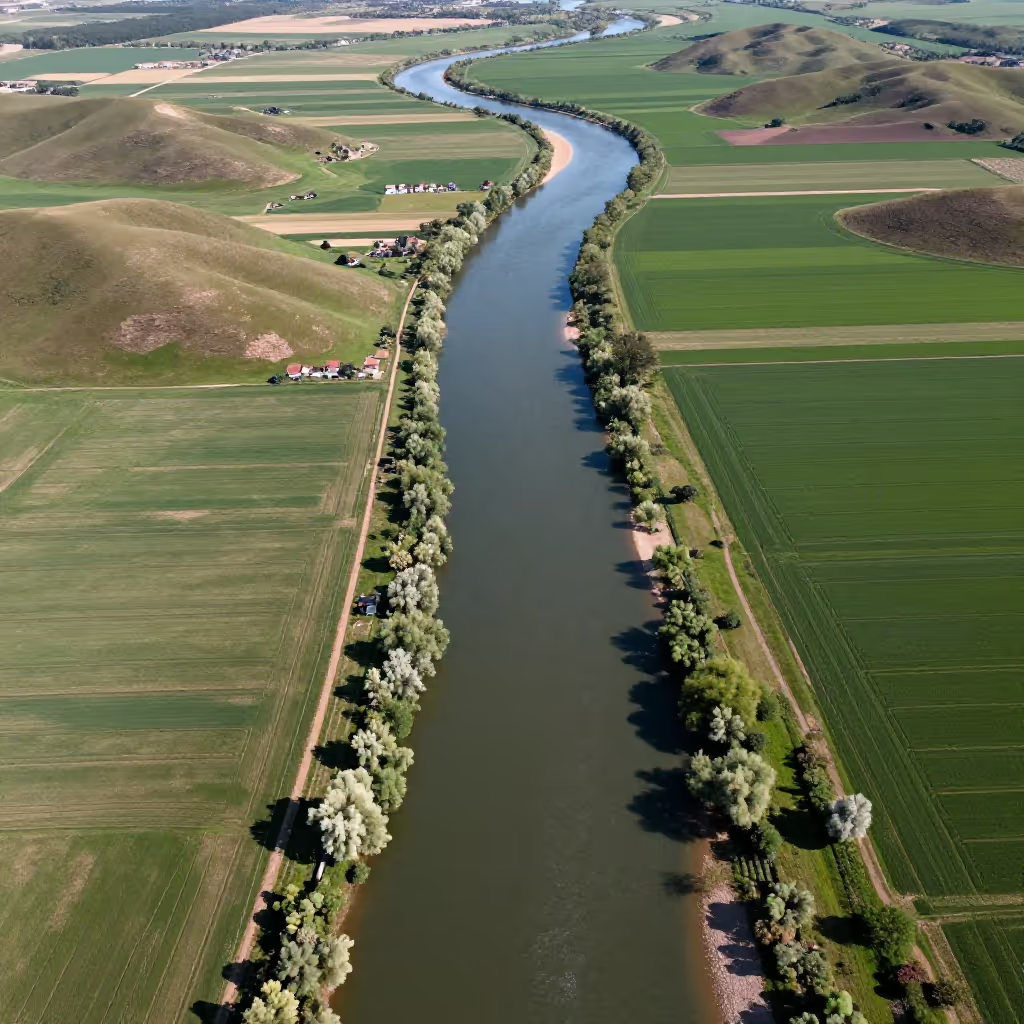
The path or direction that something such as a road, river, or border takes.
Wir folgten dem Verlauf des Flusses für mehrere Kilometer.
We followed the course of the river for several kilometers.

gradient
A gradual transition between colors or brightness values, often used in graphic design.
Der Hintergrund hat einen schönen Verlauf von Hellblau zu Dunkelblau.
The background has a beautiful gradient from light blue to dark blue.
'Der Verlauf' (course/progression) is the noun related to the verb 'verlaufen' (to run/proceed). It describes how something 'läuft' (runs) or develops over time or space. The basic idea of 'running' helps you understand the meaning.
Niemand konnte den genauen Verlauf der Ereignisse vorhersagen.
No one could predict the exact course of events.
The meaning of 'Verlauf' can be recognized from context. If it is about time, processes, or illnesses, it refers to development or progression. If it is about roads, rivers, or borders, it refers to the spatial path.
Der Verlauf des Gesprächs wurde immer angespannter.
The course of the conversation became increasingly tense.
When referring to development or progression, 'Verlauf' is often combined with abstract nouns. Typical expressions are 'der Verlauf der Krankheit' (the course of the illness), 'der Verlauf der Geschichte' (the course of the story/history), or 'im weiteren Verlauf' (as things progressed / later on).
Im weiteren Verlauf des Abends wurde die Musik lauter.
As the evening progressed, the music got louder.
When 'Verlauf' describes a path, it is often used with the verb 'folgen' (to follow) and the dative. You follow the course of something.
Die Wanderer folgten dem Verlauf des Baches.
The hikers followed the course of the stream.
The meaning as a color transition is technical language from graphic design and photography. You can recognize it from words such as 'Farbe' (color), 'Hintergrund' (background), or 'Design' (design).
Für das Plakat haben wir einen Verlauf von Gelb zu Orange gewählt.
For the poster, we chose a gradient from yellow to orange.
development
Entwicklung and Verlauf can both describe changes over time. Entwicklung places more emphasis on what is changing or on the progress being made. Verlauf focuses on the entire progression over time and the order of its phases. The appropriate choice therefore depends on the perspective you want to emphasize.
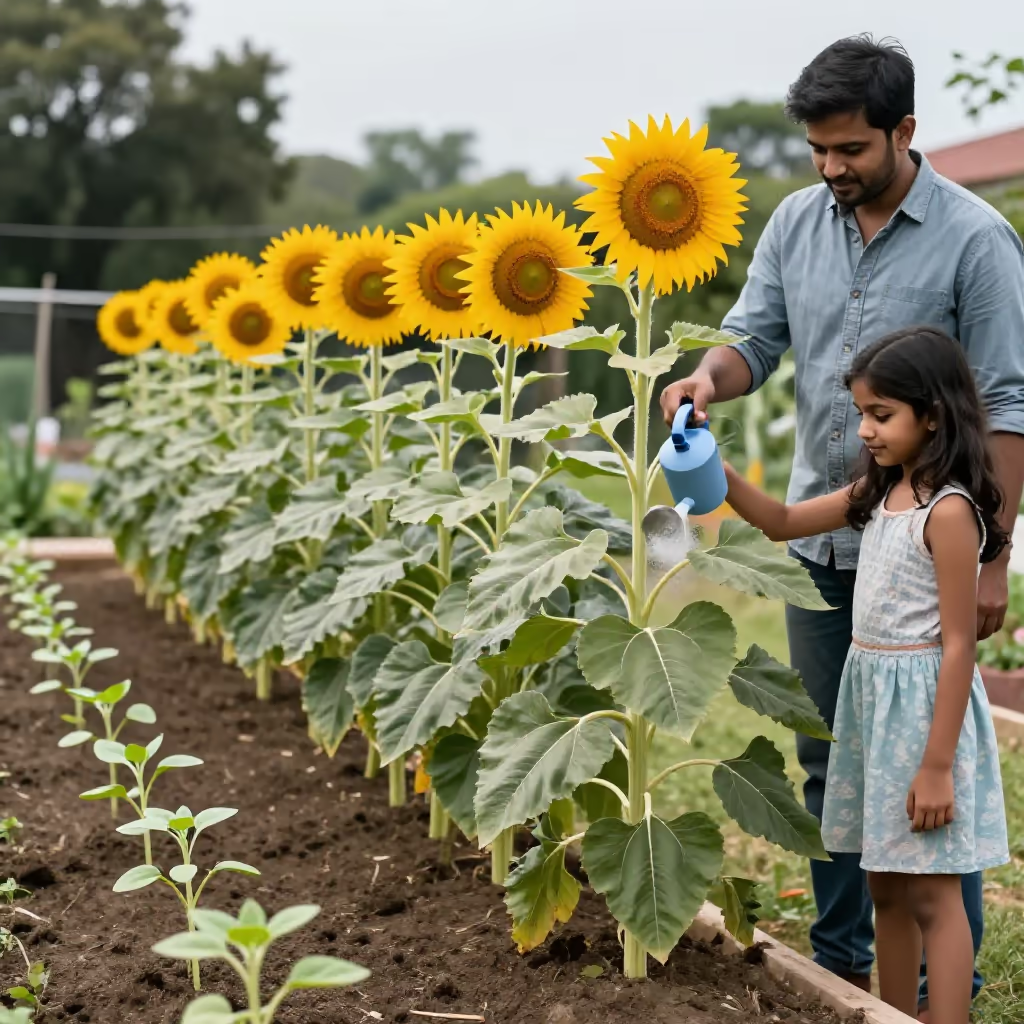
Der Verlauf des Projekts war anfangs langsam und wurde nach einigen Monaten schneller.
The project’s course was slow at first and became faster after a few months.
Die Entwicklung des Projekts zeigt nach einigen Monaten deutliche Fortschritte.
The project’s development shows clear progress after a few months.