

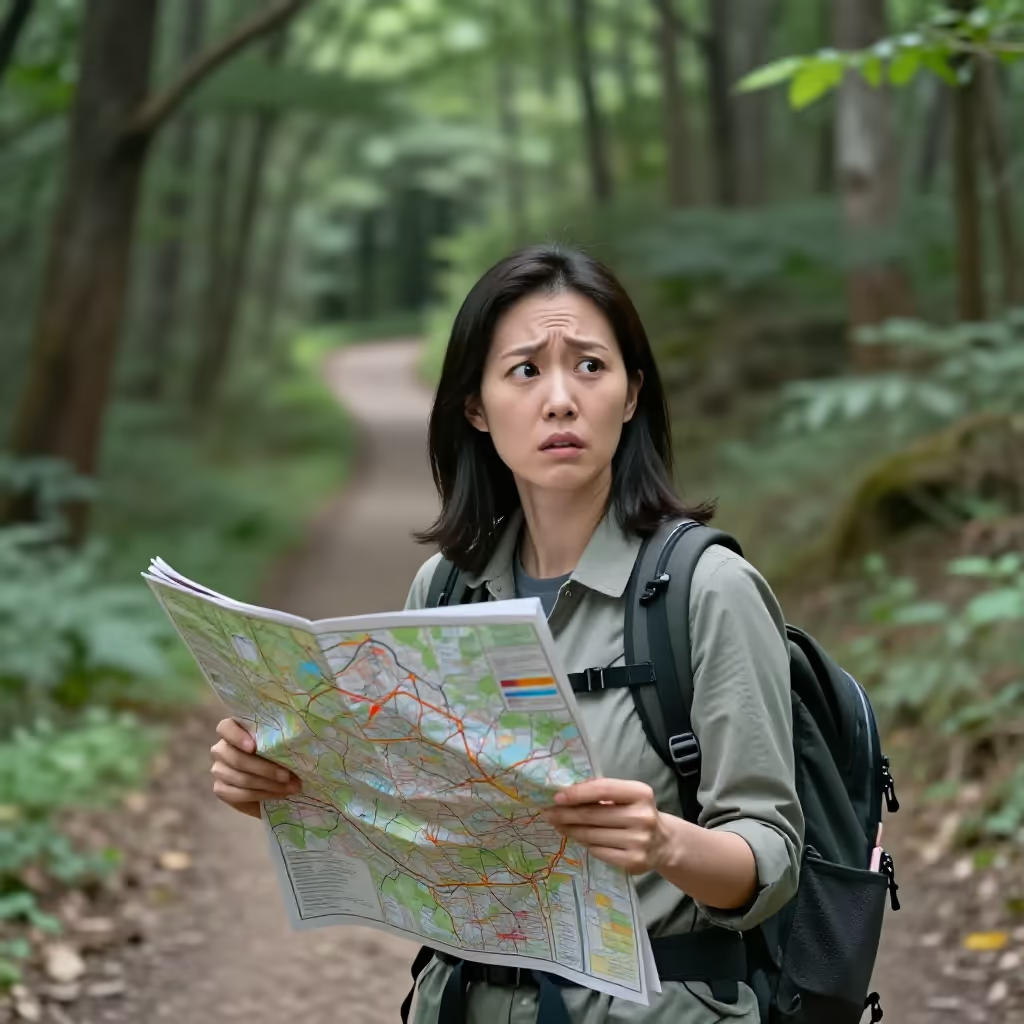
sich verlaufen
to get lost
To unintentionally lose the right way and no longer know where you are.
EXAMPLE
Wir haben uns im dichten Wald verlaufen.
We got lost in the dense forest.
to get lost / to proceed
Loading your saved state.
to get lost
To unintentionally lose the right way and no longer know where you are.
Wir haben uns im dichten Wald verlaufen.
We got lost in the dense forest.

to proceed
Describes how an event, process, or period of time proceeds or develops.
Die Konferenz ist sehr erfolgreich verlaufen.
The conference proceeded very successfully.
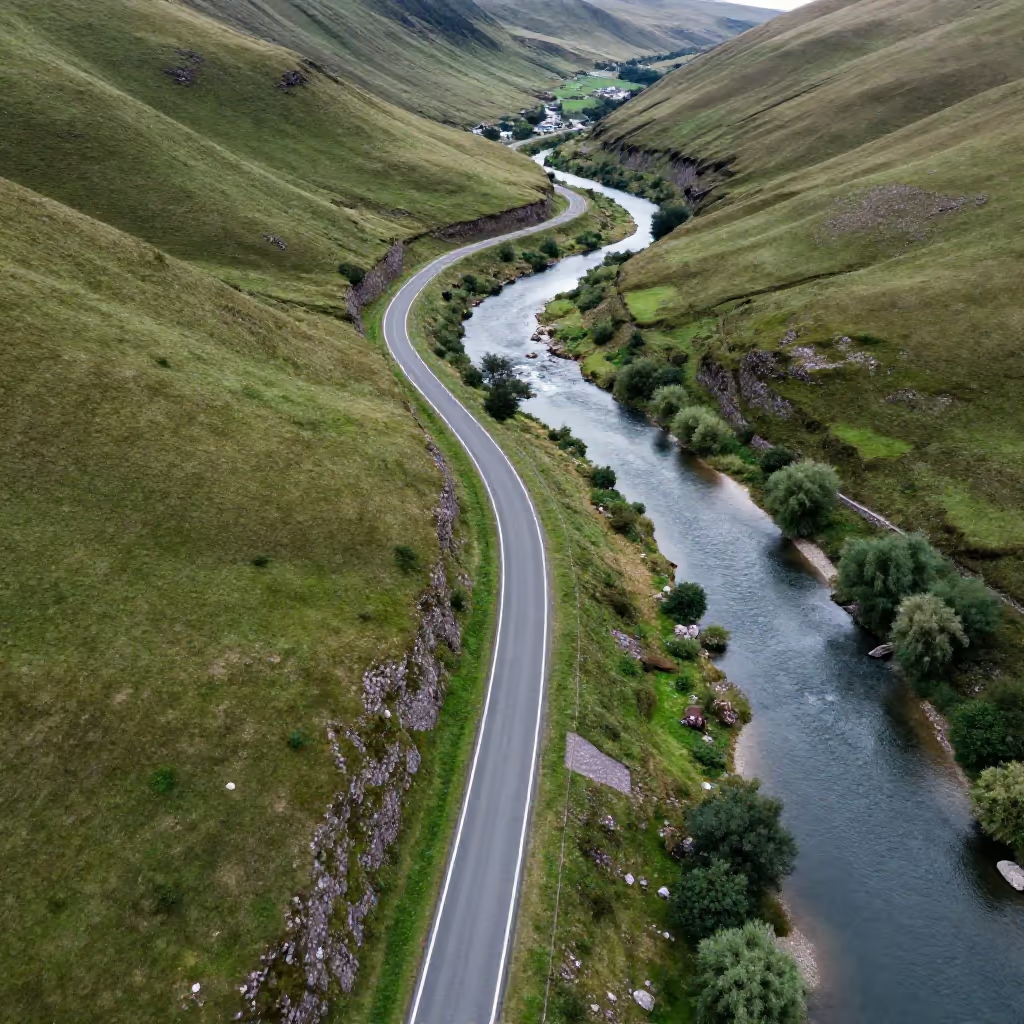
to run
Describes the physical course of a line, border, road, or path in a particular direction.
Der Wanderweg verläuft direkt am Fluss entlang.
The hiking trail runs directly along the river.
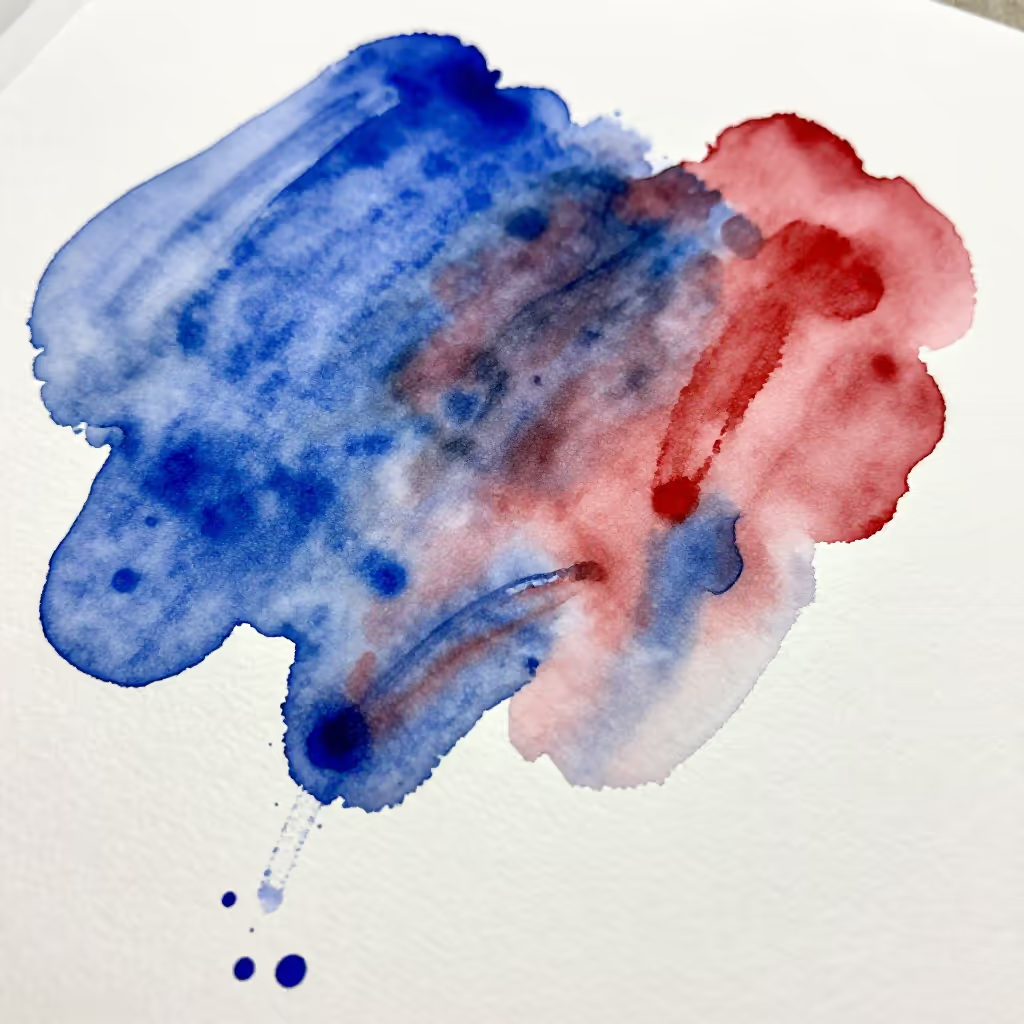
to run / blur
Refers to liquids or colors that flow into each other uncontrollably or lose their shape and blur.
Durch den Regen ist die Tinte auf dem Brief verlaufen.
Because of the rain, the ink on the letter ran.
The verb 'verlaufen' forms the perfect tense always with the auxiliary verb 'sein' (to be). This applies to all its meanings, since it always describes a process, movement, or change of state.
Die Demonstration ist friedlich verlaufen.
The demonstration proceeded peacefully.
The prefix 'ver-' is firmly attached to the verb 'laufen' (to run/walk) and is never separated. In some meanings, such as 'sich verlaufen' (to get lost), 'ver-' indicates that something is going wrong or in the wrong direction.
Ich hoffe, ich habe mich in dieser großen Stadt nicht verlaufen.
I hope I haven't gotten lost in this big city.
The meaning of 'verlaufen' can often be recognized from the subject. A person can 'sich verlaufen' (get lost). An event 'verläuft' (proceeds) in a certain way. A path or border 'verläuft' (runs) along a line. A liquid 'verläuft' (runs/blurs) when it becomes smudged.
Der Tourist hat sich in der Altstadt verlaufen.
The tourist got lost in the old town.
In the meaning 'den Weg verlieren' (to lose the way), 'verlaufen' is always used reflexively: 'sich verlaufen' (to get lost). The reflexive pronoun must be adjusted to the person who got lost.
Ich habe mich auf dem Rückweg verlaufen.
I got lost on the way back.
When it is about the course of events, 'verlaufen' is often combined with adverbs such as 'gut' (well), 'schlecht' (badly), 'erfolgreich' (successfully), or 'nach Plan' (according to plan). The subject is usually a process or an event.
Das Meeting ist genau nach Plan verlaufen.
The meeting proceeded exactly according to plan.
to lead
When referring to a road or path, both verbs can describe its direction. „Führen“ presents the route as a way to a destination, while „verlaufen“ describes its spatial course or location. Use „führen“ when the destination is important and „verlaufen“ when you are describing the route itself.

Dieser Weg verläuft durch den Wald entlang des Flusses.
This path runs through the forest along the river.
Dieser Weg führt durch den Wald direkt zum Bahnhof.
This path leads through the forest directly to the train station.