


sich verrechnen
to miscalculate
To make a mistake when calculating, so that the result is wrong.
EXAMPLE
Entschuldigung, ich habe mich verrechnet, die Summe ist 15 Euro, nicht 14.
Sorry, I miscalculated; the total is 15 euros, not 14.
to miscalculate / offset
Loading your saved state.
to miscalculate
To make a mistake when calculating, so that the result is wrong.
Entschuldigung, ich habe mich verrechnet, die Summe ist 15 Euro, nicht 14.
Sorry, I miscalculated; the total is 15 euros, not 14.

to offset
To balance one amount of money against another, so that only the difference has to be paid.
Wir können Ihre Vorauszahlung mit der Endrechnung verrechnen.
We can offset your advance payment against the final invoice.

to charge
Especially in Austria and southern Germany: to calculate or invoice a price for goods or a service.
Für die Reparatur hat der Handwerker zwei Arbeitsstunden verrechnet.
The tradesman charged two hours of work for the repair.
'Verrechnen' is an inseparable verb. The prefix 'ver-' always remains attached to the stem 'rechnen' (to calculate). It often indicates that something is done incorrectly ('sich verrechnen', to miscalculate) or that a transaction is completed.
Ich glaube, der Kassierer hat sich verrechnet.
I think the cashier miscalculated.
In the meaning 'einen Rechenfehler machen' (to make a calculation error), the verb must always be used reflexively: 'sich verrechnen' (to miscalculate). The subject of the sentence is the person who makes the mistake.
Pass auf, dass du dich bei der Addition nicht verrechnest.
Be careful not to miscalculate during the addition.
When amounts are offset against each other, the structure 'etwas (accusative) mit etwas (dative) verrechnen' is used. This is typical in financial or business contexts.
Das Pfand für die Flaschen können wir direkt mit Ihrem Einkauf verrechnen.
We can offset the deposit for the bottles directly against your purchase.
The meaning 'etwas in Rechnung stellen' (to invoice something / to charge for something) is mainly common in Austria and southern Germany. In other parts of Germany, people would more likely say 'berechnen' or 'in Rechnung stellen'.
Der Elektriker hat mir für die Anfahrt 50 Euro verrechnet.
The electrician charged me 50 euros for the trip.
to calculate / charge
Both words can be used when stating a price. In Standard German, berechnen is the general choice for this; in this sense, verrechnen means to charge a price or put it on an invoice, especially in Austria and southern Germany. Outside these regions, berechnen is usually more appropriate.
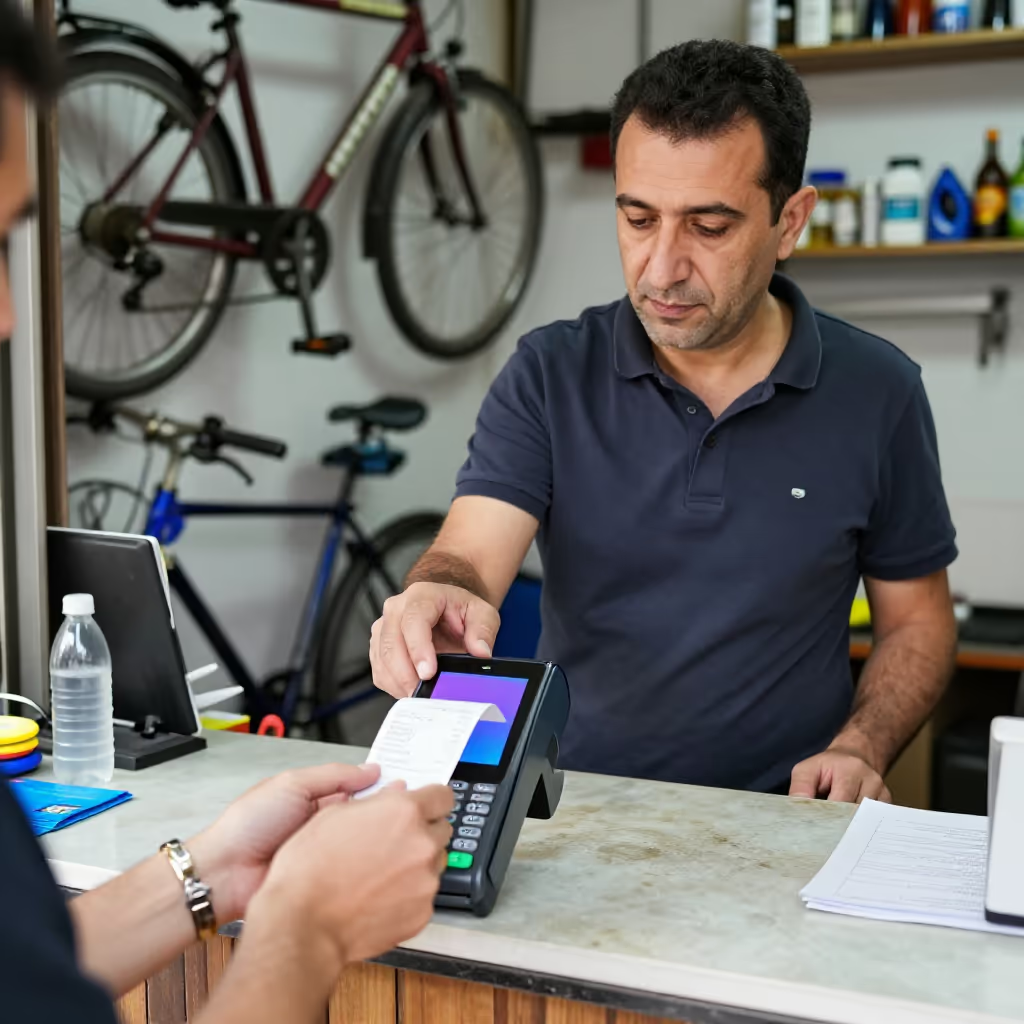
In Österreich verrechnet der Handwerker für die Reparatur 120 Euro.
In Austria, the contractor charges 120 euros for the repair.
Der Handwerker berechnet für die Reparatur 120 Euro.
The contractor charges 120 euros for the repair.