

verrotten
to rot
To gradually break down through decay or other natural decomposition processes.
EXAMPLE
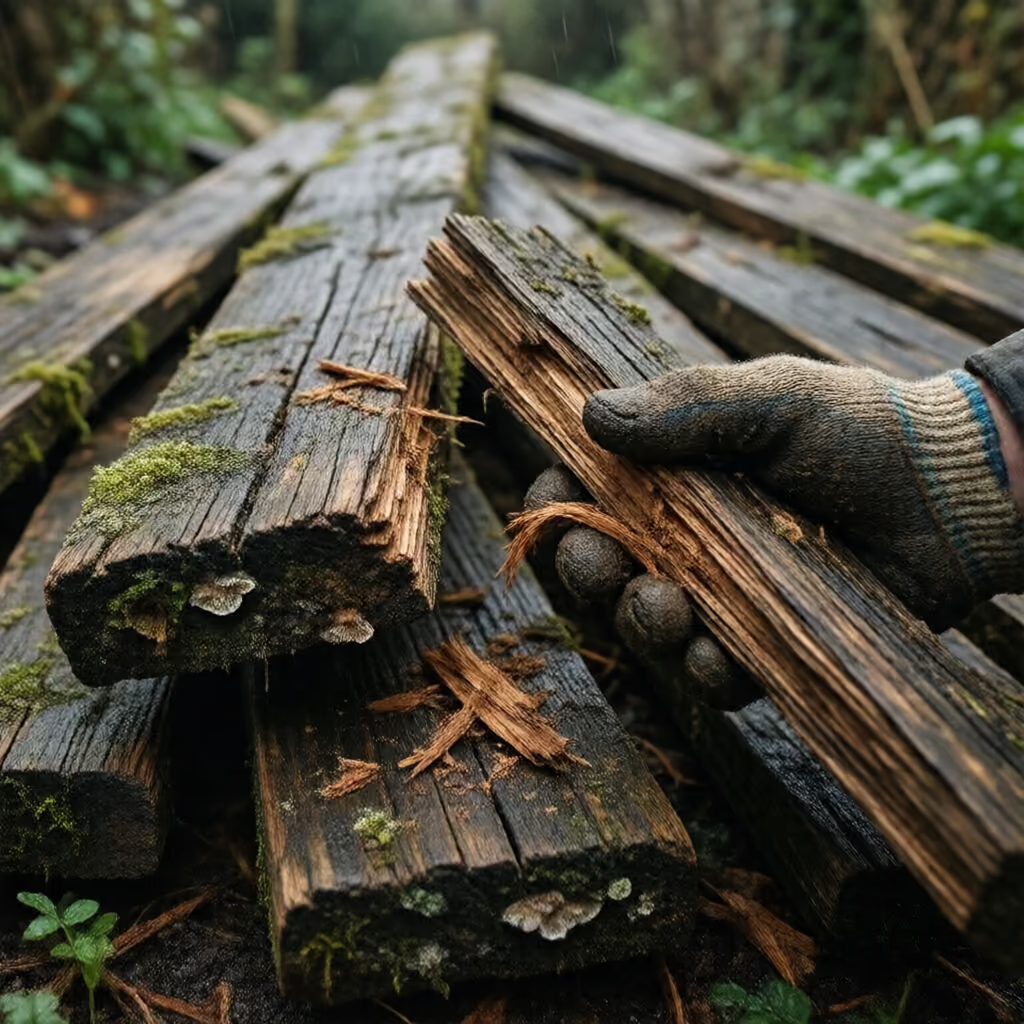
Die feuchten Bretter sind im Laufe der Jahre völlig verrottet.
The damp boards have completely rotted over the years.
to rot
verrotten – verrottete – ist verrottet
Loading your saved state.
to rot
To gradually break down through decay or other natural decomposition processes.
Die feuchten Bretter sind im Laufe der Jahre völlig verrottet.
The damp boards have completely rotted over the years.
to rot
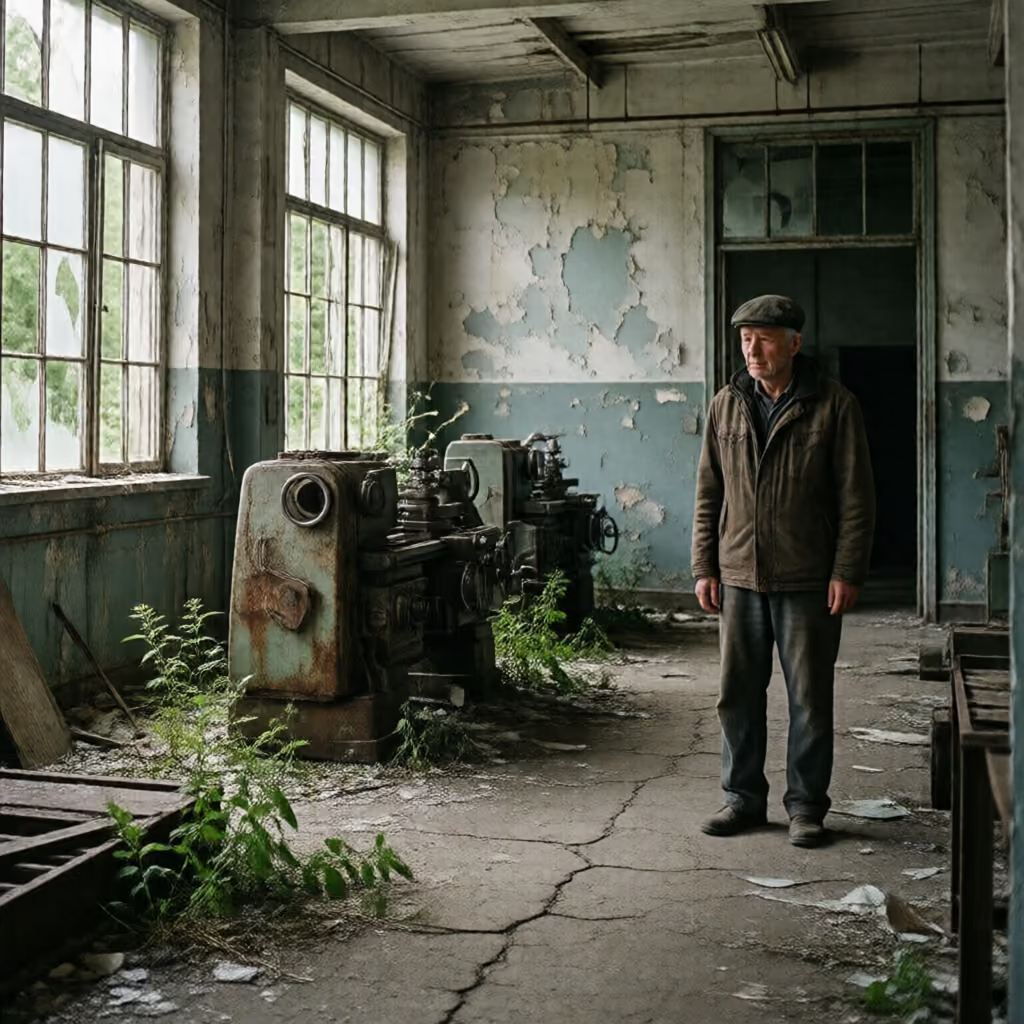
To increasingly deteriorate and become unusable due to prolonged neglect.
Seit der Stilllegung verrotten die Fabrikanlagen ungenutzt.
The factory facilities have been rotting away unused since they were shut down.

to rot
To increasingly decline in an intellectual or moral sense. This figurative use expresses strong negative judgment.
Nach Ansicht des Schriftstellers verrottet eine Gesellschaft, in der nur noch Geld und Macht zählen.
In the writer's view, a society in which only money and power matter is rotting.
| ich | verrotte |
|---|---|
| du | verrottest |
| er/sie/es | verrottet |
| wir | verrotten |
| ihr | verrottet |
| sie | verrotten |
| ich | verrottete |
|---|---|
| du | verrottetest |
| er/sie/es | verrottete |
| wir | verrotteten |
| ihr | verrottetet |
| sie | verrotteten |
| ich | bin verrottet |
|---|---|
| du | bist verrottet |
| er/sie/es | ist verrottet |
| wir | sind verrottet |
| ihr | seid verrottet |
| sie | sind verrottet |
| du | verrott! verrotte! |
|---|---|
| ihr | verrottet! |
| Sie | verrotten Sie! |
| ich | war verrottet |
|---|---|
| du | warst verrottet |
| er/sie/es | war verrottet |
| wir | waren verrottet |
| ihr | wart verrottet |
| sie | waren verrottet |
| ich | werde verrotten |
|---|---|
| du | wirst verrotten |
| er/sie/es | wird verrotten |
| wir | werden verrotten |
| ihr | werdet verrotten |
| sie | werden verrotten |
| ich | verrotte |
|---|---|
| du | verrottest |
| er/sie/es | verrotte |
| wir | verrotten |
| ihr | verrottet |
| sie | verrotten |
Used for reported speech.
| ich | verrottete |
|---|---|
| du | verrottetest |
| er/sie/es | verrottete |
| wir | verrotteten |
| ihr | verrottetet |
| sie | verrotteten |
Used for wishes and “would”.
| infinitive | verrotten |
|---|---|
| with zu | zu verrotten |
| present participle | verrottend |
| past participle | verrottet |
'Verrotten' (to rot) begins with the inseparable prefix 'ver-'. The prefix is not separated from the verb in main clauses, subordinate clauses, or the infinitive.
Das Holz verrottet schnell, wenn es ständig feucht bleibt.
The wood rots quickly if it remains constantly damp.
'Verrotten' (to rot) is normally used without an accusative object: the material itself is the subject. That is why 'sein' (to be) is usually used as the auxiliary verb in the perfect tense.
Die alten Äpfel sind im Keller vollständig verrottet.
The old apples have completely rotted in the cellar.
In the meaning of natural decay, 'verrotten' (to rot) is often used with organic materials or damp wood. Typical collocations include 'Laub verrottet' (leaves rot), 'Holz verrottet' (wood rots), and 'im Boden verrotten' (to rot in the soil).
Das Laub verrottet über den Winter und bildet Humus.
The leaves rot over the winter and form humus.
When used with facilities, buildings, or objects, 'verrotten' (to rot) often points to prolonged vacancy or a lack of maintenance. This state is frequently described with 'ungenutzt' (unused) or 'vor sich hin' (away, with no one doing anything about it).
Das alte Bahnhofsgebäude verrottet seit Jahren vor sich hin.
The old train station building has been rotting away for years.
The figurative use often refers to societies, political systems, or institutions. It is clearly judgmental and often appears in critical or polemical statements.
Der Redner behauptete, das politische System verrotte von innen.
The speaker claimed that the political system was rotting from within.