

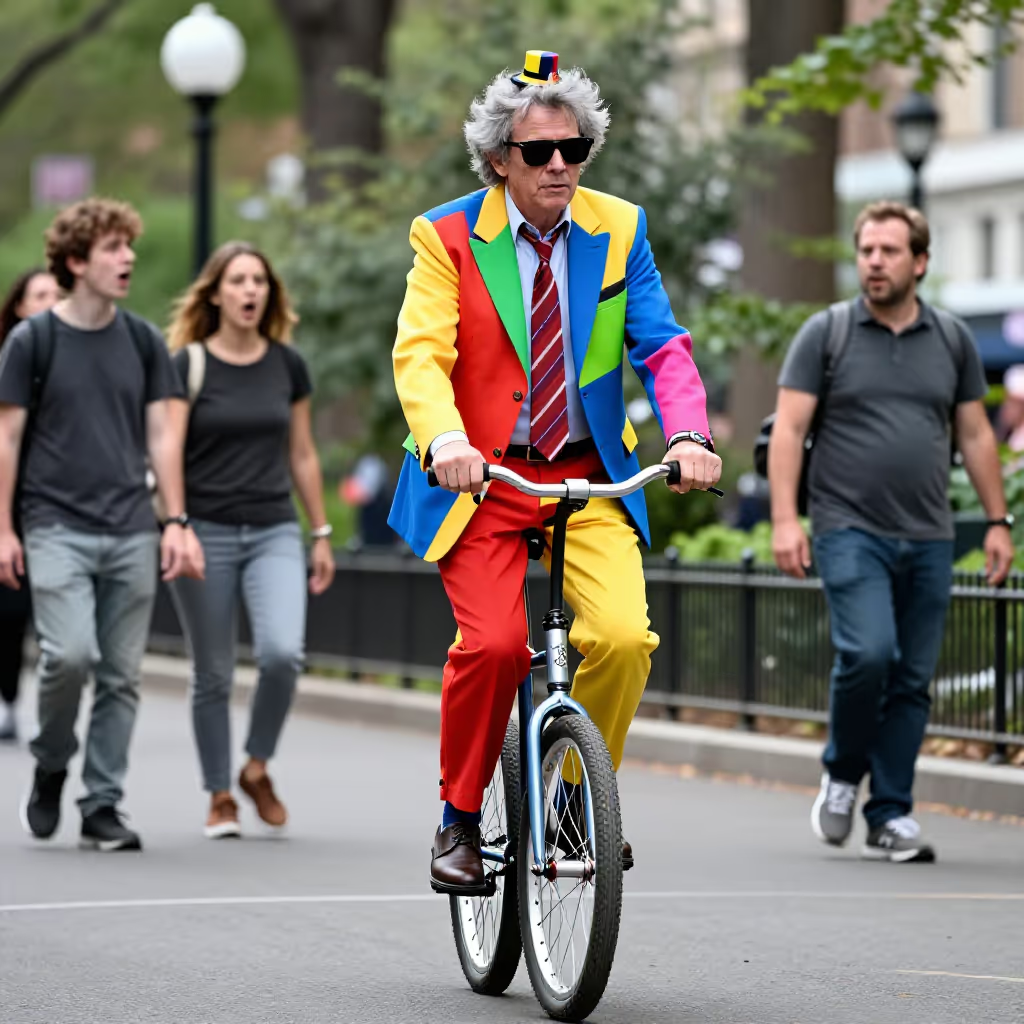
verrückt
crazy
Colloquial for unreasonable, strange, or eccentric in behavior or appearance.
EXAMPLE
Du willst bei dem Wetter schwimmen gehen? Du bist ja total verrückt!
You want to go swimming in this weather? You're totally crazy!
crazy
Loading your saved state.
crazy
Colloquial for unreasonable, strange, or eccentric in behavior or appearance.
Du willst bei dem Wetter schwimmen gehen? Du bist ja total verrückt!
You want to go swimming in this weather? You're totally crazy!

crazy about
To be very enthusiastic about someone or something; to have a strong liking for something.
Meine kleine Schwester ist total verrückt nach Pferden.
My little sister is totally crazy about horses.
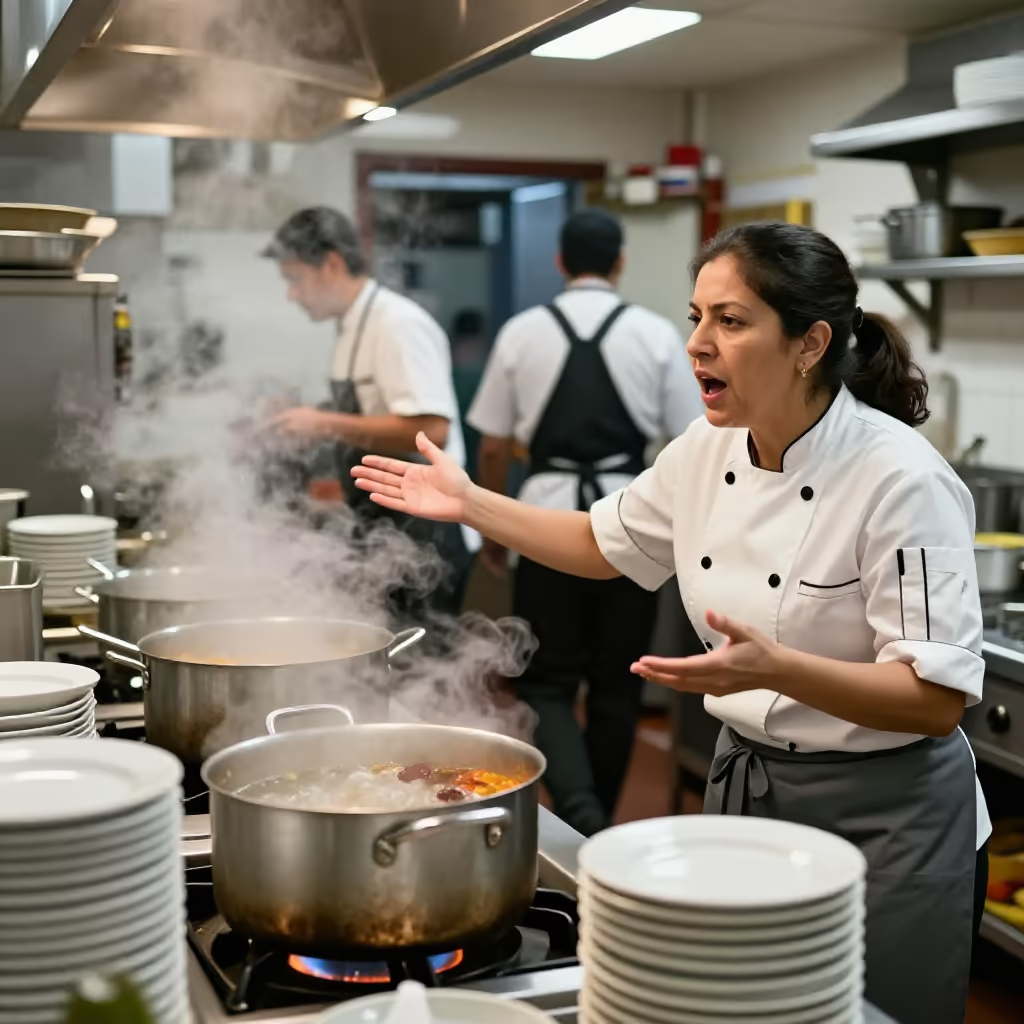
wild
Describing a situation as extreme, chaotic, or very intense.
Das war ein völlig verrücktes Spiel mit sieben Toren in der zweiten Halbzeit.
That was a completely wild game with seven goals in the second half.

mentally ill
In the literal but now less commonly used sense: mentally ill, insane.
Nach dem schweren Schicksalsschlag wurde er beinahe verrückt vor Trauer.
After the severe stroke of fate, he almost went mad with grief.
The word is derived from the verb 'verrücken' (to move something out of place), which means 'to move something from its proper place.' So 'verrückt' (crazy) metaphorically describes a state in which the mind or things are no longer in their normal place.
Kannst du bitte den Tisch ein wenig verrücken?
Could you please move the table a little?
The expression 'jemanden verrückt machen' (to drive someone crazy) is very common. It means to make someone very nervous, angry, or impatient.
Dieser Lärm macht mich noch ganz verrückt!
This noise is going to drive me completely crazy!
'Verrückt' (crazy) is often intensified with adverbs such as 'total' (totally), 'völlig' (completely), or 'komplett' (completely) to express intensity.
Die Party gestern war total verrückt.
The party yesterday was totally crazy.
When you want to express that you are very enthusiastic about something or someone, you use the fixed construction 'verrückt sein nach' (to be crazy about) followed by the dative.
Die Kinder sind ganz verrückt nach dem neuen Eis.
The children are completely crazy about the new ice cream.
The literal meaning 'geisteskrank' (mentally ill) is outdated and is considered insensitive today. In modern language, neutral terms such as 'psychisch krank' (mentally ill) are used instead.
Er leidet an einer psychischen Krankheit und ist in Behandlung.
He suffers from a mental illness and is receiving treatment.
sick
krank and verrückt can colloquially be used to judge a shocking or unreasonable action. Verrückt emphasizes the irrational or daring aspect, while krank usually sounds stronger and can suggest something morally repulsive or disturbed. Use verrückt for risky ideas and krank for a particularly extreme judgment.

Seine Idee, allein durch den Sturm zu wandern, ist verrückt.
His idea of walking through the storm alone is crazy.
Dass er trotz der Warnung allein durch den Sturm wandert, ist krank.
It’s sick that he walks through the storm alone despite the warning.