

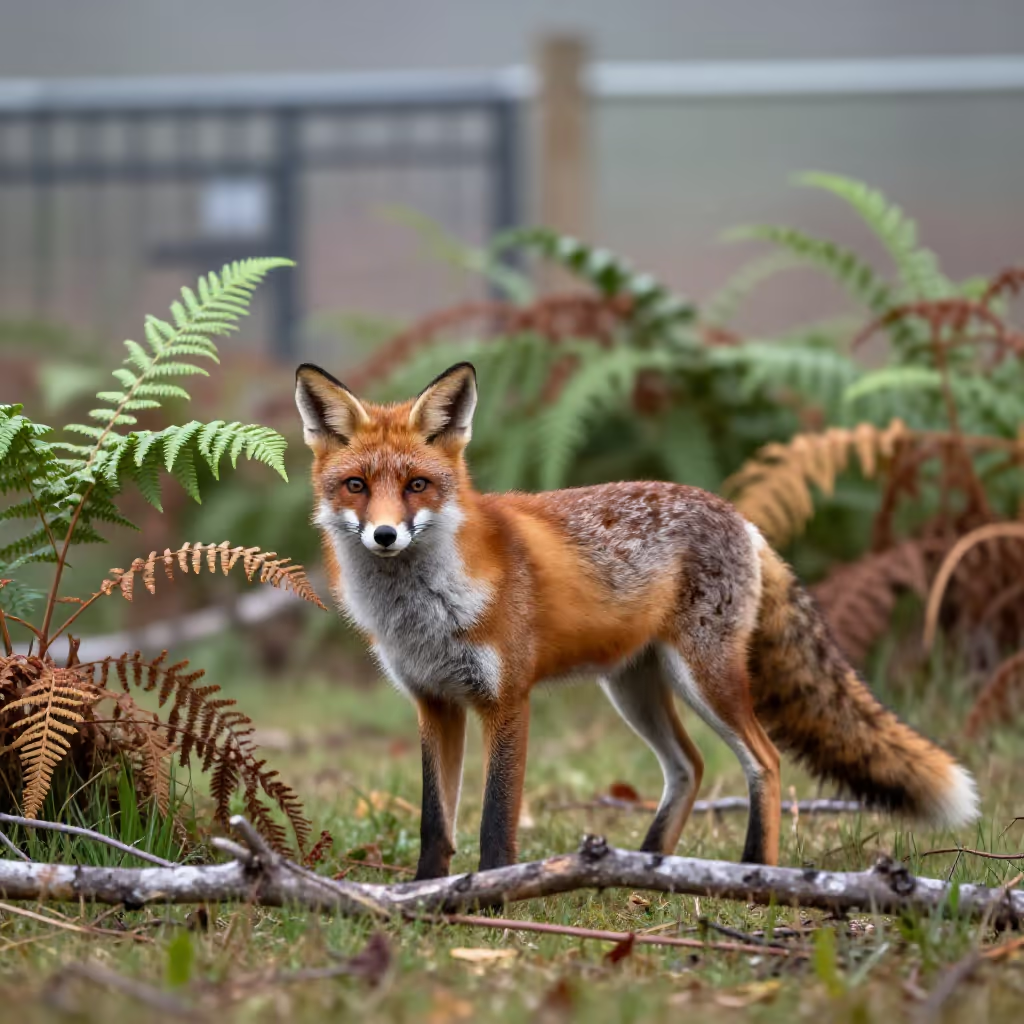
wild
Living or growing in nature and not tamed or cultivated by humans.
EXAMPLE
Im Nationalpark kann man viele wilde Tiere beobachten.
In the national park, you can observe many wild animals.
Loading your saved state.
Living or growing in nature and not tamed or cultivated by humans.
Im Nationalpark kann man viele wilde Tiere beobachten.
In the national park, you can observe many wild animals.

Uncontrolled, chaotic, stormy, or very loud.
Nach dem Tor war der Jubel im Stadion einfach nur wild.
After the goal, the cheering in the stadium was just wild.

Colloquial for great, crazy, or impressive.
Die Party gestern war echt wild, wir hatten so viel Spaß!
The party yesterday was really wild; we had so much fun!
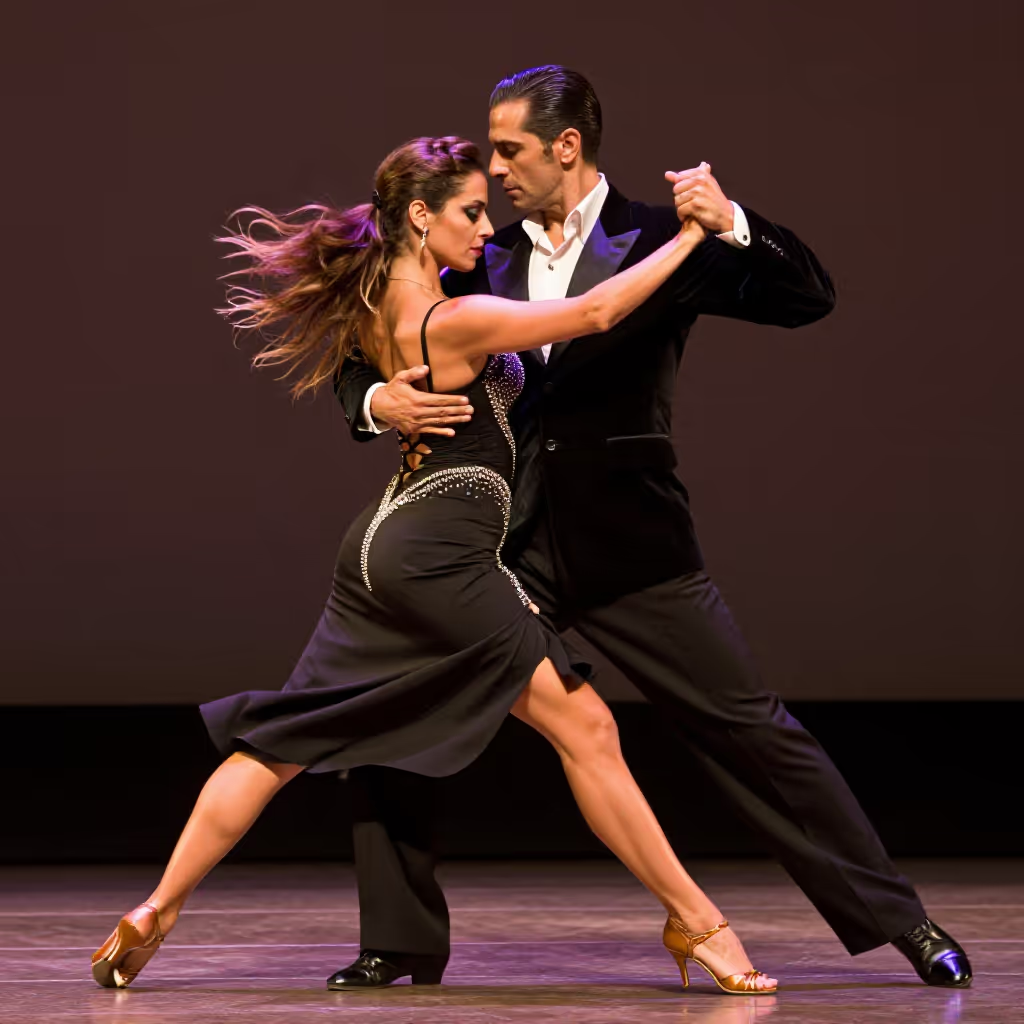
Very intense, passionate, or uninhibited.
Sie küssten sich wild und vergaßen alles um sich herum.
They kissed wildly and forgot everything around them.

complete stranger
Completely unfamiliar or unknown. Used almost exclusively in the intensifier 'wildfremd' (completely unknown).
Ich kann doch keinem wildfremden Menschen einfach so mein Auto leihen.
I can't just lend my car to a complete stranger like that.
'Wild' can also be used as an adverb to describe an action. It then means 'uncontrolled', 'chaotic', or 'very intense'.
Die Kinder rannten wild im Garten umher.
The children ran around wildly in the garden.
In the meaning of 'not tamed', 'wild' is almost always used in relation to nature. Typical combinations are 'wilde Tiere' (wild animals), 'wilde Pflanzen' (wild plants), or 'wild wachsen' (to grow wild).
In diesem Wald wachsen viele wilde Kräuter.
Many wild herbs grow in this forest.
The meaning 'chaotic' or 'uncontrolled' is transferred from nature. It is often used to describe hair, parties, discussions, or even the weather.
Nach dem Sturm sah der Garten ziemlich wild aus.
After the storm, the garden looked pretty wild.
The meaning 'great' or 'crazy' is colloquial and is used especially by younger people. You would not use it in formal situations.
Das Konzert gestern war total wild!
The concert yesterday was totally wild!
The meaning 'completely unfamiliar' occurs almost only in the compound adjective 'wildfremd' (completely unknown / a complete stranger). Here, 'wild' intensifies the word 'fremd' (strange, unfamiliar).
Er hat sein Geheimnis einer wildfremden Person im Zug erzählt.
He told his secret to a complete stranger on the train.
crazy
In colloquial language, both words can describe an unusual and intense situation. “Wild” can simply express enthusiasm or admiration, while “verrückt” places more emphasis on something strange or extreme. If something is mainly impressive, “wild” is appropriate; if it seems hardly sensible or unbelievable, “verrückt” is more appropriate.

Das Konzert gestern war wild, die ganze Halle hat getanzt.
The concert yesterday was wild; the whole venue was dancing.
Das Konzert gestern war verrückt, plötzlich spielte die Band auf dem Dach.
The concert yesterday was crazy; suddenly the band started playing on the roof.