


versunken in
absorbed in
Completely absorbed in thoughts, feelings, or an activity and therefore barely paying attention to one’s surroundings.
EXAMPLE
Sie saß versunken in ein Buch am Fenster.
She sat by the window, absorbed in a book.
absorbed / sunken / bygone
Loading your saved state.
absorbed in
Completely absorbed in thoughts, feelings, or an activity and therefore barely paying attention to one’s surroundings.
Sie saß versunken in ein Buch am Fenster.
She sat by the window, absorbed in a book.
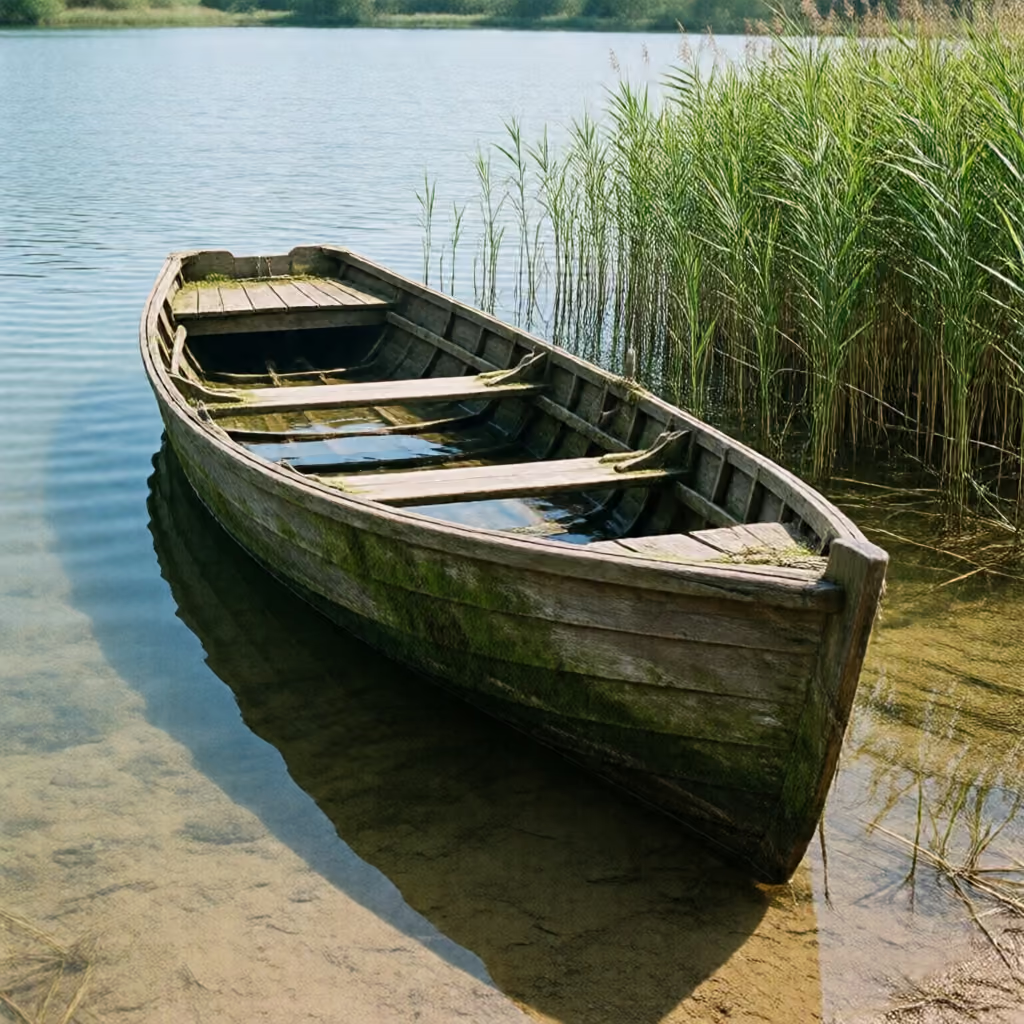
sunken
Having gone under or sunk so deeply into water, earth, or another material that it lies completely or partly within it.
Die versunkene Stadt wurde nach Jahrhunderten wiederentdeckt.
The sunken city was rediscovered after centuries.

bygone
Past and no longer existing, or known only through memory.
Er erzählte von einer versunkenen Welt seiner Kindheit.
He talked about a bygone world from his childhood.
| basic form | versunken |
|---|
| masc. | fem. | neut. | plural | |
|---|---|---|---|---|
| nom. | -e | -e | -e | -en |
| acc. | -en | -e | -e | -en |
| dat. | -en | -en | -en | -en |
| gen. | -en | -en | -en | -en |
Add the ending to versunken.
| masc. | fem. | neut. | plural | |
|---|---|---|---|---|
| nom. | -er | -e | -es | -en |
| acc. | -en | -e | -es | -en |
| dat. | -en | -en | -en | -en |
| gen. | -en | -en | -en | -en |
Add the ending to versunken.
| masc. | fem. | neut. | plural | |
|---|---|---|---|---|
| nom. | -er | -e | -es | -e |
| acc. | -en | -e | -es | -e |
| dat. | -em | -er | -em | -en |
| gen. | -en | -er | -en | -er |
Add the ending to versunken.
'Versunken' (absorbed / sunken) is the participle of the verb 'versinken' (to sink) and is also used as an adjective. This connection helps with understanding: the word often describes an achieved state, including in a figurative sense.
Vom versunkenen Schiff waren nur noch die Masten zu sehen.
Only the masts of the sunken ship were still visible.
When you name the activity or thing that completely occupies someone, 'in' is often used with the accusative. In the fixed expression 'in Gedanken versunken' (lost in thought), however, it is used with the dative.
Er war so in seine Arbeit versunken, dass er das Telefon nicht hörte.
He was so absorbed in his work that he did not hear the phone.
In Gedanken versunken ging sie an ihrer Haustür vorbei.
Lost in thought, she walked past her front door.
Common collocations include 'versunkene Schiffe' (sunken ships), 'versunkene Schätze' (sunken treasures), and 'versunkene Städte' (sunken cities). You will encounter them especially in reports about dives and the search for remains from the past.
Die Taucher suchten vor der Küste nach versunkenen Schätzen.
The divers searched for sunken treasures off the coast.
When referring to memories and past eras, 'versunken' (bygone) has a vivid and often literary quality. Typical collocations include 'eine versunkene Welt' (a bygone world) and 'eine versunkene Epoche' (a bygone era).
Die alten Briefe lassen eine versunkene Epoche wieder lebendig werden.
The old letters bring a bygone era back to life.