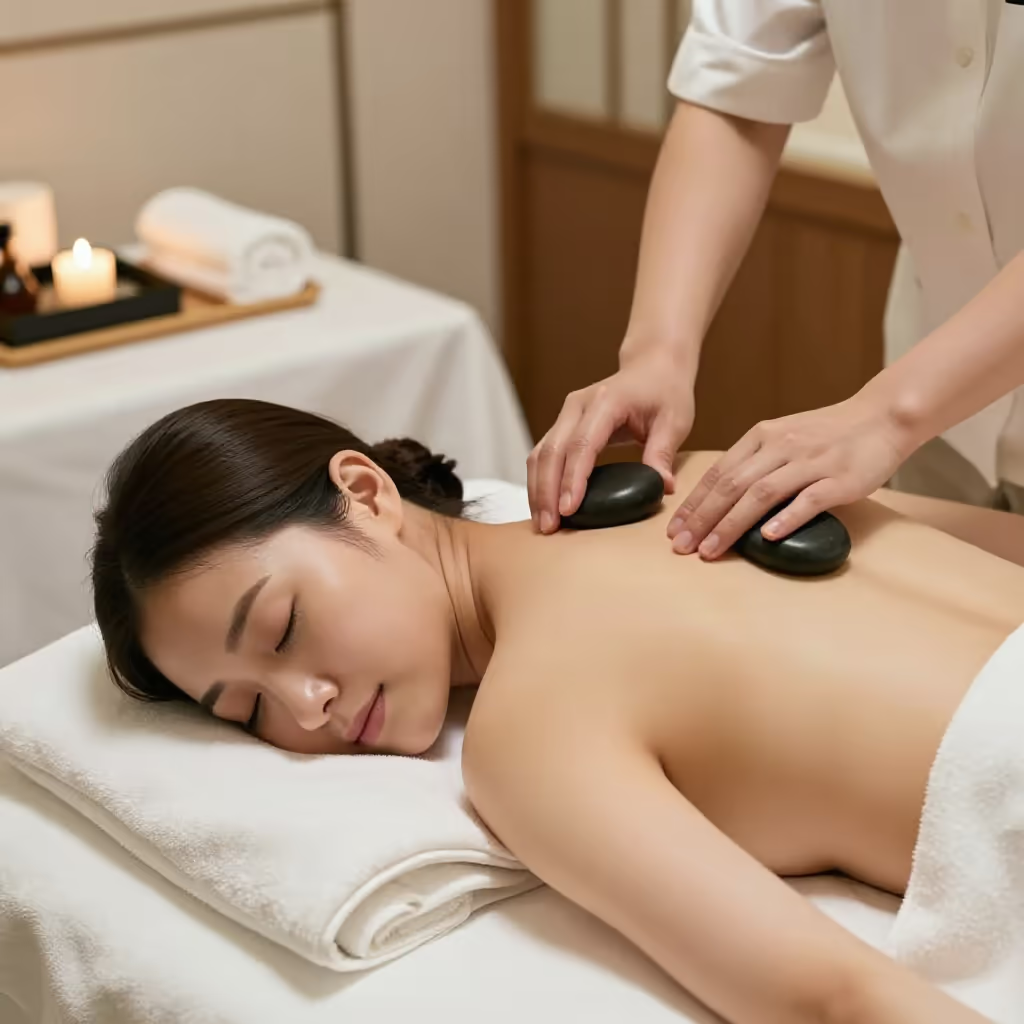
To consciously give someone or yourself something especially good and pleasant in order to bring joy or help them relax.
example
Im Wellness-Hotel kann man sich mit Massagen und gutem Essen richtig verwöhnen lassen.
At the wellness hotel, you can really let yourself be pampered with massages and good food.

Usage tips
Inseparable verb
'Verwöhnen' (to pamper/spoil) is an inseparable verb. The prefix 'ver-' remains firmly attached to the verb stem in all tenses and sentence constructions.
EXAMPLE
Sie verwöhnt ihre Katze mit dem besten Futter.
She spoils her cat with the best food.
Reflexive use
The verb is very often used reflexively as 'sich verwöhnen' (to pamper oneself) or in the construction 'sich verwöhnen lassen' (to let oneself be pampered). It then means doing something good for yourself or enjoying being taken care of by others.
EXAMPLE
Heute Abend koche ich nicht, ich lasse mich mal verwöhnen.
I'm not cooking tonight; for once, I'm going to let myself be pampered.
Context clue
Whether 'verwöhnen' (to pamper/spoil) is meant positively (to take care of) or negatively (to spoil) depends on the context. Excessive, long-term indulgence, especially with children, is often understood negatively.
EXAMPLE
Er ist ein Einzelkind und wurde von seinen Eltern ziemlich verwöhnt.
He is an only child and was pretty spoiled by his parents.
Figurative use
In the figurative meaning, the construction 'von etwas verwöhnt sein' (to be spoiled by something) is often used. This expresses that someone is used to a high standard because of constant success or luxury.
EXAMPLE
Die Fans waren von den vielen Siegen der letzten Jahre verwöhnt.
The fans had been spoiled by the many victories of recent years.
Compare with
confusable
verwöhnen vs gewöhnen
to get used to
'gewöhnen' and 'verwöhnen' sound very similar, but they mean different things. 'gewöhnen' means that someone adapts to a situation, person, or thing. Over time, something becomes normal. 'verwöhnen' means giving someone something especially pleasant, for example good food, rest, or lots of attention. It can be meant positively, but also negatively if someone becomes too demanding because of it. There is a risk of confusion especially because of the similar form. Remember: 'sich an etwas gewöhnen' (to get used to something) has to do with adaptation, while 'jemanden verwöhnen' (to pamper/spoil someone) has to do with special care or enjoyment.
verwöhnen
Im Restaurant verwöhne ich meine Familie heute mit einem guten Essen.
At the restaurant, I am treating my family to a good meal today.
gewöhnen
Der Mitarbeiter gewöhnt sich langsam an die neue Arbeitszeit.
The employee is slowly getting used to the new working hours.