


verwüsten
to devastate
To completely destroy a place through violence or disorder, or to put it into a state of chaos.
EXAMPLE
Die Einbrecher haben die gesamte Wohnung verwüstet.
The burglars devastated the entire apartment.
to devastate
Loading your saved state.
to devastate
To completely destroy a place through violence or disorder, or to put it into a state of chaos.
Die Einbrecher haben die gesamte Wohnung verwüstet.
The burglars devastated the entire apartment.
The verb is derived from the adjective 'wüst' (desolate or chaotic). The prefix 'ver-' intensifies this and turns it into an action: to put something into a devastated state.
Nach dem Sturm war der ganze Garten verwüstet.
After the storm, the whole garden was devastated.
'Verwüsten' (to devastate) is an inseparable verb. The prefix 'ver-' always stays at the beginning of the verb, including in the past participle ('verwüstet') and in subordinate clauses.
Die Vandalen haben den Park verwüstet.
The vandals devastated the park.
The verb 'verwüsten' (to devastate) is typically used with places as accusative objects. Common examples are: to devastate an apartment, a room, a city, a country, or a landscape.
Die Wildschweine haben in einer Nacht den ganzen Acker verwüstet.
The wild boars devastated the entire field in one night.
This verb is very often used in the passive to describe the state of a place after destruction. The focus is then on the result, not on the perpetrator.
Das Hotelzimmer wurde komplett verwüstet.
The hotel room was completely devastated.
to destroy
Both words are suitable when a place is severely damaged by violence. Zerstören refers to destruction in general, while verwüsten additionally emphasizes the place's extensive, chaotic condition. Use verwüsten when not just individual things are damaged, but the entire place is severely and disorderly damaged.
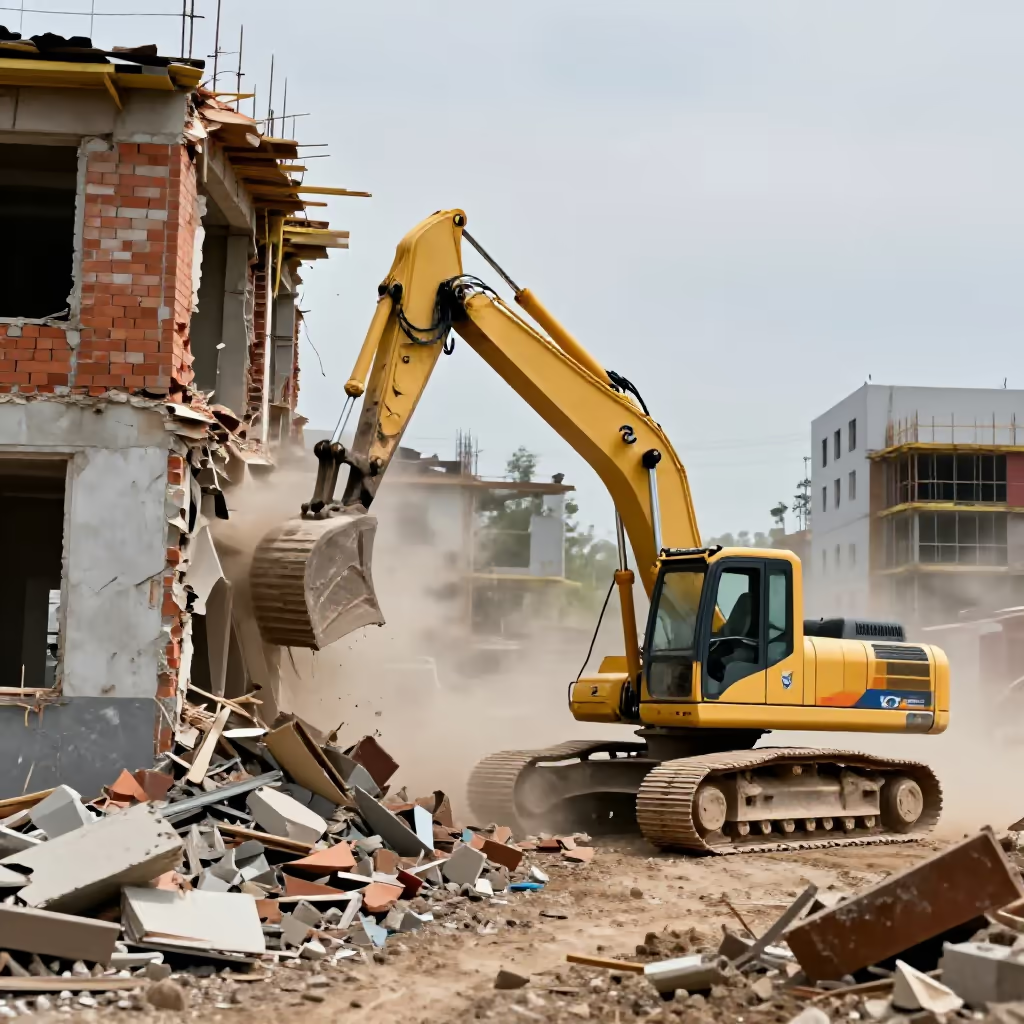
Der Sturm verwüstete den ganzen Stadtteil am Stadtrand.
The storm devastated the entire neighborhood on the outskirts of the city.
Der Sturm zerstörte mehrere Häuser am Stadtrand.
The storm destroyed several houses on the outskirts of the city.