


vorbeikommen
to drop by
To visit someone for a short, usually informal time.
EXAMPLE
Komm doch heute Abend einfach mal auf einen Kaffee vorbei.
Why don't you just drop by for a coffee this evening?
to drop by / pass by
Loading your saved state.
to drop by
To visit someone for a short, usually informal time.
Komm doch heute Abend einfach mal auf einen Kaffee vorbei.
Why don't you just drop by for a coffee this evening?
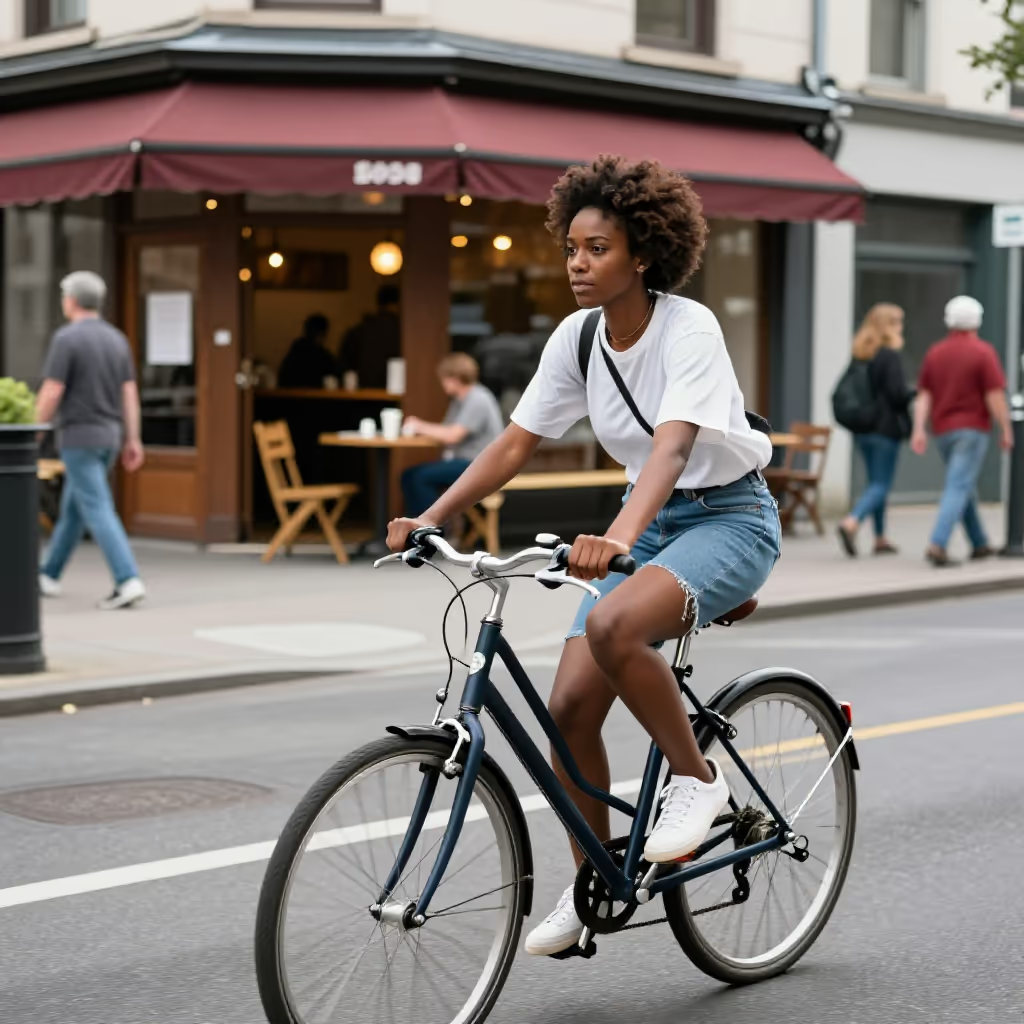
to pass by
To pass a place, person, or thing on one's way without stopping.
Ich bin heute Morgen an deiner alten Wohnung vorbeigekommen.
I passed by your old apartment this morning.

cannot get around
Figurative for an unavoidable confrontation or necessity; not being able to avoid something.
Wer in dieser Branche erfolgreich sein will, kommt an digitalem Marketing nicht vorbei.
Anyone who wants to be successful in this industry cannot get around digital marketing.
'Vorbeikommen' (to drop by / pass by) is a separable verb. The prefix 'vorbei-' stands at the end in a main clause. In subordinate clauses and in the infinitive with 'zu', the verb stays together.
Meine Tante kommt morgen kurz vorbei.
My aunt is dropping by briefly tomorrow.
Since 'kommen' (to come) is a verb of movement, the perfect tense of 'vorbeikommen' is always formed with the auxiliary verb 'sein' (to be).
Bist du gestern bei Thomas vorbeigekommen?
Did you drop by Thomas's place yesterday?
The preposition indicates the meaning. 'Bei' + person means a short visit. 'An' + place means that you pass something on your way.
Ich komme später bei dir vorbei, um das Buch abzuholen.
I'll drop by your place later to pick up the book.
For a short, informal visit, the verb is often combined with a purpose, for example 'auf einen Kaffee vorbeikommen' (to drop by for a coffee) or 'auf einen Sprung vorbeikommen' (to drop by briefly).
Hast du Lust, heute Abend auf einen Sprung vorbeizukommen?
Would you like to drop by briefly this evening?
In the figurative meaning, the expression is almost always negated: 'an etwas nicht vorbeikommen' (not to be able to get around something). It expresses that something is unavoidable or necessary.
Um die Prüfung zu bestehen, kommt man am Lernen nicht vorbei.
To pass the exam, you cannot get around studying.
to happen / pass
Passieren and an etwas vorbeikommen can both express going past a place or building on the way somewhere. Passieren takes a direct accusative object, while vorbeikommen requires the preposition an and often emphasizes the route past that place. Both forms are possible in everyday language.
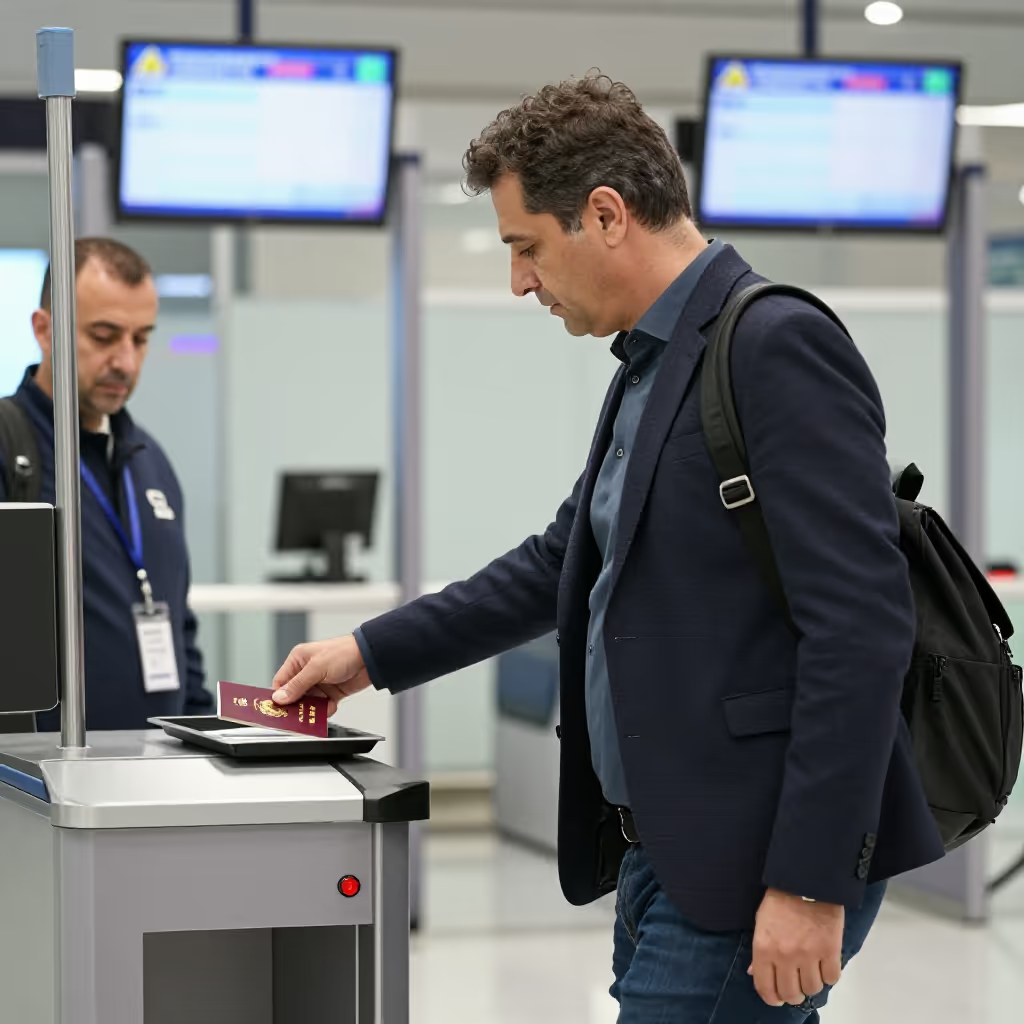
Auf dem Weg zum Bahnhof kam ich am alten Rathaus vorbei.
On my way to the train station, I went past the old town hall.
Auf dem Weg zum Bahnhof passierte ich das alte Rathaus.
On my way to the train station, I passed the old town hall.