

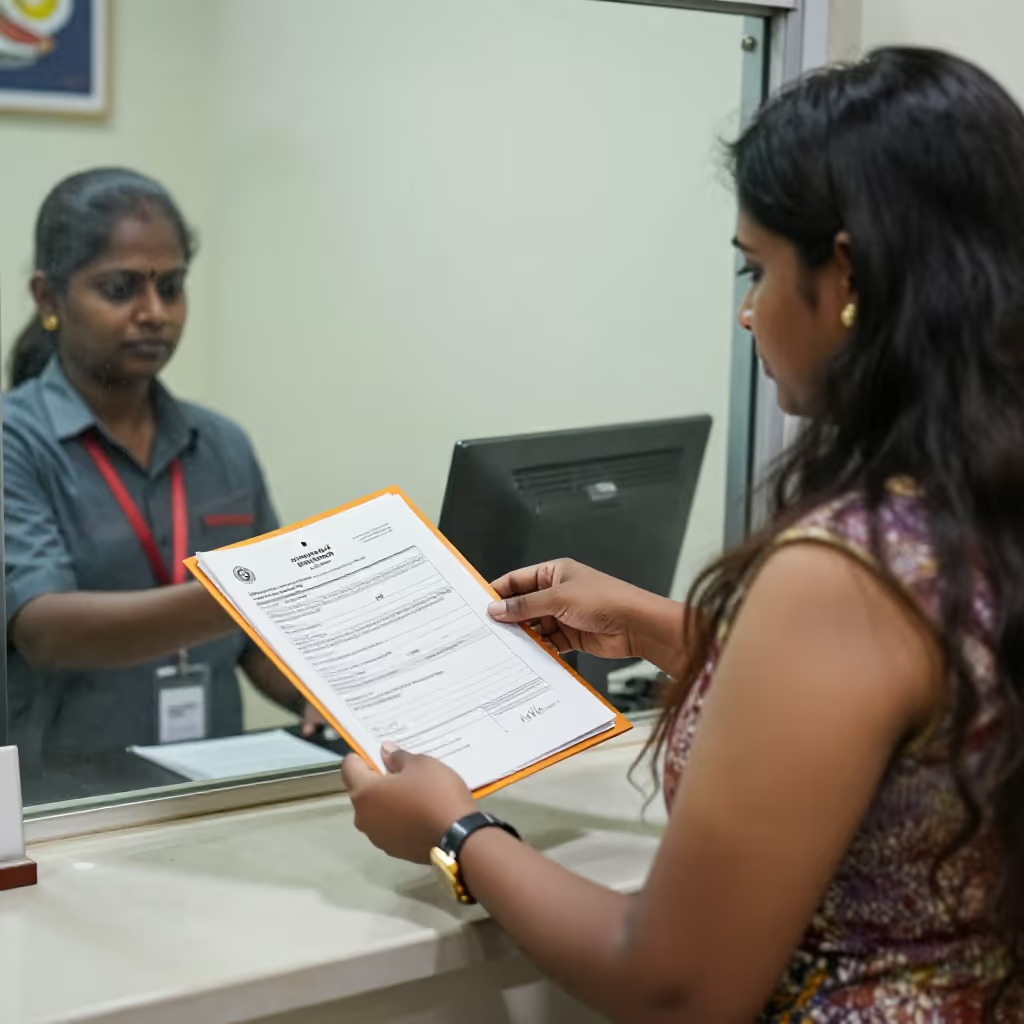
vorlegen
to present
To present or submit something for examination, inspection, or approval.
EXAMPLE
Könnten Sie bitte Ihren Pass und das Visum vorlegen?
Could you please present your passport and visa?
to present / advance
Loading your saved state.
to present
To present or submit something for examination, inspection, or approval.
Könnten Sie bitte Ihren Pass und das Visum vorlegen?
Could you please present your passport and visa?

to set up
In sports, especially in soccer, to play a pass that gives a teammate a direct chance to score.
Der Mittelfeldspieler konnte seinem Stürmer den Ball perfekt zum 1:0 vorlegen.
The midfielder was able to set up his striker perfectly for the 1-0 goal.

to advance money
To spend money for someone else with the expectation of getting it back.
Kannst du das Geld für die Kinokarten vorlegen? Ich bezahle dich morgen.
Can you advance the money for the movie tickets? I'll pay you back tomorrow.

to serve
When eating, to distribute food from a large platter or bowl onto the plates of those present.
Darf ich Ihnen noch etwas von dem Salat vorlegen?
May I serve you some more of the salad?

to set a mark
In a competition or contest, to achieve a strong performance or fast result that puts pressure on the competitors.
Der Favorit hat im ersten Lauf eine beeindruckende Zeit vorgelegt.
The favorite set an impressive time in the first run.
'Vorlegen' (to present/advance) is a separable verb. The prefix 'vor-' carries the literal meaning 'forward' or 'in front of someone'. This basic idea appears in most of its meanings.
Beim Betreten des Gebäudes müssen Sie Ihren Ausweis vorlegen.
When entering the building, you must present your ID.
As a separable verb, the prefix 'vor-' stands at the end in a main clause. In subordinate clauses and in the infinitive with 'zu', the verb stays together.
Er legt die Dokumente vor.
He presents the documents.
'Vorlegen' (to present/advance) is very often used with a dative object and an accusative object. The person to whom something is presented is in the dative, and the thing that is presented is in the accusative.
Die Studentin legte dem Professor ihre Arbeit vor.
The student presented her paper to the professor.
The many meanings of 'vorlegen' (to present/advance) are best recognized from the object and the context. Whether it is about documents, money, food, or a ball determines the exact meaning.
Der Stürmer hat das entscheidende Tor genial vorgelegt.
The striker brilliantly set up the decisive goal.
In official or business contexts, 'vorlegen' (to present) is often combined with documents. Typical phrases are: 'einen Ausweis vorlegen' (to present an ID), 'einen Vertrag vorlegen' (to present a contract), or 'Beweise vorlegen' (to present evidence).
Für den Antrag müssen Sie eine Geburtsurkunde vorlegen.
For the application, you must present a birth certificate.
to present
Both words can be used for a report presented to a decision-making body. Präsentieren emphasizes presenting the information clearly to an audience, while vorlegen highlights handing something over for examination, review, or approval. Use „präsentieren“ for the presentation and „vorlegen“ for the formal review of the document.

Die Projektleiterin legt dem Ausschuss den Bericht zur Genehmigung vor.
The project manager submits the report to the committee for approval.
Die Projektleiterin präsentiert dem Ausschuss die Ergebnisse und beantwortet Fragen.
The project manager presents the results to the committee and answers questions.