


sich etwas vornehmen
to plan to do
To make a firm plan or form the intention to do something specific.
EXAMPLE
Für das neue Jahr habe ich mir vorgenommen, mehr Sport zu treiben.
For the new year, I've planned to do more sports.
to plan / carry out
Loading your saved state.
to plan to do
To make a firm plan or form the intention to do something specific.
Für das neue Jahr habe ich mir vorgenommen, mehr Sport zu treiben.
For the new year, I've planned to do more sports.

to carry out
To perform or carry out an action, often an official, formal, or complex one.
Der Techniker wird morgen eine Wartung an der Anlage vornehmen.
The technician will carry out maintenance on the system tomorrow.

to take someone aside
Colloquial for confronting, criticizing, or punishing someone.
Wenn der Junge nach Hause kommt, nehme ich ihn mir mal richtig vor!
When the boy gets home, I'm going to really take him aside!
'Vornehmen' (to plan / carry out) is a separable verb. The prefix 'vor' comes at the end in a main clause. In subordinate clauses and in the infinitive with 'zu', the verb stays together.
Ich nehme mir für morgen nicht zu viel vor.
I'm not planning too much for tomorrow.
When making a plan, the construction is reflexive: 'sich (Dativ) etwas vornehmen' (to plan something for oneself). It is often followed by an infinitive clause with 'zu'.
Ich habe mir vorgenommen, jeden Tag Deutsch zu lernen.
I've planned to study German every day.
In this meaning, 'vornehmen' (to carry out) is rather formal and is often used in official or technical contexts. Typical objects are abstract nouns like 'Änderungen' (changes), 'Anpassungen' (adjustments), or 'eine Messung' (a measurement).
Der Gutachter wird eine genaue Prüfung des Gebäudes vornehmen.
The assessor will carry out a precise inspection of the building.
to do / make
Both verbs can describe carrying out an examination or measurement. „Machen“ is neutral and general, while „vornehmen“ is commonly used for an often formal or complex procedure. „Machen“ fits a casual statement; „vornehmen“ is more appropriate in a factual description of such an action.
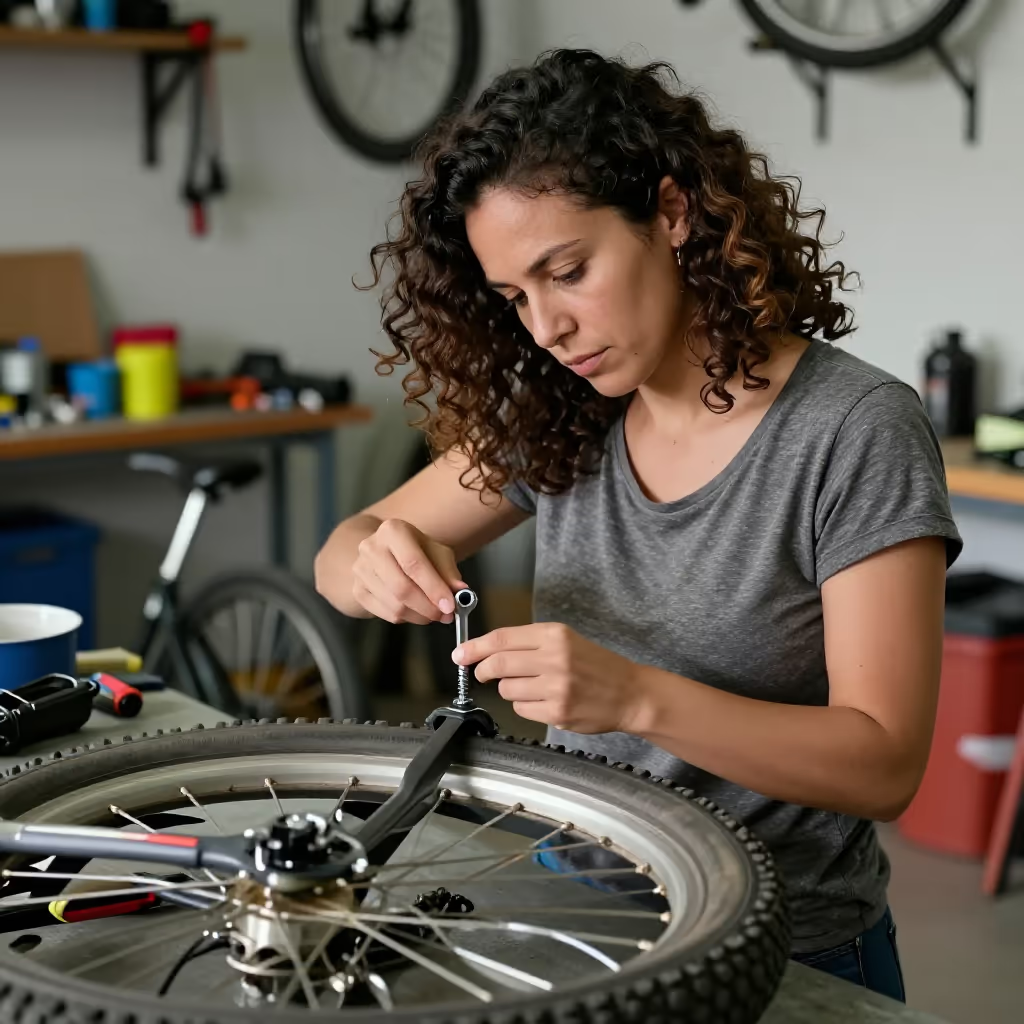
Für die Untersuchung nimmt die Ärztin noch eine Messung vor.
The doctor is carrying out another measurement for the examination.
Für die Untersuchung macht die Ärztin noch eine Messung.
The doctor is taking another measurement for the examination.