

machen
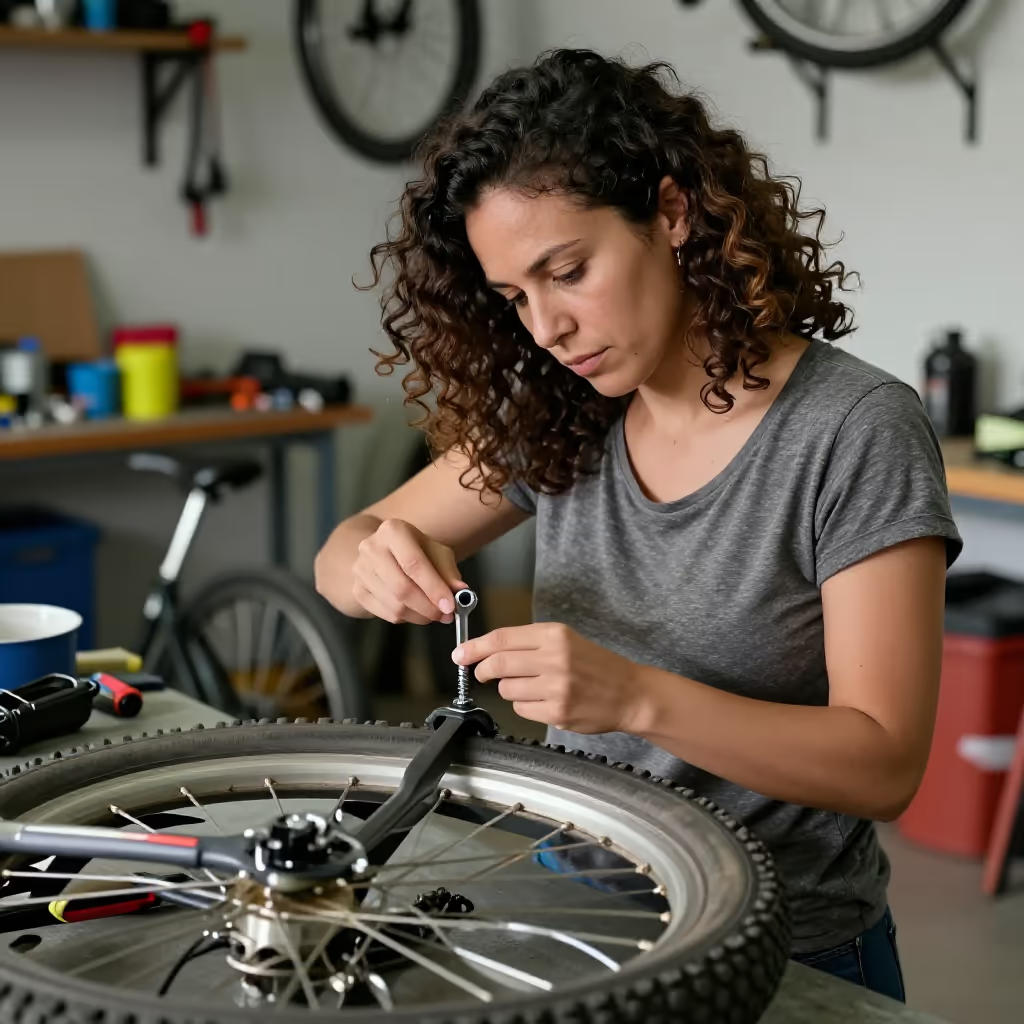
to do
To carry out an activity or perform an action. It is a very general verb for many kinds of activities.
EXAMPLE
Was machst du am Wochenende?
What are you doing on the weekend?
to do / make
Loading your saved state.
to do
To carry out an activity or perform an action. It is a very general verb for many kinds of activities.
Was machst du am Wochenende?
What are you doing on the weekend?
to make
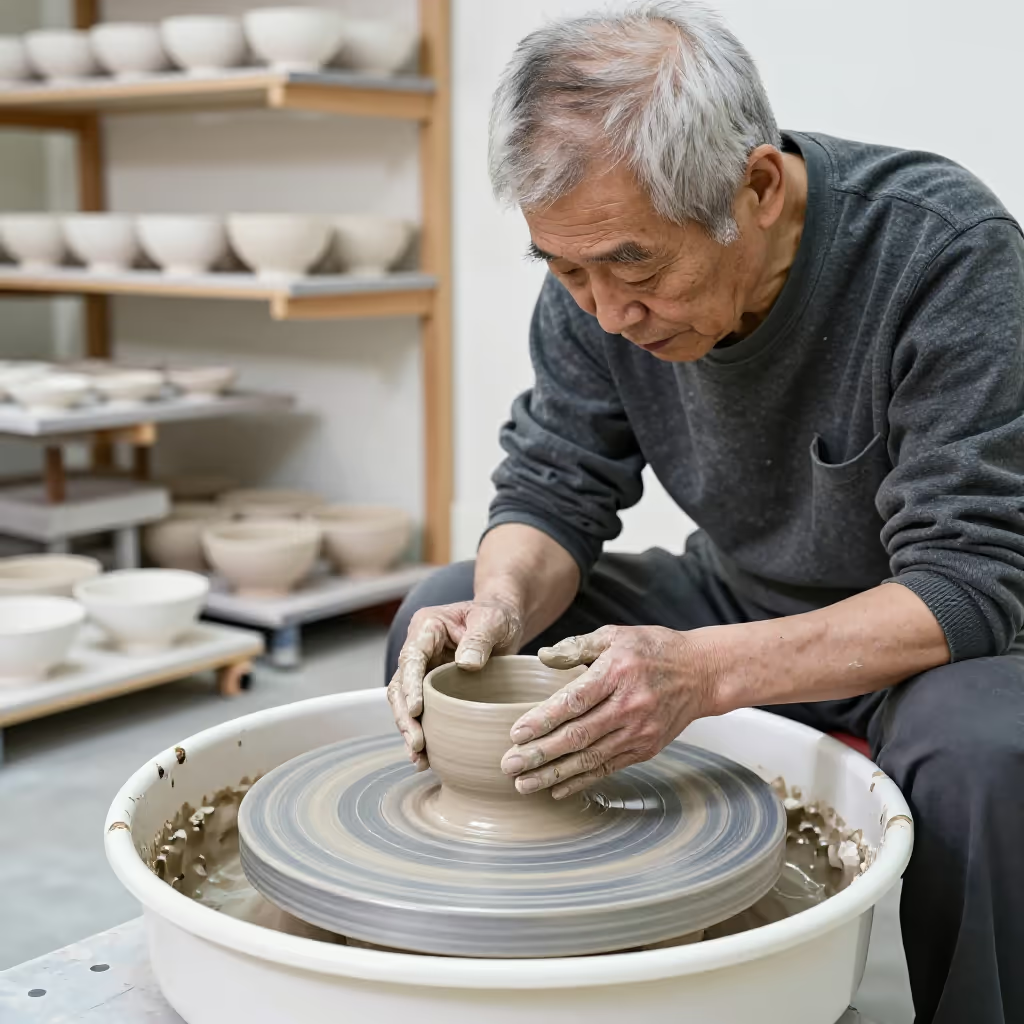
To produce, prepare, or create something.
Meine Oma macht die beste Marmelade.
My grandma makes the best jam.

to make
To cause someone or something to enter a certain state or have a certain feeling.
Der Lärm macht mich ganz nervös.
The noise makes me really nervous.
to clean / tidy
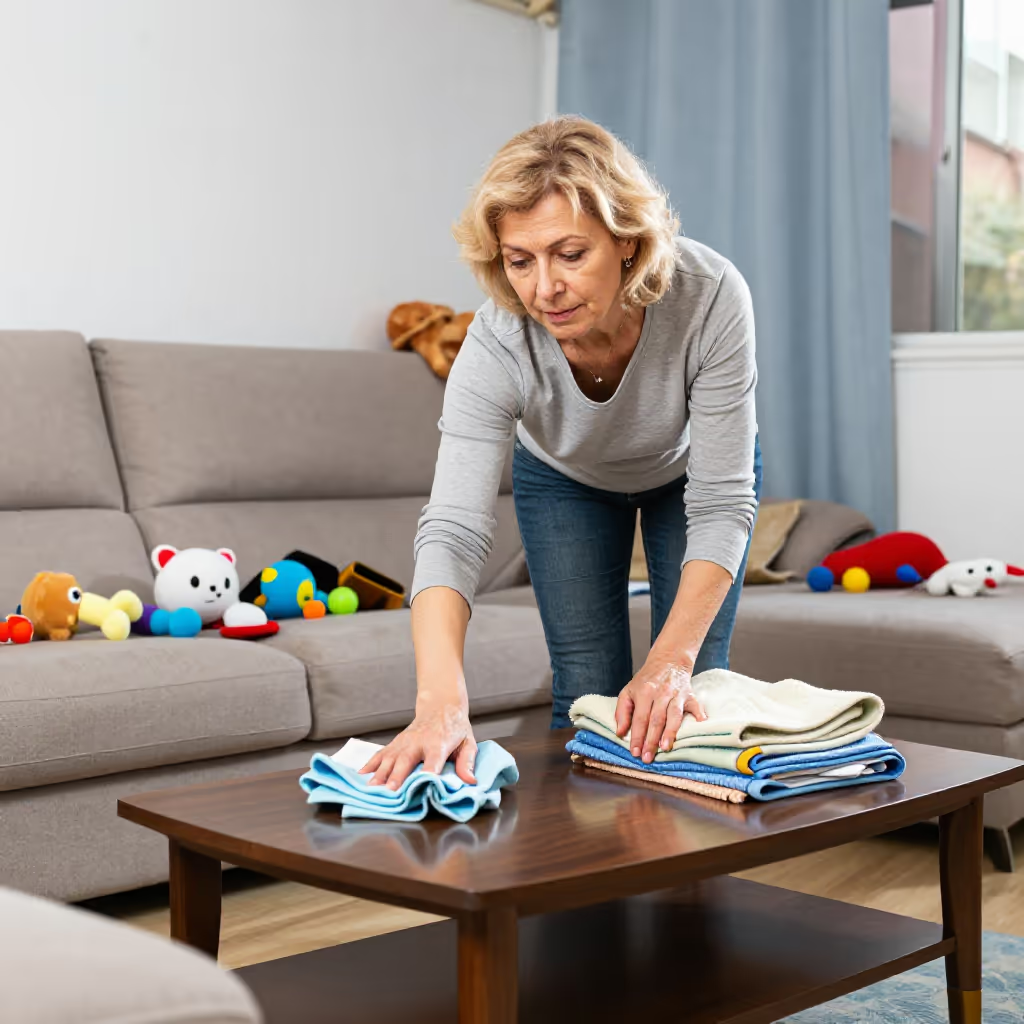
To clean, tidy up, or put something in order.
Ich muss noch schnell das Bad machen, bevor die Gäste kommen.
I still have to quickly clean the bathroom before the guests arrive.
to make / come to
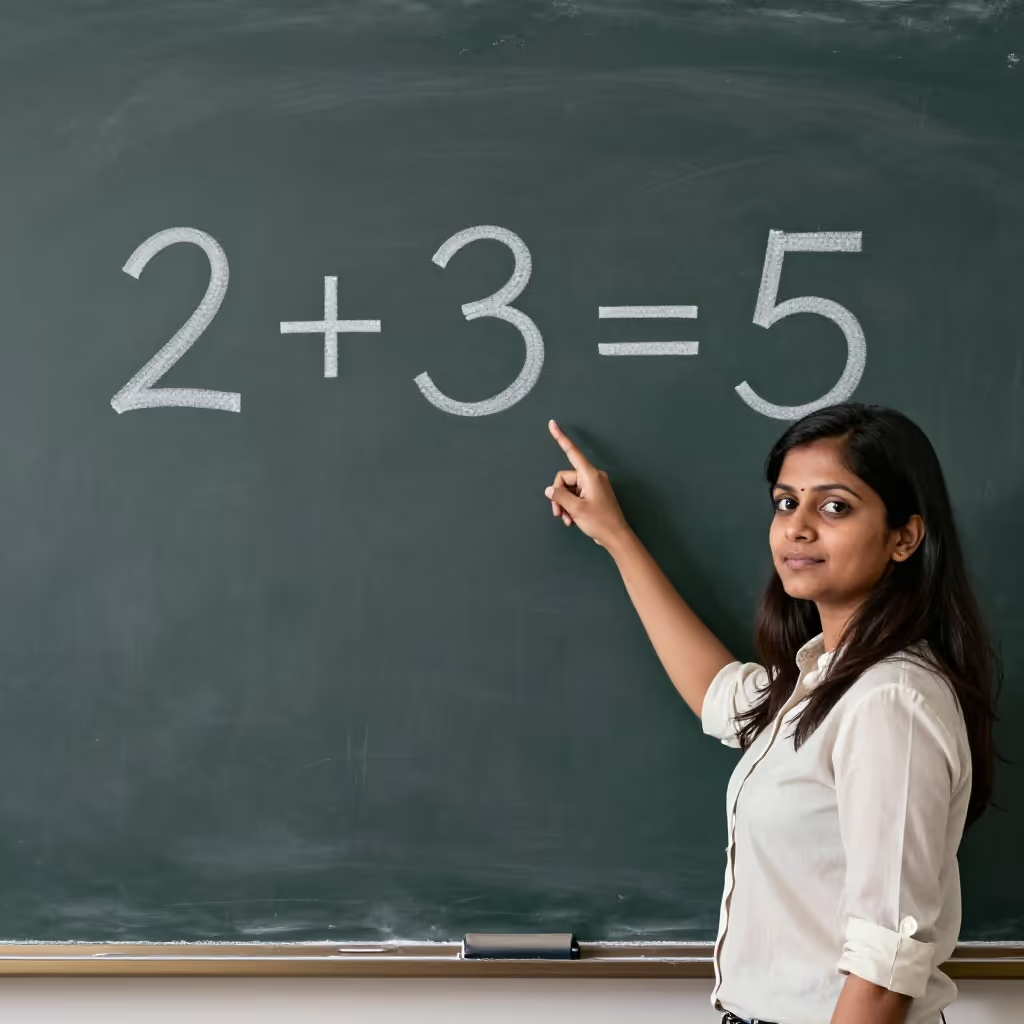
In mathematics or with amounts of money, “to equal” or “to amount to.”
Fünf mal fünf macht fünfundzwanzig.
Five times five makes twenty-five.

to worry
To be worried or anxious about someone or something.
Mach dir keine Sorgen, es wird alles gut werden.
Don't worry, everything will be fine.

to set off
To leave or begin a journey.
Wir sollten uns langsam auf den Weg machen, sonst verpassen wir den Zug.
We should slowly set off, otherwise we'll miss the train.

it doesn't matter
A colloquial expression used to say that something is not a problem or is not bad.
„Oh, Entschuldigung!“ – „Schon gut, das macht nichts.“
“Oh, sorry!” — “It's all right, it doesn't matter.”

to develop
To develop or show progress, often in a positive way.
Der neue Mitarbeiter macht sich in seinem Job wirklich gut.
The new employee is really developing well in his job.
For general activities, 'machen' (to do) is often combined with a noun. Common combinations are: Hausaufgaben machen (to do homework), eine Pause machen (to take a break), Sport machen (to do sports/exercise), einen Ausflug machen (to take a trip).
Lass uns am Nachmittag eine Pause machen.
Let's take a break in the afternoon.
In the meaning of “to produce” or “to prepare,” 'machen' (to make) is often used for everyday things. Typical combinations are: das Essen machen (to make the food/meal), Kaffee machen (to make coffee), ein Foto machen (to take a photo), ein Feuer machen (to make a fire).
Wer macht heute das Abendessen?
Who is making dinner today?
To express that something causes a feeling or state, the structure 'etwas macht jemanden + Adjektiv' (something makes someone + adjective) is used. The person is in the accusative.
Diese Musik macht mich immer glücklich.
This music always makes me happy.
The use of 'machen' (to do/make) in the sense of “to tidy up” or “to clean” (e.g., 'das Zimmer machen' — to clean/tidy the room) is very colloquial. In written language, you would more likely use 'sauber machen' (to clean) or 'aufräumen' (to tidy up).
Kannst du bitte schnell dein Zimmer machen?
Can you please quickly tidy your room?
In the sense of “to amount to,” 'machen' (to make) is mainly used in spoken language for simple calculations or when paying. It sounds informal.
Zwei Kaffee und ein Stück Kuchen, das macht zusammen 8,50 Euro.
Two coffees and a piece of cake, that comes to 8.50 euros altogether.
The expression 'sich Sorgen machen' (to worry) is reflexive and is used with the preposition 'um' and the accusative to say what you are worried about.
Ich mache mir Sorgen um meine kranke Großmutter.
I'm worried about my sick grandmother.
'Sich auf den Weg machen' (to set off) is a fixed reflexive expression and means “to leave” or “to start.” It is often used to describe the beginning of a movement or journey.
Es wird dunkel, wir sollten uns auf den Weg nach Hause machen.
It's getting dark; we should set off for home.
'Das macht nichts' (It doesn't matter) is a fixed, very common response to an apology. It signals that the situation is not a problem.
„Oh, ich habe dein Glas umgestoßen!“ – „Kein Problem, das macht nichts.“
“Oh, I knocked over your glass!” — “No problem, it doesn't matter.”
The reflexive verb 'sich machen' (to develop) describes development or progress, often in a professional or personal context. It is usually accompanied by an adverb such as 'gut' (well) or 'schlecht' (badly).
Unser Sohn hat sich in der neuen Schule gut gemacht.
Our son has done well at the new school.
to do
Machen and tun can both refer to a general action. Machen is very often used with a specifically named activity, while tun is especially common for a general action or in fixed expressions. When you name the specific activity, machen is usually the right choice; when it remains unspecified, tun is often more natural.
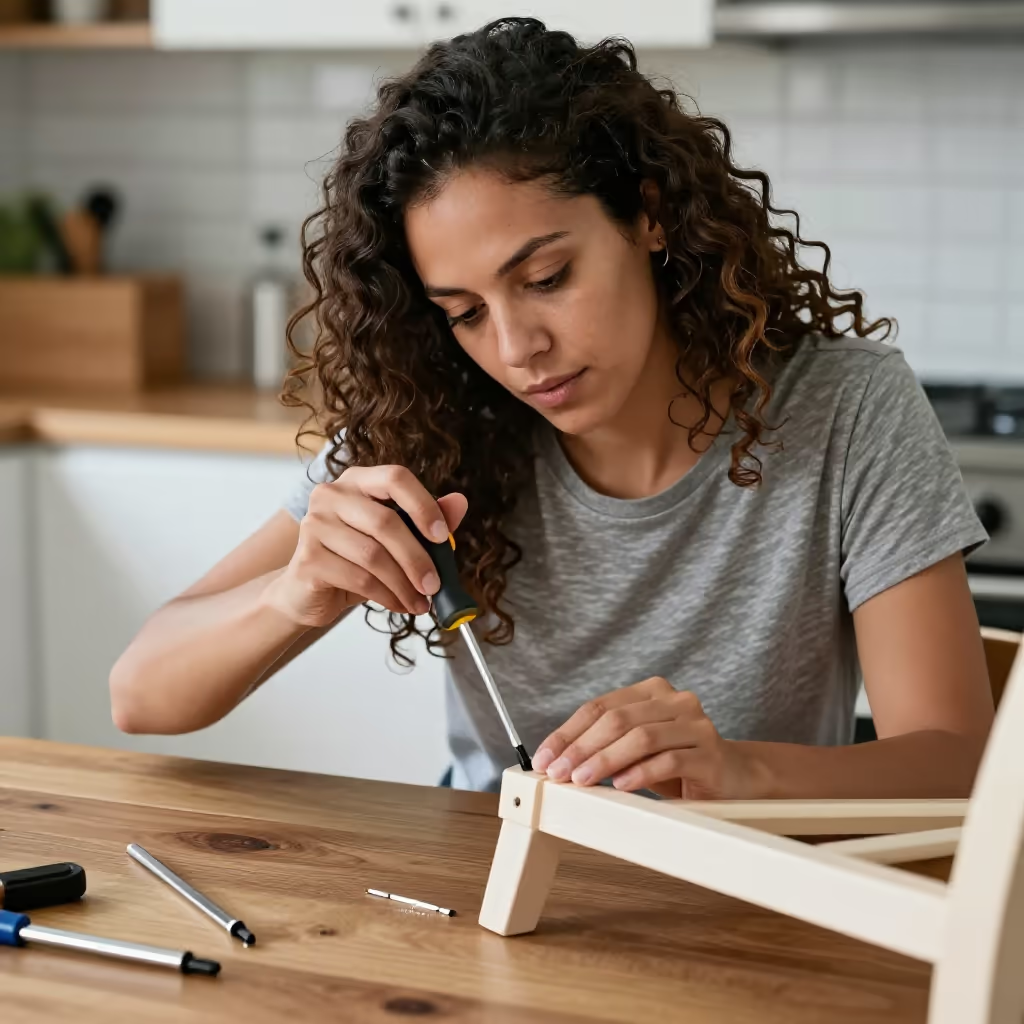
Nach dem Essen mache ich den Abwasch.
After dinner, I do the dishes.
Gegen den Lärm muss ich etwas tun.
I have to do something about the noise.