


klar
clear
Easy to understand, unambiguous, and without doubt.
EXAMPLE
Seine Anweisungen waren kurz und klar.
His instructions were short and clear.
clear
Loading your saved state.
clear
Easy to understand, unambiguous, and without doubt.
Seine Anweisungen waren kurz und klar.
His instructions were short and clear.
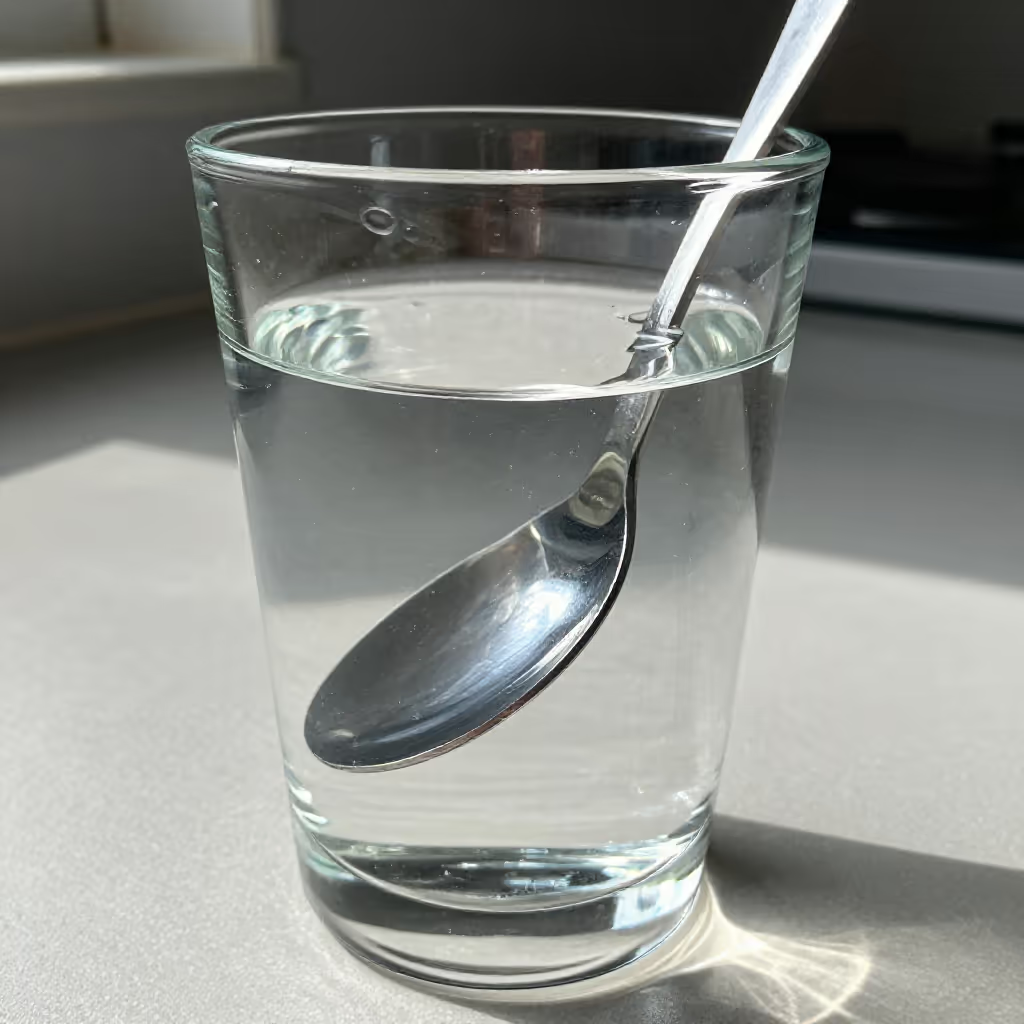
clear
Transparent, so that you can see through it.
Das Wasser im See war kristallklar.
The water in the lake was crystal clear.

sure
Used as an affirmative answer and means 'of course' or 'naturally'.
Hilfst du mir? – Klar!
Will you help me? – Sure!

clear-headed
Fully conscious and able to think rationally.
Nach einer Tasse Kaffee war sein Kopf wieder klar.
After a cup of coffee, his head was clear again.
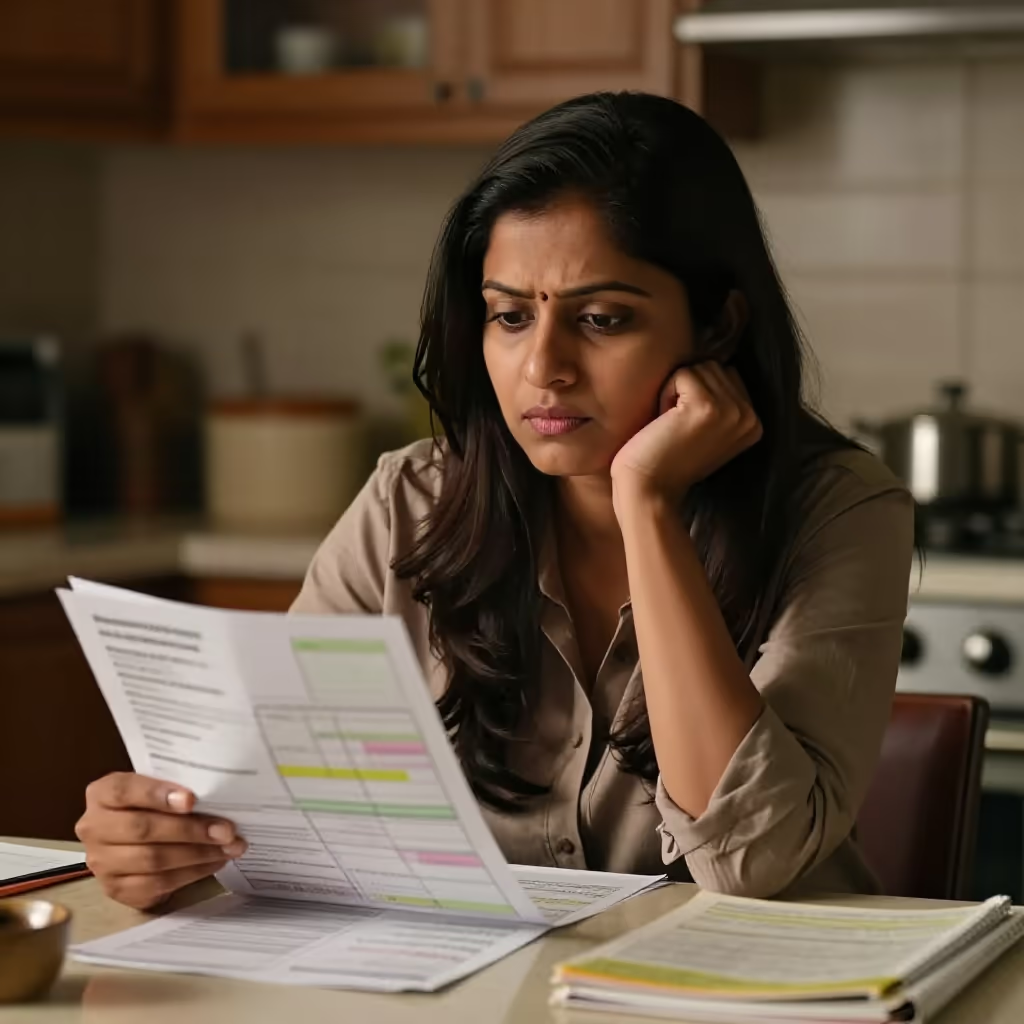
to be aware of
To be or become conscious of something; to recognize and understand something.
Du musst dir über die Konsequenzen deines Handelns klar sein.
You have to be aware of the consequences of your actions.

ready
Ready or prepared for an action, often in nautical or military contexts.
Das Schiff ist klar zum Auslaufen.
The ship is ready to set sail.
When 'klar' (clear) describes an abstract thing like an idea or a statement, it means 'understandable'. When it describes a physical substance like water or glass, it means 'transparent'.
Das war eine klare Anweisung.
That was a clear instruction.
The expression 'Alles klar!' is very versatile. It can be used as a question ('Did you understand everything?') or as an answer ('Yes, I understood.' / 'Yes, everything is all right.').
Wir treffen uns um 8 Uhr. Alles klar?
We're meeting at 8 o'clock. All clear?
In the meaning 'understandable', 'klar' (clear) is often used with nouns from the area of communication. Typical phrases are 'klare Worte' (clear words), 'eine klare Antwort' (a clear answer), or 'eine klare Struktur' (a clear structure).
Ich erwarte von dir eine klare Antwort: Ja oder Nein?
I expect a clear answer from you: yes or no?
As a standalone answer, 'Klar!' (Sure!) is a very common, colloquial way of saying 'yes, of course' or 'naturally'. It expresses casual agreement.
Kannst du mir kurz helfen? – Klar, kein Problem!
Can you help me for a moment? – Sure, no problem!
When 'klar' (clear) describes a mental state, it is often used in connection with 'Kopf' (head) or 'Gedanke' (thought). Fixed expressions include 'einen klaren Kopf bewahren' (to keep a clear head) and 'einen klaren Gedanken fassen' (to form a clear thought).
Auch in stressigen Situationen versucht er, einen klaren Kopf zu bewahren.
Even in stressful situations, he tries to keep a clear head.
The expression 'sich über etwas klar sein' (to be aware of something) is reflexive and uses the dative. The person who is aware is in the dative ('ich bin mir klar'), and the topic follows with 'über' + accusative.
Ich bin mir über die Risiken im Klaren.
I am aware of the risks.
natural / of course
Natürlich and klar can be used to agree to a request. Natürlich sounds more like a natural or friendly response, while klar is a direct, colloquial agreement. Choose natürlich for an expected or self-evident response and klar for a short, decisive answer.

Auf die Bitte, beim Umzug zu helfen, antwortete Jana klar und sagte sofort zu.
When asked to help with the move, Jana said, “Sure,” and agreed immediately.
Auf die Bitte, beim Umzug zu helfen, antwortete Jana natürlich sofort.
When asked to help with the move, Jana of course agreed immediately.