


wählen
to vote
To cast one's vote for a person or party in a political election or vote.
Ich weiß noch nicht, welche Partei ich bei der nächsten Bundestagswahl wählen werde.
I don't yet know which party I will vote for in the next federal election.


to vote / choose / dial
Loading your saved state.
to vote
To cast one's vote for a person or party in a political election or vote.
Ich weiß noch nicht, welche Partei ich bei der nächsten Bundestagswahl wählen werde.
I don't yet know which party I will vote for in the next federal election.
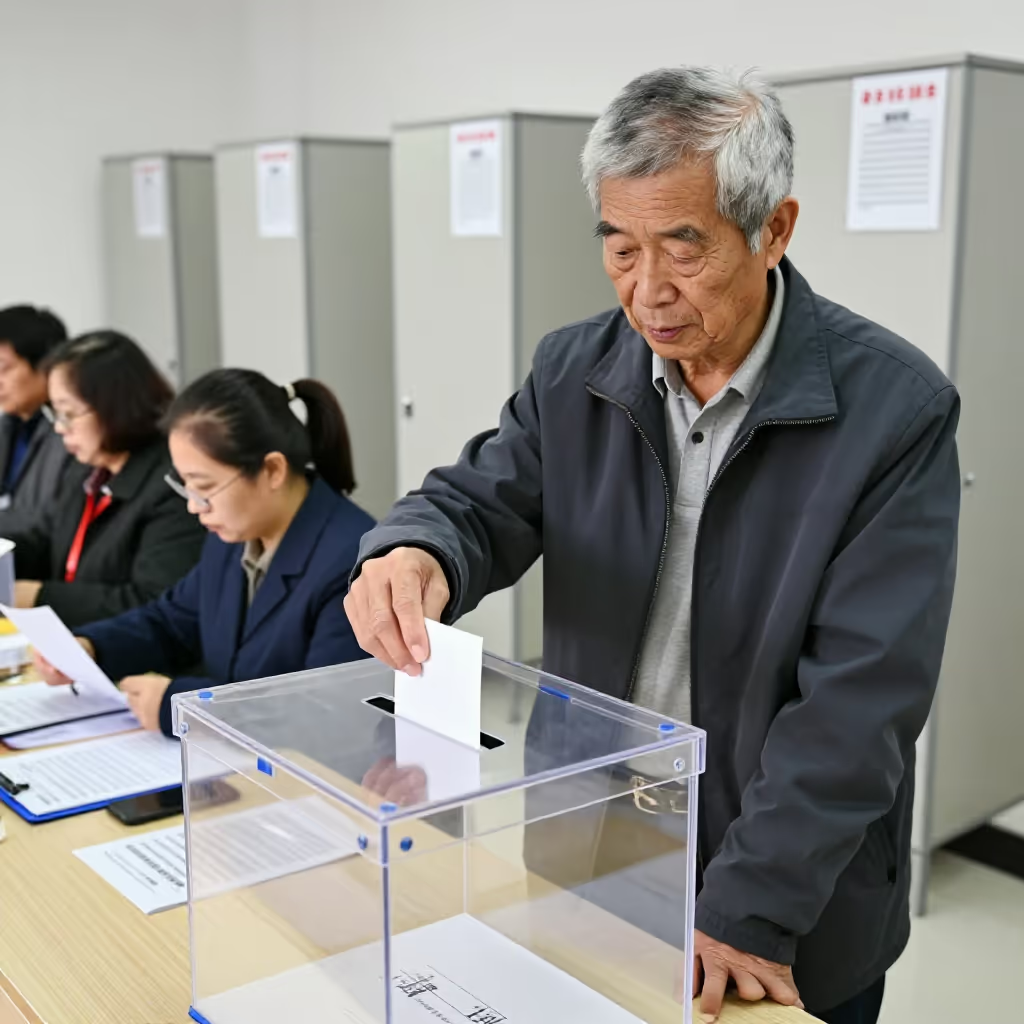
The verb 'wählen' (to vote / choose / dial) is closely related to the noun 'die Wahl' (the election / choice). 'Die Wahl' means both a political election and a choice or selection.
Die nächste Wahl findet in zwei Jahren statt.
The next election will take place in two years.
In a political context, 'wählen' (to vote) is almost always used with an accusative object. Typical combinations are 'eine Partei wählen' (to vote for a party), 'einen Kandidaten wählen' (to vote for a candidate), or 'das Parlament wählen' (to elect parliament).
Viele junge Leute gehen zum ersten Mal wählen.
Many young people are going to vote for the first time.
When deciding between options, you often use the structure 'zwischen etwas (Dativ) wählen' (to choose between something, dative) or 'aus etwas (Dativ) wählen' (to choose from something, dative).
Ich kann zwischen dem roten und dem blauen Kleid wählen.
I can choose between the red and the blue dress.
You can almost always recognize the meaning 'eine Telefonnummer eingeben' (to enter a phone number) from the combination with 'Nummer' (number) or a digit. You often hear this expression in automated announcements.
Bitte wählen Sie die Nummer des gewünschten Gesprächspartners.
Please dial the number of the person you would like to speak to.
to be right / to vote / to tune
'stimmen' and 'wählen' can both have to do with politics and decisions. 'wählen' is used especially when you choose a person or party in an election. 'stimmen' is used in an election or vote, often with 'für' or 'gegen'. It emphasizes the act of casting a vote more. The words can be confused because in an election you also 'stimmt' (vote). More naturally: you 'wählt eine Partei' (vote for / choose a party), but you 'stimmt für einen Vorschlag' (vote for a proposal).

Bei der nächsten Wahl möchte ich eine andere Partei wählen.
In the next election, I want to vote for a different party.
Die Mitglieder stimmen heute über den neuen Plan ab.
The members are voting on the new plan today.