


die Mitte
middle / center
The central point or area that is roughly the same distance from all edges or ends.
EXAMPLE
In der Mitte des Platzes steht ein großer Brunnen.
There is a large fountain in the middle of the square.
middle / center
Loading your saved state.
middle / center
The central point or area that is roughly the same distance from all edges or ends.
In der Mitte des Platzes steht ein großer Brunnen.
There is a large fountain in the middle of the square.

mid-
Refers to the middle part of a period of time, such as a month, year, or century.
Wir erwarten die Lieferung für Mitte nächster Woche.
We expect the delivery in the middle of next week.
center
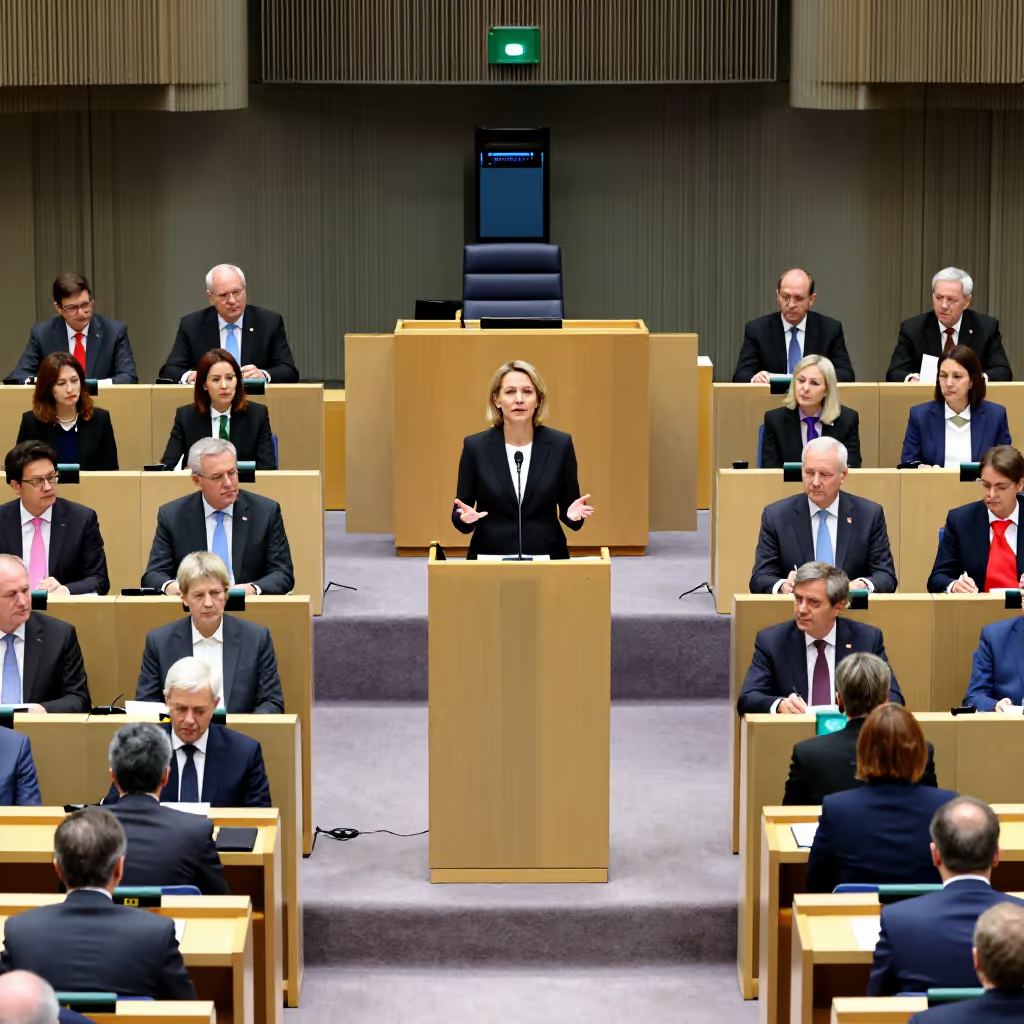
The political orientation that stands between left-wing and right-wing positions and is considered moderate.
Die Partei versucht, die Wähler der politischen Mitte für sich zu gewinnen.
The party is trying to win over voters from the political center.
from within
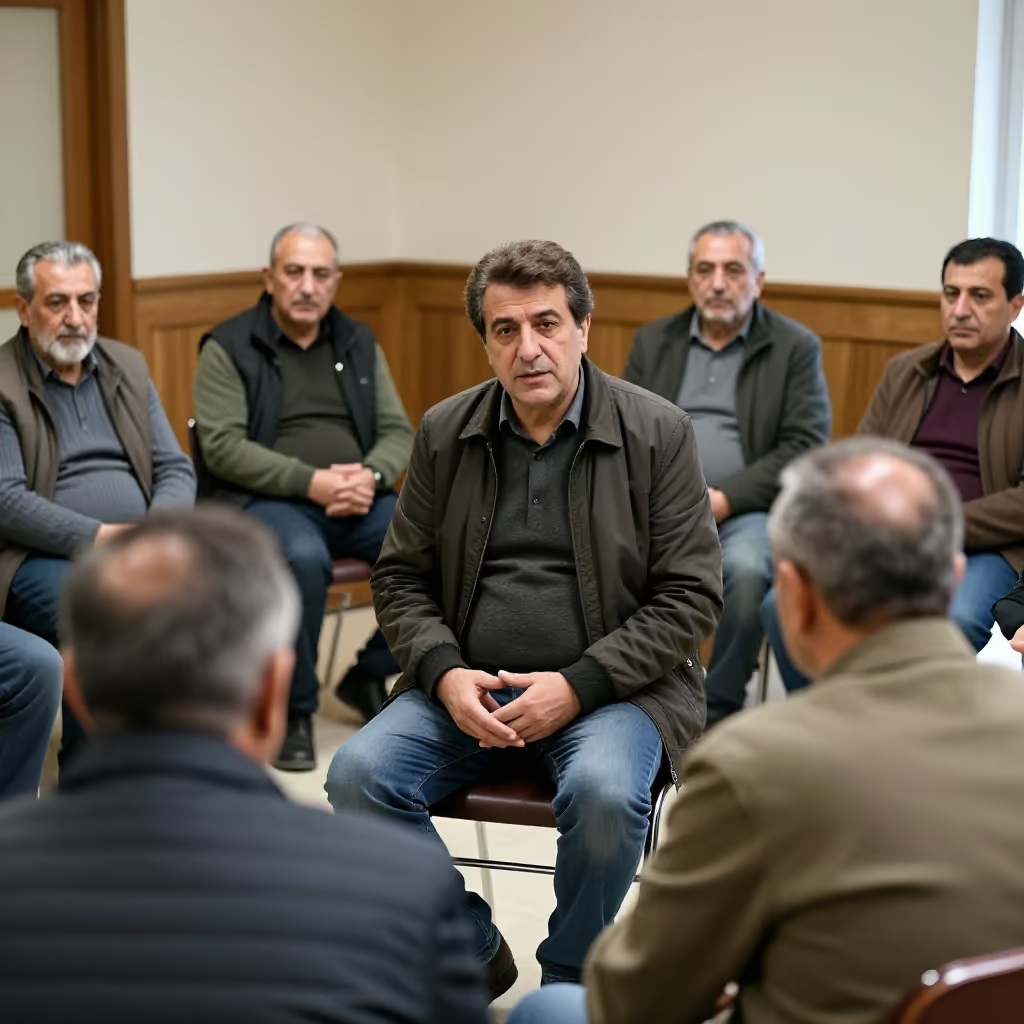
Originating from inside a group, community, or society.
Der neue Vorsitzende wurde aus der Mitte des Vereins gewählt.
The new chairperson was elected from within the association.
'Die Mitte' (the middle/center) belongs to a word family centered around the concept of 'Zentrum' (center). Related words include the adverb 'mitten' (right in the middle, e.g. in the middle of the room) and the adjective 'mittel' (middle/medium, e.g. a medium size).
Der Tisch steht mitten im Zimmer.
The table is right in the middle of the room.
To describe a location, 'Mitte' (middle/center) is almost always used with the preposition 'in' and the dative: 'in der Mitte' (in the middle).
Wir trafen uns in der Mitte des Parks.
We met in the middle of the park.
When 'Mitte' (mid-/middle) describes a point in time, it stands without an article or preposition directly before the month, week, or year. This structure is very common.
Ich komme Mitte Mai zurück.
I'll come back in mid-May.
The political meaning of 'die Mitte' (the center) can be recognized from words in the political context, such as 'Partei' (party), 'Wähler' (voters), 'politisch' (political), or 'gemäßigt' (moderate).
Die Partei richtet ihre Kampagne an die politische Mitte.
The party is directing its campaign at the political center.
The phrase 'aus der Mitte' (from within) expresses that someone or something comes from inside a group. It is often followed by the genitive or by 'von' to specify the group.
Der Vorschlag kam direkt aus der Mitte des Teams.
The suggestion came directly from within the team.
half
„Mitte“ refers to the central point or area of a distance. „Hälfte“ identifies the same point by dividing the whole into two equal parts. Use „Mitte“ when the central location is important, and „Hälfte“ when you mean the part already covered or the part that remains.

Wir treffen uns in der Mitte der Strecke zwischen den beiden Dörfern.
We’ll meet in the middle of the route between the two villages.
Nach der Hälfte der Strecke machen wir eine kurze Pause.
We’ll take a short break halfway through the route.