


der Wedel
frond
A large, often fan-shaped leaf, especially of ferns or palms.
EXAMPLE
Die Palmwedel raschelten im Wind.
The palm fronds rustled in the wind.
frond / duster / tail
Loading your saved state.
frond
A large, often fan-shaped leaf, especially of ferns or palms.
Die Palmwedel raschelten im Wind.
The palm fronds rustled in the wind.

duster
A tool for dusting, often made of feathers or synthetic fibers.
Mit einem Wedel entfernte sie die Spinnweben von der Decke.
She removed the cobwebs from the ceiling with a duster.
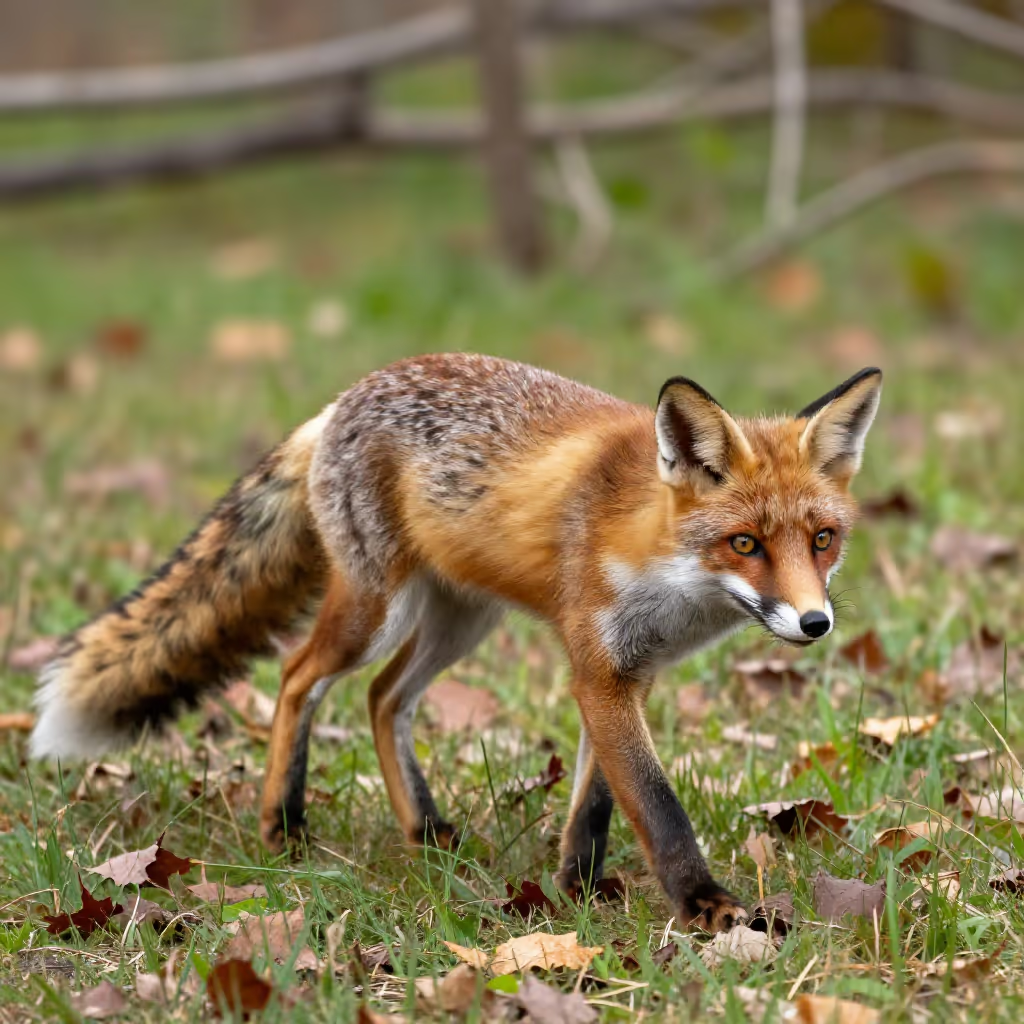
tail
In hunting terminology, the term for the bushy tail of certain animals, such as a fox or a squirrel.
Der Jäger erkannte den Fuchs am buschigen Wedel.
The hunter recognized the fox by its bushy tail.
All meanings of 'der Wedel' (frond / duster / tail) are connected to the verb 'wedeln' (to wag or wave something back and forth). A palm frond moves in the wind, you wipe with a duster, and an animal wags its tail.
Der Hund wedelte freudig mit dem Schwanz.
The dog wagged its tail happily.
The context makes clear which 'Wedel' (frond / duster / tail) is meant. If it is about plants, it means the leaf. If it is about cleaning, it means a duster. And with animals like foxes, it means the tail.
Die Blätter der Palme sind riesige Wedel.
The leaves of the palm tree are huge fronds.
In the meaning of 'Staubwischgerät' (dusting tool), the compounds 'der Staubwedel' (duster) or 'der Federwedel' (feather duster) are often used. Typical verbs are 'Staub wischen' (to dust) or 'entstauben' (to remove dust).
Sie entfernte den Staub auf den Büchern mit einem Federwedel.
She removed the dust from the books with a feather duster.
The term 'Wedel' for an animal's tail is technical language used by hunters (hunting terminology). In normal usage, people simply say 'der Schwanz' (the tail).
Der Fuchs war im Gebüsch kaum zu sehen, nur sein Wedel schaute heraus.
The fox was barely visible in the bushes; only its tail was sticking out.
tail / dick
Schwanz is the general term for the rear body appendage of an animal. Wedel can refer to the same thing in certain animals, such as foxes, but belongs to hunting terminology. Schwanz is appropriate in normal conversation; Wedel can be used in a hunting context.

Der Jäger beobachtet den buschigen Wedel des Fuchses.
The hunter observes the fox's bushy tail.
Die Wanderin beobachtet den buschigen Schwanz des Fuchses.
The hiker observes the fox's bushy tail.