


wehtun
to hurt
To cause or feel physical pain.
EXAMPLE
Vorsicht, der Topf ist heiß und tut weh, wenn du ihn anfasst!
Careful, the pot is hot and hurts if you touch it!
to hurt
Loading your saved state.
to hurt
To cause or feel physical pain.
Vorsicht, der Topf ist heiß und tut weh, wenn du ihn anfasst!
Careful, the pot is hot and hurts if you touch it!

to hurt
To cause emotional or psychological pain; to hurt someone's feelings.
Deine abfällige Bemerkung hat mir wirklich wehgetan.
Your disparaging remark really hurt me.
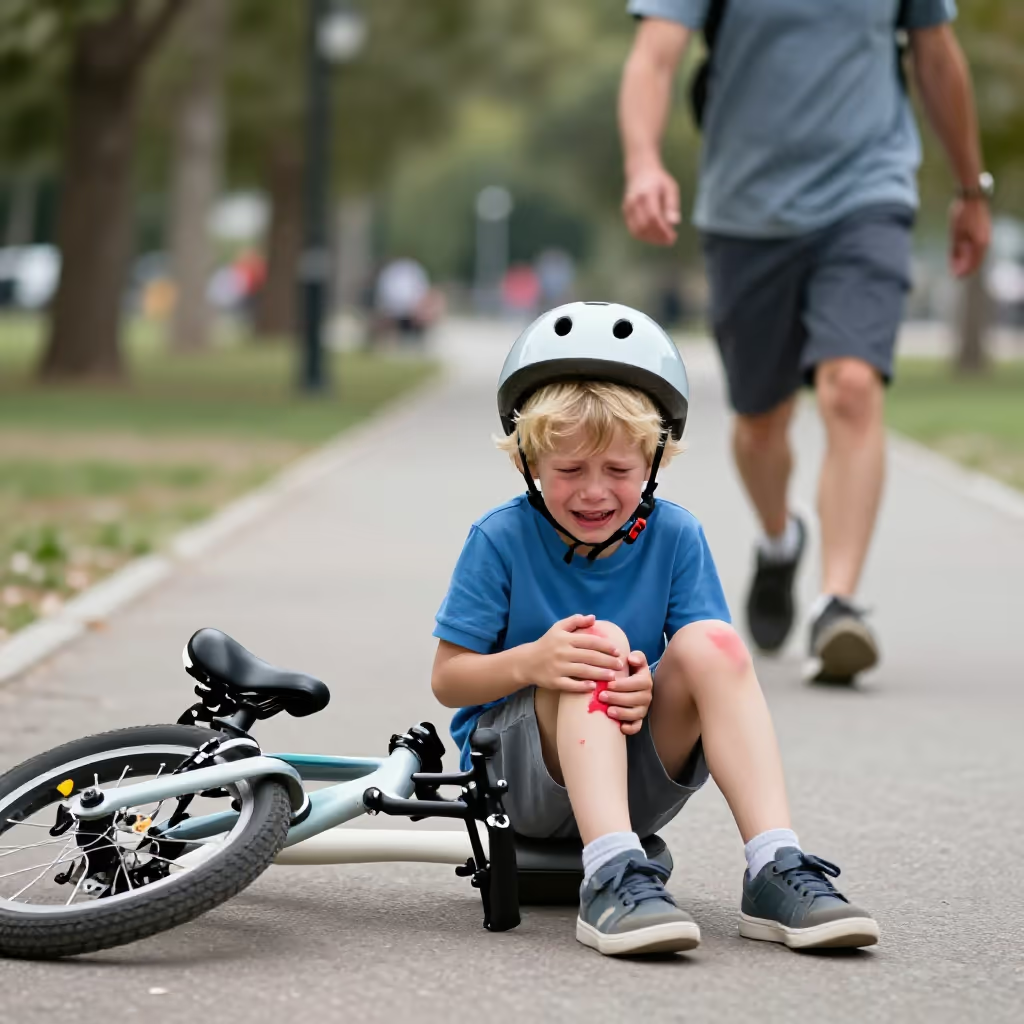
to hurt oneself
To cause oneself a physical injury or pain, usually through an accident.
Pass auf, dass du dir auf dem glatten Boden nicht wehtust.
Be careful that you don't hurt yourself on the slippery floor.
'Wehtun' (to hurt) is a separable verb. The prefix 'weh' comes at the end of the main clause. In the infinitive with 'zu', it is written as 'weh zu tun'.
Mein Kopf tut schon den ganzen Tag weh.
My head has been hurting all day.
The person who feels the pain is always in the dative. The thing that causes the pain (e.g., a body part or an action) is the subject of the sentence.
Der Zahn tut mir weh.
My tooth hurts.
The context makes it clear whether physical or emotional pain is meant. Body parts like 'Arm' (arm) or 'Bauch' (belly/stomach) point to physical pain, while abstract nouns like 'Kritik' (criticism) or 'Trennung' (separation/breakup) point to emotional pain.
Nach dem langen Lauf tun meine Beine weh.
After the long run, my legs hurt.
The reflexive form 'sich wehtun' (to hurt oneself) means to injure oneself. The reflexive pronoun is in the accusative. If you name the injured body part, the pronoun is in the dative and the body part is in the accusative.
Das Kind ist hingefallen und hat sich wehgetan.
The child fell down and hurt themselves.
to injure / hurt / violate
Both verbs can refer to physical discomfort. Wehtun focuses on the pain that is felt or caused; verletzen means that physical harm has occurred. Wehtun is appropriate for pain alone, while verletzen is more suitable for a wound or injury.

Das lange Sitzen auf dem harten Boden tut Lea am Knie weh.
Sitting on the hard floor for a long time hurts Lea's knee.
Beim Sturz verletzte sich Lea am Knie, und die Wunde musste verbunden werden.
Lea injured her knee in the fall, and the wound had to be bandaged.