

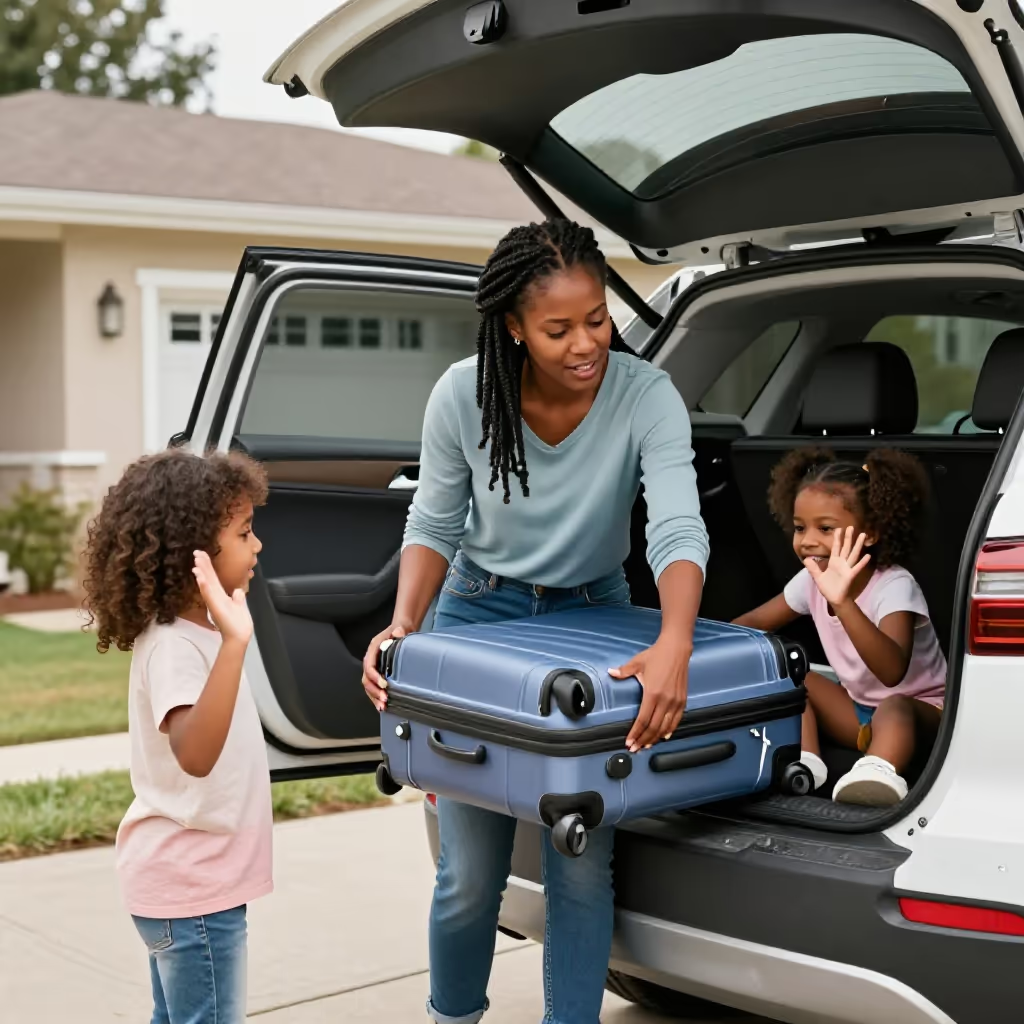
wegfahren
to go away
To leave a place by vehicle (car, train, bus, etc.), often for a trip or vacation.
EXAMPLE
Wir fahren nächstes Wochenende für ein paar Tage weg.
We're going away for a few days next weekend.
to go away / drive away
Loading your saved state.
to go away
To leave a place by vehicle (car, train, bus, etc.), often for a trip or vacation.
Wir fahren nächstes Wochenende für ein paar Tage weg.
We're going away for a few days next weekend.
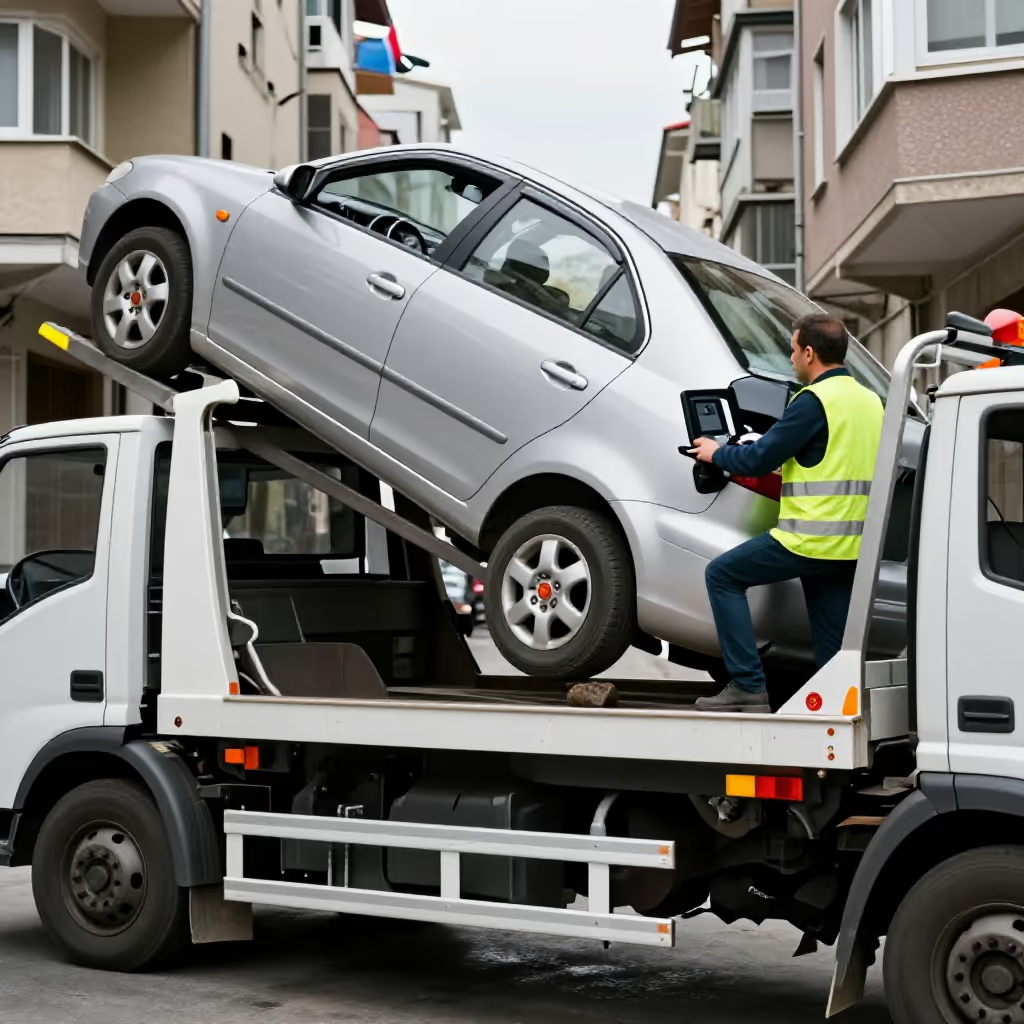
to drive away
To remove or transport something from a place using a vehicle.
Der Abschleppdienst hat das falsch geparkte Auto weggefahren.
The towing service drove away the illegally parked car.

to be crazy about
Colloquial for: to be very enthusiastic about something or to like something extremely.
Die Teenager fahren total auf diese neue Musikrichtung weg.
The teenagers are totally crazy about this new style of music.
'Wegfahren' (to go away / drive away) is a separable verb. The prefix 'weg' comes at the end in a main clause. In subordinate clauses and in the infinitive with 'zu', the verb stays together.
Wann fahrt ihr morgen früh weg?
When are you leaving tomorrow morning?
Since 'fahren' (to drive/go by vehicle) describes movement, the perfect tense of 'wegfahren' is always formed with the auxiliary verb 'sein'.
Meine Nachbarn sind gestern in den Urlaub weggefahren.
My neighbors went away on vacation yesterday.
When 'wegfahren' has an accusative object, it means that something is being transported away. Without an object, it usually means that a person is going on a trip.
Kannst du bitte dein Fahrrad aus dem Weg wegfahren?
Can you please move your bike out of the way?
In the colloquial meaning 'to like something very much', 'wegfahren' is always used with the preposition 'auf' and the accusative.
Mein kleiner Bruder fährt total auf Superheldenfilme weg.
My little brother is totally crazy about superhero movies.
The meaning 'to be enthusiastic about something' is purely colloquial and is used especially by younger people.
Die Fans fahren auf die neue Sängerin total weg.
The fans are totally crazy about the new singer.
to depart / be into
Both verbs can express that a vehicle leaves a place. “Abfahren” focuses more on the vehicle’s departure, often with reference to a place or timetable; “wegfahren” emphasizes more strongly that a person or vehicle leaves the place. Depending on the perspective, either word may be possible.

Nach dem Frühstück fuhren wir mit dem Auto weg.
After breakfast, we drove away in the car.
Der Zug fährt pünktlich vom Bahnhof ab.
The train departs from the station on time.