

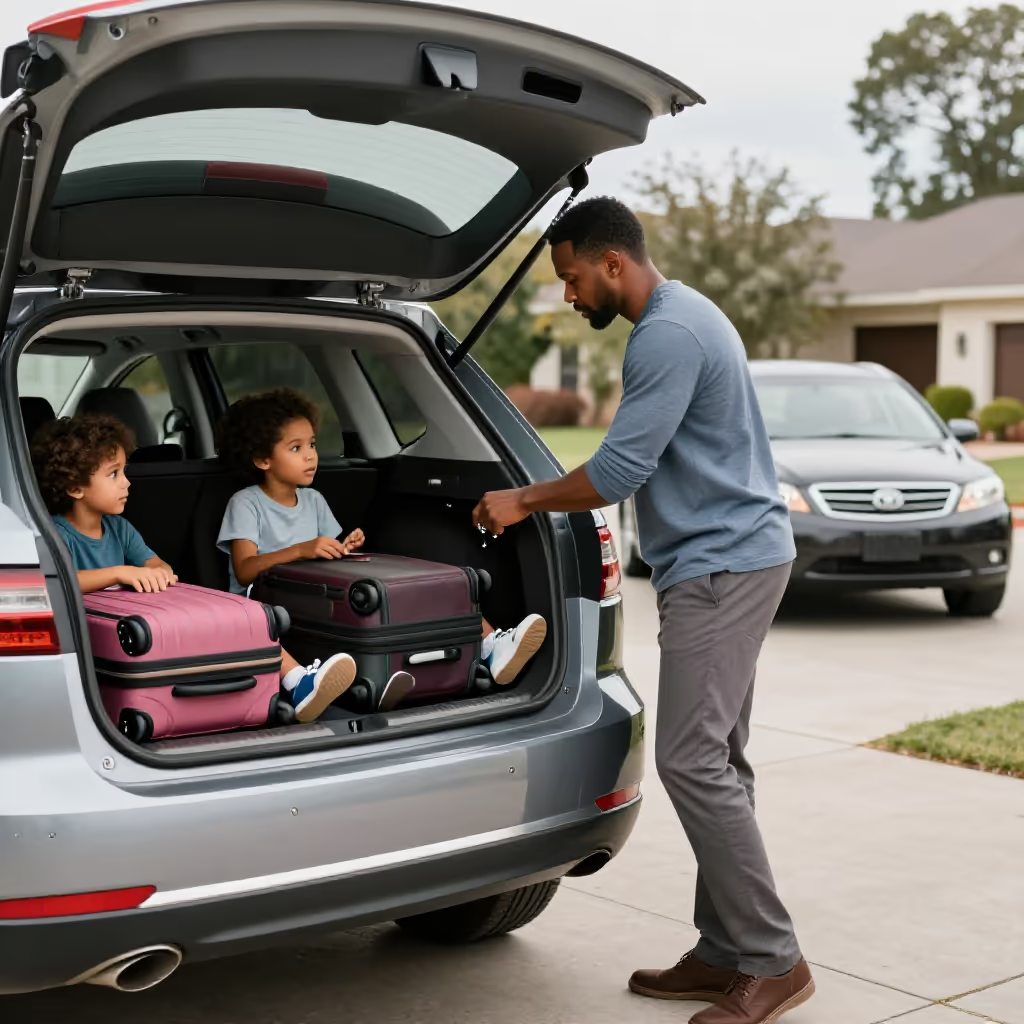
losfahren
to set off
To begin a trip or journey with a vehicle, such as a car, bicycle, or train; to depart.
EXAMPLE
Wir sollten morgen früh losfahren, um den Berufsverkehr zu vermeiden.
We should set off early tomorrow morning to avoid rush hour.
to set off / start driving
Loading your saved state.
to set off
To begin a trip or journey with a vehicle, such as a car, bicycle, or train; to depart.
Wir sollten morgen früh losfahren, um den Berufsverkehr zu vermeiden.
We should set off early tomorrow morning to avoid rush hour.

to lash out
Colloquial for suddenly and forcefully beginning a verbal attack or scolding.
Als er den Kratzer am neuen Auto sah, fuhr er sofort los und machte seiner Wut Luft.
When he saw the scratch on the new car, he immediately lashed out and vented his anger.
'Losfahren' (to set off/start driving) is a separable verb. The prefix 'los' goes to the end in a main clause. In subordinate clauses and in the infinitive with 'zu', the verb stays together.
Wann fahren wir morgen los?
When are we setting off tomorrow?
Since 'losfahren' (to set off/start driving) describes movement away from a place, the perfect tense is always formed with the auxiliary verb 'sein' (to be).
Er ist schon vor einer Stunde losgefahren.
He set off an hour ago already.
The prefix 'los-' often signals the beginning of an action. You can also find it in other verbs such as 'losgehen' (to start walking/to begin) or 'loslegen' (to get started doing something).
Sobald das Signal ertönt, können die Läufer loslaufen.
As soon as the signal sounds, the runners can start running.
You can recognize the colloquial meaning 'anfangen zu schimpfen' (to start scolding) from the fact that the context has nothing to do with a trip or a vehicle. It is about a sudden, emotional reaction by a person.
Als sie die schlechte Note sah, fuhr sie sofort los und beschwerte sich laut.
When she saw the bad grade, she immediately lashed out and complained loudly.
to start
When talking about a journey, both starten and losfahren can express the beginning. Starten refers more generally to the start of the journey, while losfahren specifically means that a vehicle begins to move. Use starten for the scheduled beginning of a journey and losfahren for actually setting off.
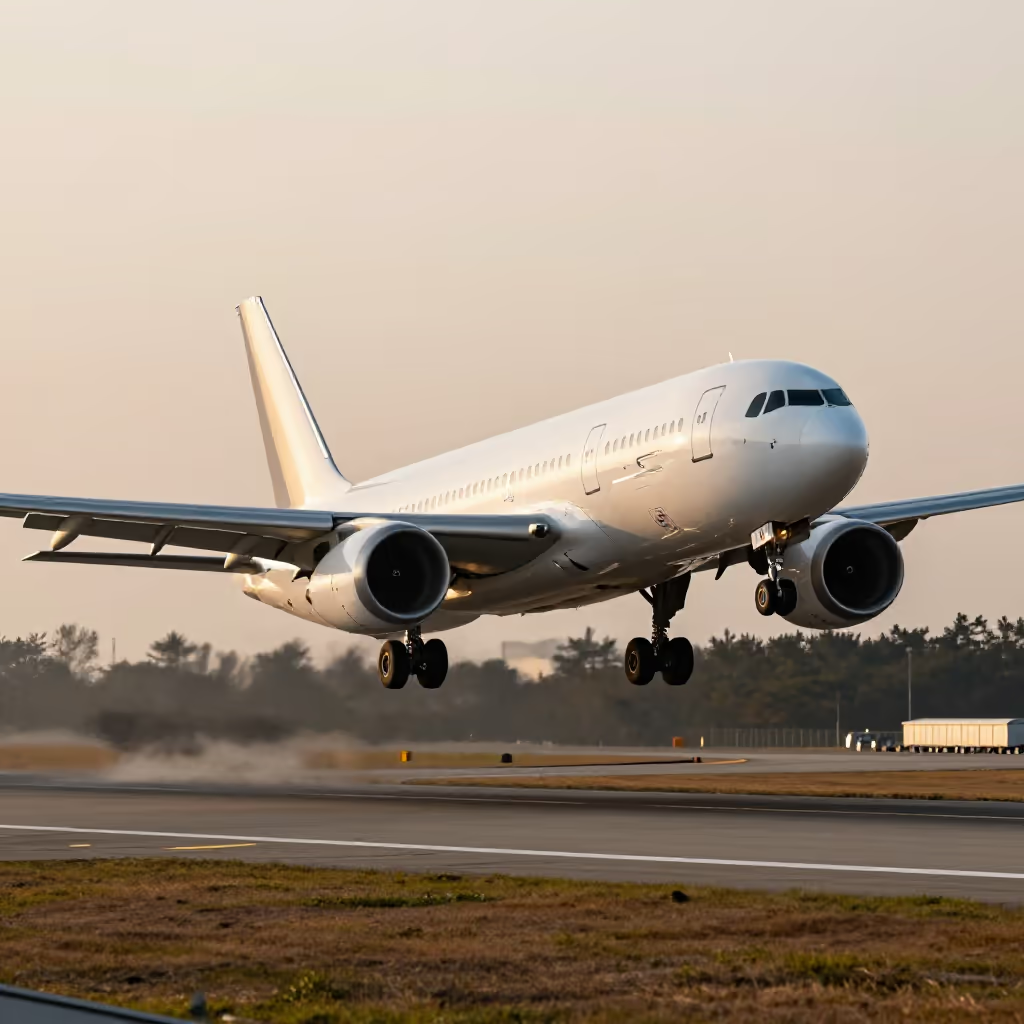
Wir fahren am Samstagmorgen mit dem Auto los.
We are setting off by car on Saturday morning.
Unsere Reise mit dem Auto startet am Samstagmorgen.
Our car trip starts on Saturday morning.