

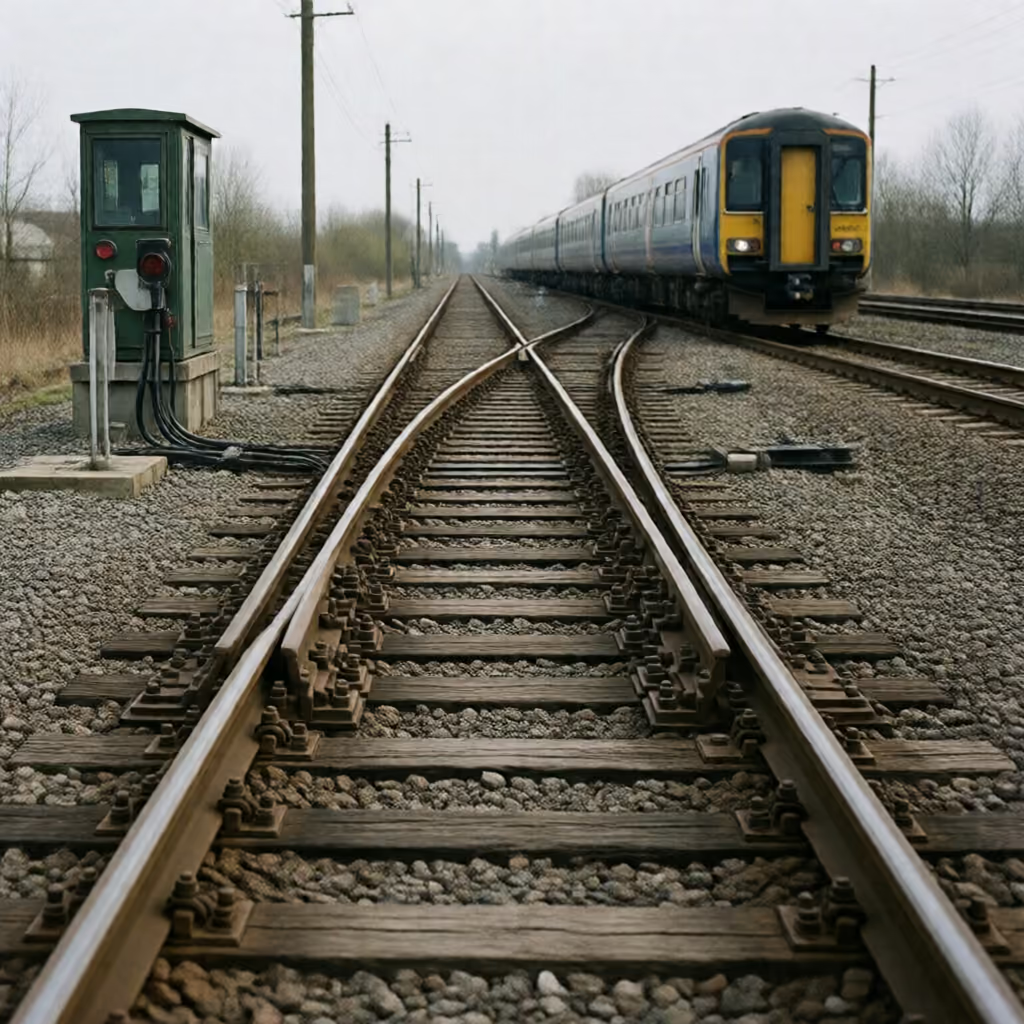
die Weiche
switch
A device in a railway network that directs a train from one track to another.
EXAMPLE
Der Zug musste vor der Weiche warten.
The train had to wait in front of the switch.
switch / flank
die Weiche, die Weichen
Loading your saved state.
switch
A device in a railway network that directs a train from one track to another.
Der Zug musste vor der Weiche warten.
The train had to wait in front of the switch.
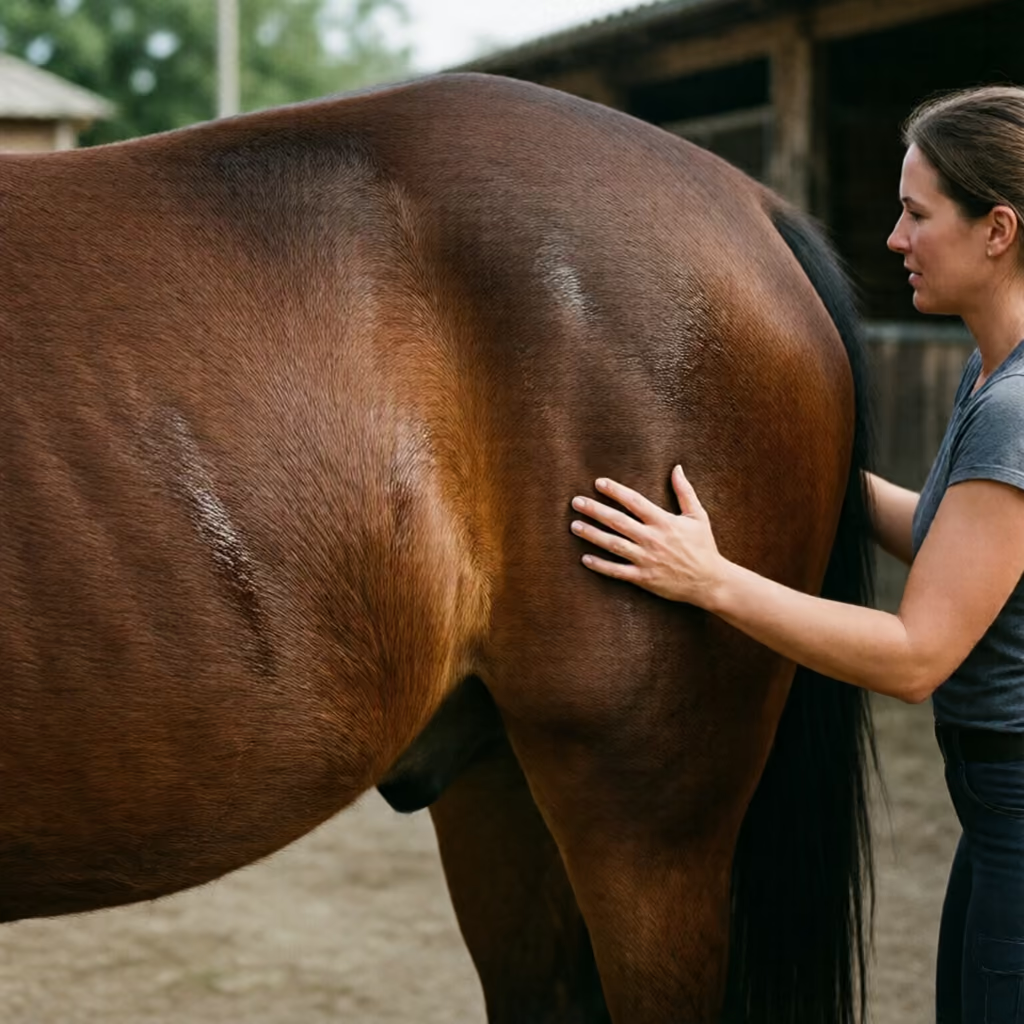
flank
A soft part of the body on the side between the lower ribs and the hip; usually used in the plural and especially in reference to animals.
Nach dem langen Ritt zitterten die Weichen des Pferdes.
After the long ride, the horse’s flanks were trembling.

to set the course
To prepare a development or decision in such a way that it leads in a particular direction or to a particular result.
Mit dieser Reform stellt die Regierung die Weichen für weiteres Wachstum.
With this reform, the government is setting the course for further growth.
| gender | feminine die |
|---|---|
| plural | die Weichen |
| genitive | der Weiche |
| singular | plural | |
|---|---|---|
| nominative | die Weiche | die Weichen |
| accusative | die Weiche | die Weichen |
| dative | der Weiche | den Weichen |
| genitive | der Weiche | der Weichen |
The article changes with the case; it is shown in colour.
In the context of trains, tracks, or railway stations, „die Weiche“ (the switch) refers to a technical device. In expressions about the body or decisions, the surrounding words help identify the intended meaning.
Kurz vor dem Bahnhof fuhr der Zug langsam über mehrere Weichen.
Shortly before the station, the train slowly passed over several switches.
Die Tierärztin tastete vorsichtig die Weichen des Hundes ab.
The veterinarian carefully felt the dog’s flanks.
In the railway context, „Weiche“ (switch) commonly occurs with verbs such as „stellen“ (to set), „umstellen“ (to change), and „überfahren“ (to pass over). The phrase „vor der Weiche warten“ (to wait in front of the switch) is also common.
Der Stellwerker stellte die Weiche für den nächsten Zug um.
The signal operator changed the switch for the next train.
The body-related meaning is now found mainly in texts about horses and other animals, usually in the plural. A typical phrase is „einem Pferd die Sporen in die Weichen drücken“ (to press one’s spurs into a horse’s flanks).
Der Reiter drückte seinem Pferd die Sporen in die Weichen.
The rider pressed his spurs into his horse’s flanks.
In the figurative expression „die Weichen für etwas stellen“ (to set the course for something), „für“ takes the accusative. The expression describes deliberately preparing a development.
Schon in der Schule werden die Weichen für das spätere Berufsleben gestellt.
The course for later professional life is already set at school.