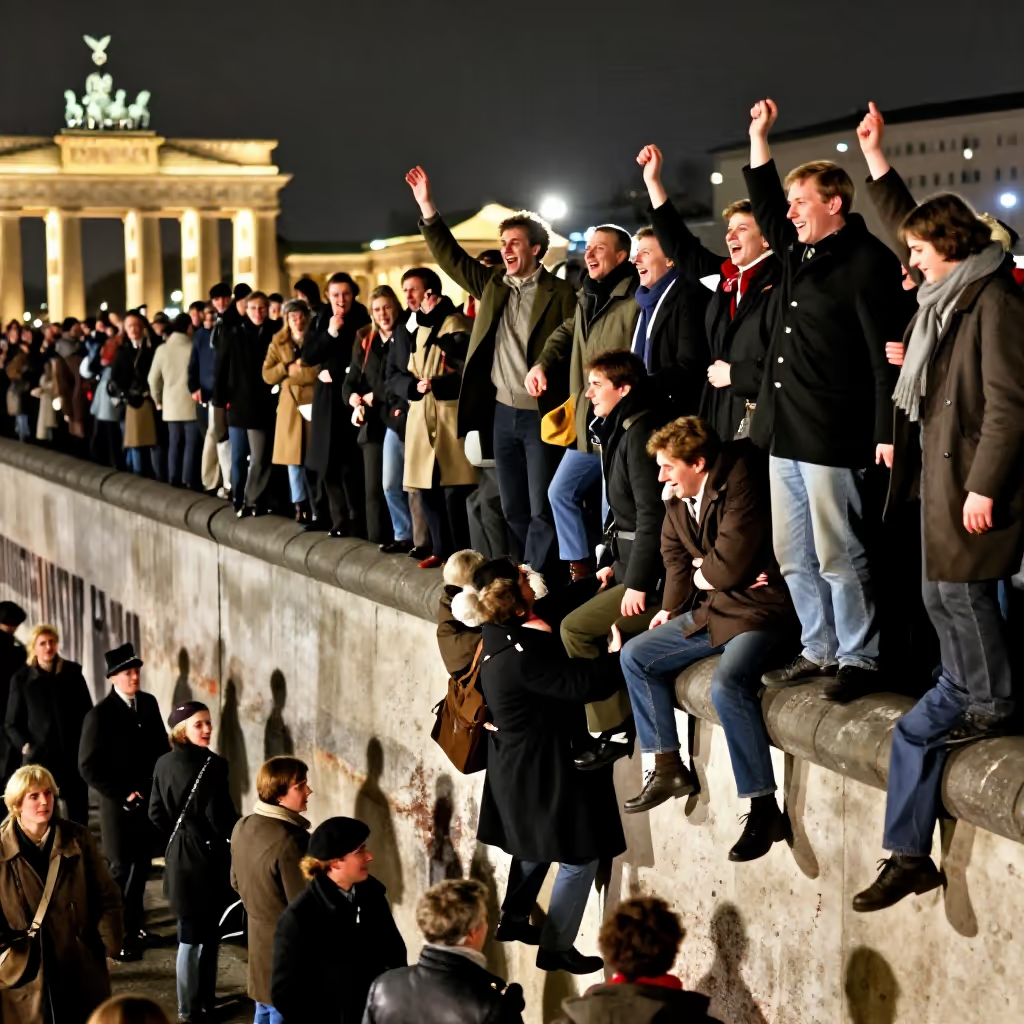
The historical process of political and social changes in East Germany in 1989 and 1990 that led to German reunification.
example
Viele sagen, dass sich ihr Leben nach der Wende komplett verändert hat.
Many people say that their lives changed completely after the Wende.

Usage tips
Word family
The noun 'die Wende' (turning point / turn) is derived directly from the verb 'wenden' (to turn). This connection helps you understand all the meanings: a historical turning point, a turn in a story, or a physical turn while driving.
EXAMPLE
Der Kapitän wendete das Schiff im Hafen.
The captain turned the ship in the harbor.
Historical context
When people speak of 'der Wende' in a German context, they almost always mean the historical process of reunification in 1989/90. The term is so firmly established that it often needs no further explanation.
EXAMPLE
Mein Onkel erzählt oft Geschichten aus der Zeit vor der Wende.
My uncle often tells stories from the time before the Wende.
Typical collocations
In the general meaning of a turning point, 'Wende' is often used with verbs that introduce or describe a change. Typical phrases are 'eine Wende herbeiführen' (to bring about a turning point), 'eine Wende einleiten' (to initiate a turning point), or 'eine überraschende Wende nehmen' (to take a surprising turn).
EXAMPLE
Die Erfindung des Antibiotikums brachte eine Wende in der Medizin.
The invention of the antibiotic brought a turning point in medicine.
Combination with verbs
When a physical change of direction is meant, 'Wende' (turn / U-turn) is often combined with simple verbs such as 'machen' (to make) or 'hinlegen' (to pull off / do). These combinations are typical for describing driving maneuvers.
EXAMPLE
Das Auto machte auf der Straße eine schnelle Wende.
The car made a quick U-turn on the road.
Compare with
near_synonym
Wende vs Veränderung
change
'die Veränderung' and 'die Wende' can both describe that something does not stay the way it was before. 'die Veränderung' is the general word for a new state or a process. 'die Wende' more strongly means an important point at which the direction of a development changes clearly. So 'Veränderung' fits many small and large cases. 'Wende' sounds more natural when something suddenly or decisively continues in a different way, for example in a crisis, story, or development.
Wende
Nach dem wichtigen Tor kam die Wende im Spiel.
After the important goal, the turning point in the game came.
Veränderung
Die neue Arbeitszeit ist für viele Mitarbeitende eine große Veränderung.
The new working hours are a big change for many employees.