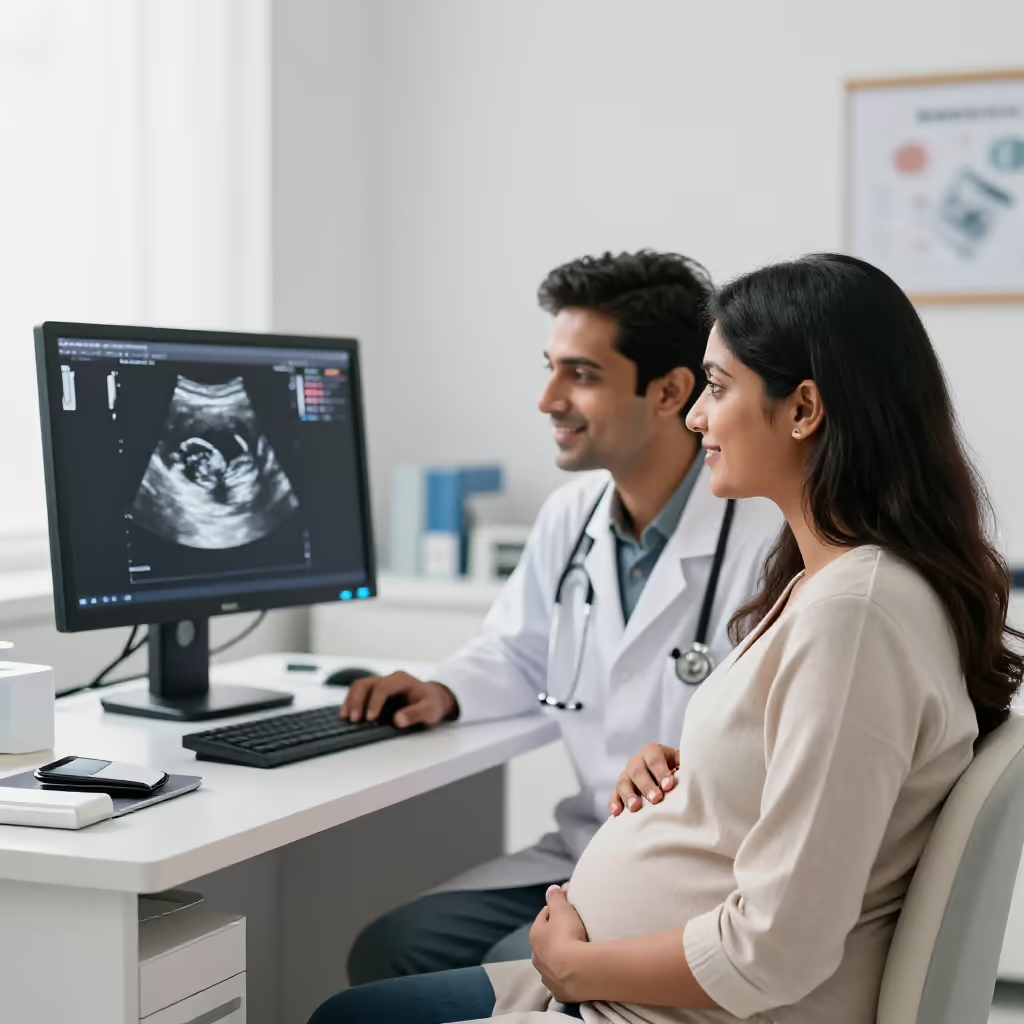
Describes a person who is in the phase of becoming something, especially in the context of parenthood. Most common in the combinations 'werdende Mutter' (expectant mother) or 'werdender Vater' (expectant father).
example
Eine werdende Mutter hat besondere Ernährungsbedürfnisse.
An expectant mother has special nutritional needs.

Usage tips
Word structure
'Werdend' is the present participle of the verb 'werden' (to become). It literally means 'in the process of becoming' or 'future' and is used as an adjective.
EXAMPLE
Das ist ein werdendes Problem, um das wir uns kümmern müssen.
That is an emerging problem that we need to deal with.
Only before a noun
'Werdend' is used almost exclusively attributively, that is, directly before a noun. You cannot say: 'Die Mutter ist werdend.' Instead, it always comes before the noun it describes.
EXAMPLE
Der werdende Vater war sehr aufgeregt.
The expectant father was very excited.
Typical collocations
In everyday language, 'werdend' is most commonly used in the context of parenthood. The fixed combinations are 'werdende Mutter' (expectant mother), 'werdender Vater' (expectant father), and 'werdende Eltern' (expectant parents).
EXAMPLE
Dieser Kurs richtet sich an werdende Eltern.
This course is aimed at expectant parents.
Compare with
near_synonym · confusable
werdend vs kommend
coming / next
'kommend' and 'werdend' can both point to something future. But the difference is important: 'kommend' means the next point in a sequence, for example 'die kommende Woche' (next week) or 'das kommende Jahr' (the coming year). 'werdend' describes more of a process: someone or something is not yet completely finished, but is developing toward that state. That is why you say 'werdende Mutter' (expectant mother), but not 'kommende Mutter', when you mean a pregnant woman. Learners may confuse the words because both have to do with the future. A simple rule is: use 'kommend' for calendar time, and 'werdend' for development.
werdend
Die Ärztin gab der werdenden Mutter im Krankenhaus wichtige Tipps.
The doctor gave the expectant mother important advice at the hospital.
kommend
In der kommenden Woche hat mein Kollege einen Termin bei der Behörde.
Next week, my colleague has an appointment at the government office.