

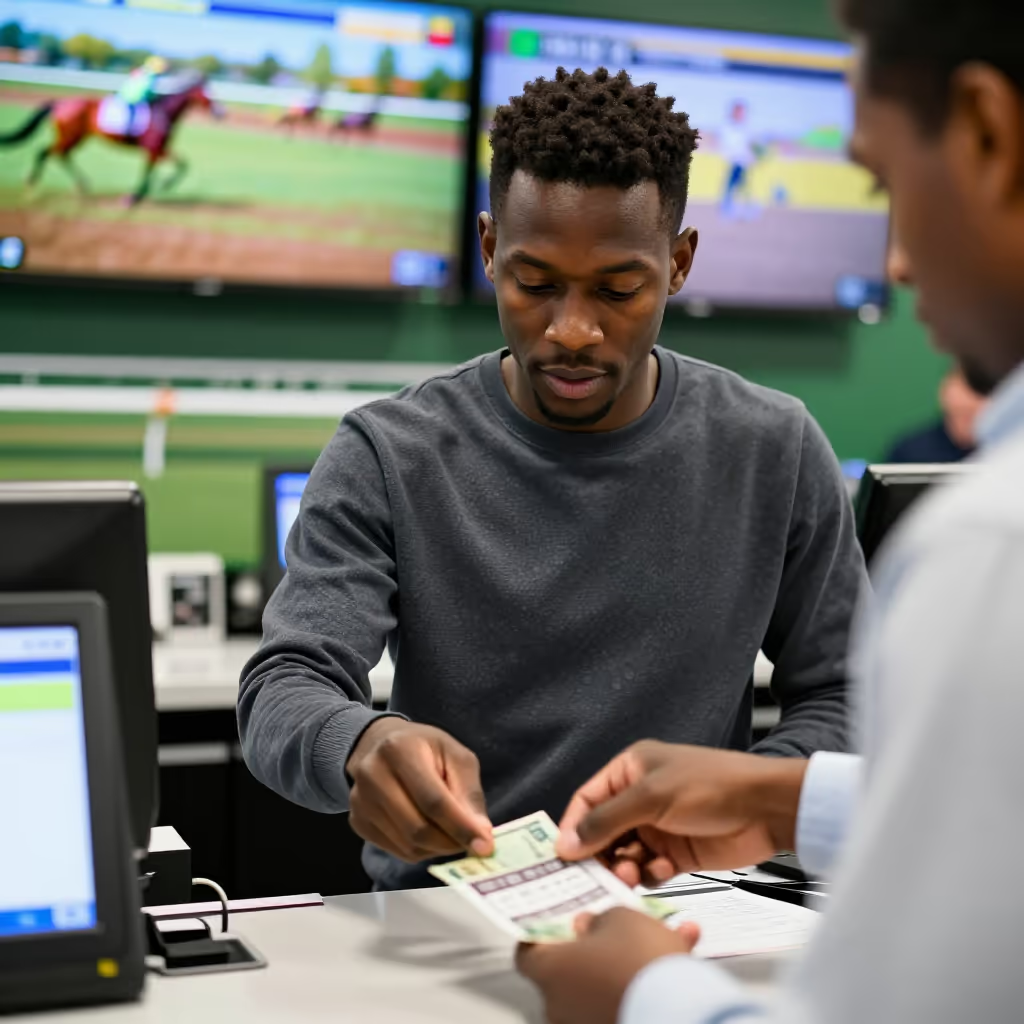
wetten
to bet
To stake an amount of money on the outcome of an uncertain event, hoping to win a profit if the prediction is correct.
Ich wette 20 Euro darauf, dass diese Mannschaft das Spiel gewinnt.
I bet 20 euros on this team winning the game.
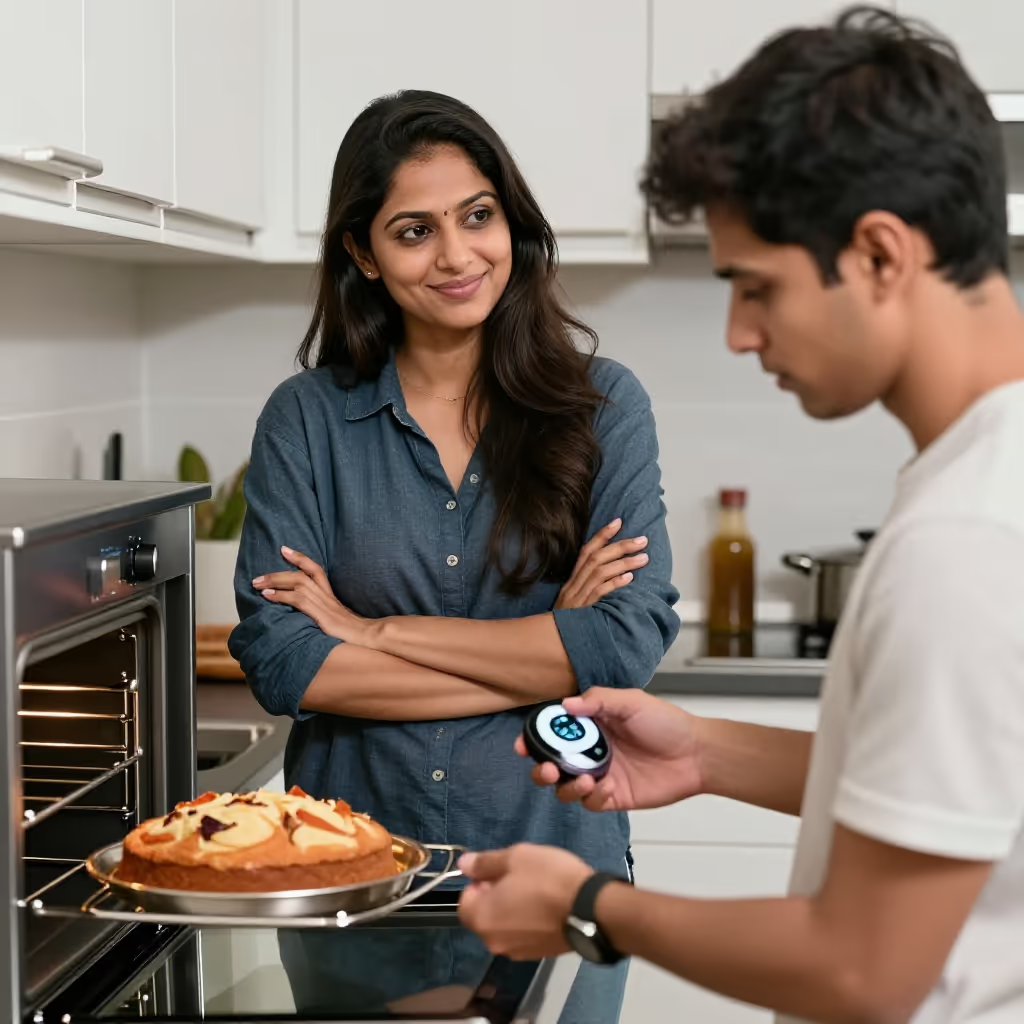

to bet
Loading your saved state.
to bet
To stake an amount of money on the outcome of an uncertain event, hoping to win a profit if the prediction is correct.
Ich wette 20 Euro darauf, dass diese Mannschaft das Spiel gewinnt.
I bet 20 euros on this team winning the game.

When you bet on the outcome of an event, you use the preposition 'auf' followed by the accusative. This names the object or event of the bet.
Er wettet immer auf seine Lieblingsmannschaft.
He always bets on his favorite team.
In the colloquial meaning 'to be sure', 'wetten' (to bet) is often used with a subordinate clause introduced by 'dass' (that). The verb 'wetten' usually comes at the beginning of the sentence to emphasize the conviction.
Ich wette, dass er heute wieder zu spät zur Arbeit kommt.
I bet that he'll be late for work again today.
If the stake of the bet is not money but an object or an action, you use the preposition 'um' followed by the accusative.
Wir haben um eine Kiste Bier gewettet.
We bet a crate of beer.
to play
'spielen' and 'wetten' can both have to do with money and luck. Here, 'spielen' is more general and means taking part in a game of chance, for example in a casino or at a slot machine. 'wetten' is more specific: you stake money on the outcome of an uncertain event, for example on a soccer match or a race. Learners may confuse the words because with both you can win or lose. Remember: with 'wetten', there is always a prediction about an outcome; with 'spielen', it is more generally about the gambling itself.

Sie wettet fünf Euro darauf, dass ihre Mannschaft gewinnt.
She bets five euros that her team will win.
Im Urlaub hat Paul im Casino gespielt und Geld verloren.
On vacation, Paul gambled in the casino and lost money.