
In a figurative sense, wild, chaotic, and disorderly. Often used to describe behavior, a party, or a condition.
example
Die Party war eine wüste Angelegenheit mit lauter Musik und viel Durcheinander.
The party was a wild affair with loud music and lots of chaos.
Usage tips
Word family
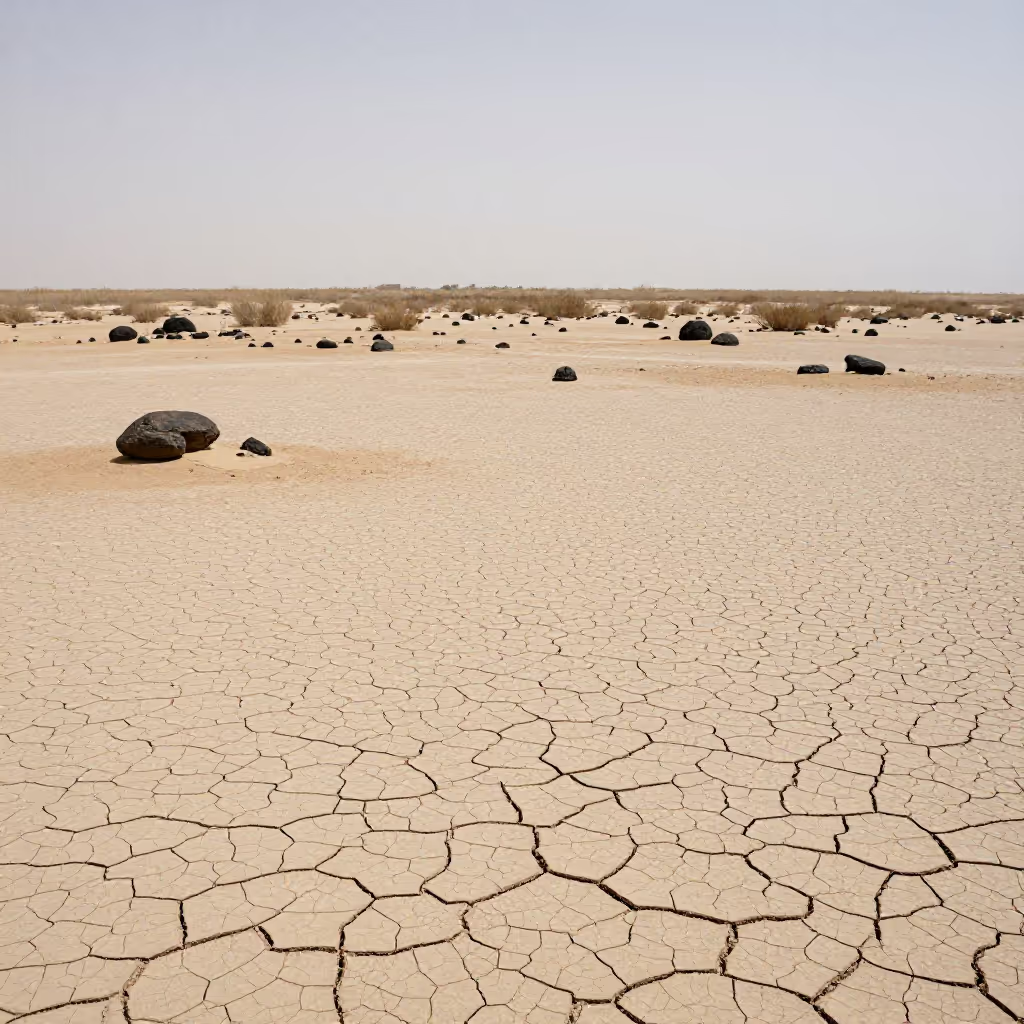
The adjective 'wüst' (wild/desolate) is closely related to the noun 'die Wüste' (desert). The basic meaning of the desert's emptiness, barrenness, and wildness appears in all meanings of 'wüst'.
EXAMPLE
Die Landschaft war karg und wüst.
The landscape was barren and desolate.
Context clue
The noun that 'wüst' (wild/desolate) describes reveals the meaning. If it refers to a landscape, it means 'leer' (empty). If it refers to a party or a room, it means 'chaotisch' (chaotic). If it refers to words, it means 'grob' (coarse).
EXAMPLE
Nach dem Sturm sah der Garten wüst aus.
After the storm, the garden looked wild and messy.
Typical collocations
In the meaning 'chaotisch' (chaotic), 'wüst' (wild) is often used to describe parties, celebrations, or conditions. Typical collocations are 'eine wüste Party' (a wild party), 'wüst feiern' (to party wildly), or 'wüste Zustände' (chaotic conditions).
EXAMPLE
Die Studenten haben das Semesterende wüst gefeiert.
The students celebrated the end of the semester wildly.
Typical collocations
When it comes to language, 'wüst' (vile) describes coarse or insulting expressions. Common combinations are 'wüste Beschimpfungen' (vile insults), 'wüste Schimpfwörter' (vile swear words), or 'wüste Flüche' (vile curses).
EXAMPLE
Der Trainer schleuderte seiner Mannschaft wüste Beschimpfungen entgegen.
The coach hurled vile insults at his team.
Compare with
near_synonym · confusable
wüst vs wild
wild
'wild' and 'wüst' can both describe a chaotic or disorderly situation. 'wild' is more general and fits noise, movement, behavior, or a stormy mood. 'wüst' often sounds stronger and more negative; it describes a very disorderly state or rough behavior that has gotten out of control. The words can be confused because both can fit parties, arguments, or chaos. However, 'wild' can also sound more neutral or even positive, while 'wüst' usually sounds more critical.
wüst
Nach der Feier sah das Wohnzimmer wüst aus.
After the party, the living room looked like a complete mess.