
To raise the hand and move it back and forth as a greeting, to say goodbye, or as a signal.
example
Sie stand am Bahnsteig und winkte, bis der Zug nicht mehr zu sehen war.
She stood on the platform and waved until the train could no longer be seen.
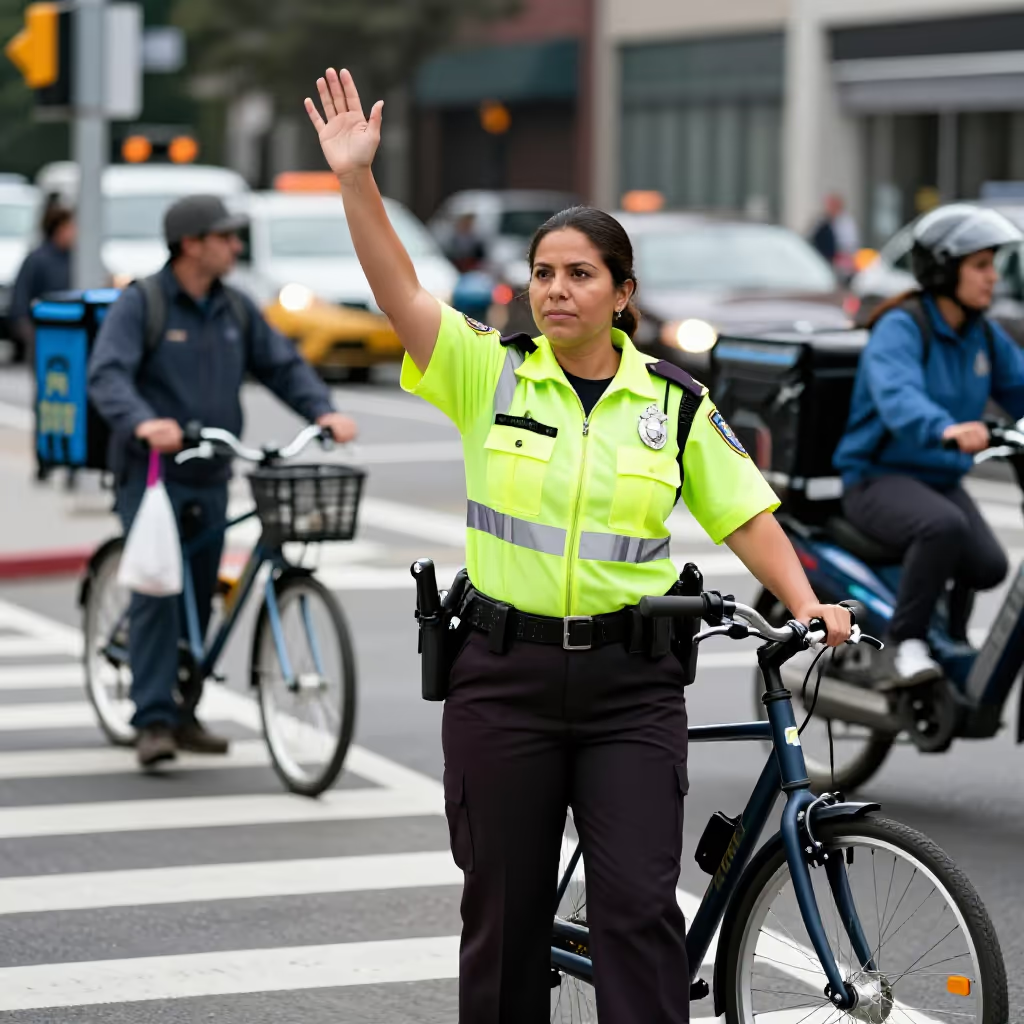
Usage tips
Dative or accusative?
With the hand movement, the case is important: you wave to 'jemandem' (someone, dative) in order to greet them. But you wave 'jemanden' (someone, accusative) toward you or to a place in order to give them a signal.
EXAMPLE
Ich habe meinem Freund zum Abschied gewinkt.
I waved goodbye to my friend.
Typical collocations
To make the purpose of waving clear, it is often combined with prepositions. Typical phrases are 'zum Gruß winken' (to wave in greeting) or 'zum Abschied winken' (to wave goodbye).
EXAMPLE
Die Kinder winkten dem Weihnachtsmann aufgeregt zu.
The children excitedly waved to Santa Claus.
Sentence structure with rewards
In the figurative meaning, the reward or opportunity is the subject of the sentence. The person who receives the opportunity is in the dative. This structure is used only for this figurative meaning.
EXAMPLE
Den Gewinnern winkt eine Reise nach Paris.
A trip to Paris awaits the winners.
Compare with
antonym · confusable
winken vs drohen
to threaten
'drohen' and 'winken' can both express that something is coming for someone in the future. In this use, however, they are opposites. 'drohen' is used for a danger or a negative consequence. 'winken' is used when a reward, a prize, or a good opportunity is in prospect. Learners may confuse the words because both can be connected with a future consequence. The simple difference is: bad consequences 'drohen' (threaten), good consequences 'winken' (await).
winken
Wenn das Team das Projekt schafft, winkt allen ein freier Freitag.
If the team completes the project, everyone can look forward to a Friday off.
drohen
Bei diesem Wetter drohen auf der Straße gefährliche Unfälle.
In this weather, dangerous accidents threaten on the road.