


bevorstehen
to be imminent
Indicates that an event or situation will occur in the near future. It is often used impersonally.
EXAMPLE
Den Schülern stehen die Abschlussprüfungen bevor.
The students' final exams are imminent.
to be imminent
Loading your saved state.
to be imminent
Indicates that an event or situation will occur in the near future. It is often used impersonally.
Den Schülern stehen die Abschlussprüfungen bevor.
The students' final exams are imminent.
The verb is made up of 'be-', 'vor' (in front of), and 'stehen' (to stand). You can picture it visually: an event 'stands before' you in time.
Uns steht eine lange Reise bevor.
A long journey lies ahead of us.
The prefix 'be-' is inseparable. This means that 'bevor' is never separated from the verb stem 'stehen', even in a main clause.
Eine wichtige Entscheidung bevorsteht dem Management.
An important decision is imminent for the management.
The person or group affected by the event is in the dative. The upcoming event itself is the subject in the nominative.
Dem Team steht ein schwieriges Spiel bevor.
A difficult game is imminent for the team.
This verb belongs more to formal or written language. It is often found in news reports, reports, or official announcements.
Der Firma stehen große Veränderungen bevor.
Major changes are imminent for the company.
to threaten
Drohen and bevorstehen can both refer to a negative event in the near future. Bevorstehen only describes that it will happen soon, whereas drohen additionally emphasizes the danger or feared possibility. Bevorstehen is appropriate for a neutral reference to time; drohen adds a warning or negative evaluation.
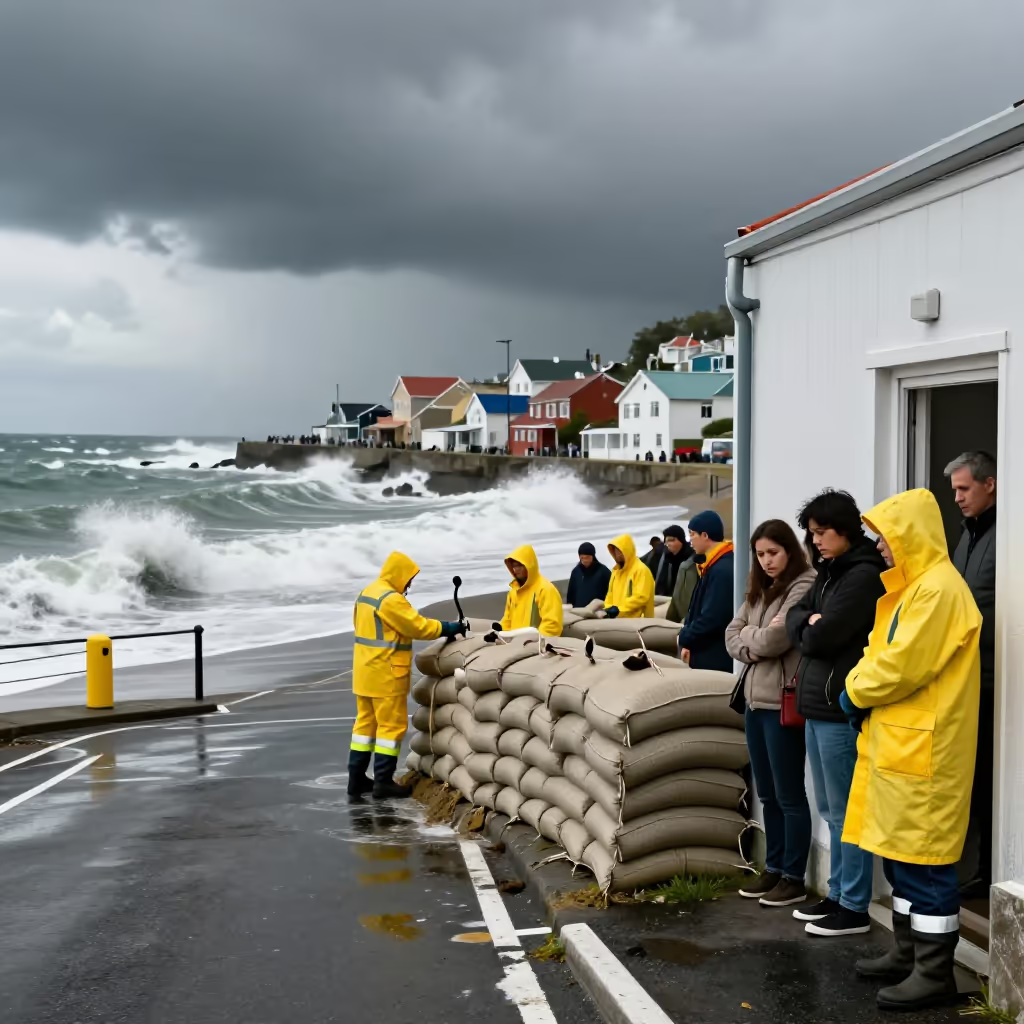
Wegen der dunklen Wolken steht der Stadt ein schweres Unwetter bevor.
Because of the dark clouds, a severe storm is imminent for the city.
Wegen der dunklen Wolken droht der Stadt ein schweres Unwetter.
Because of the dark clouds, the city is threatened by a severe storm.