

wund
sore
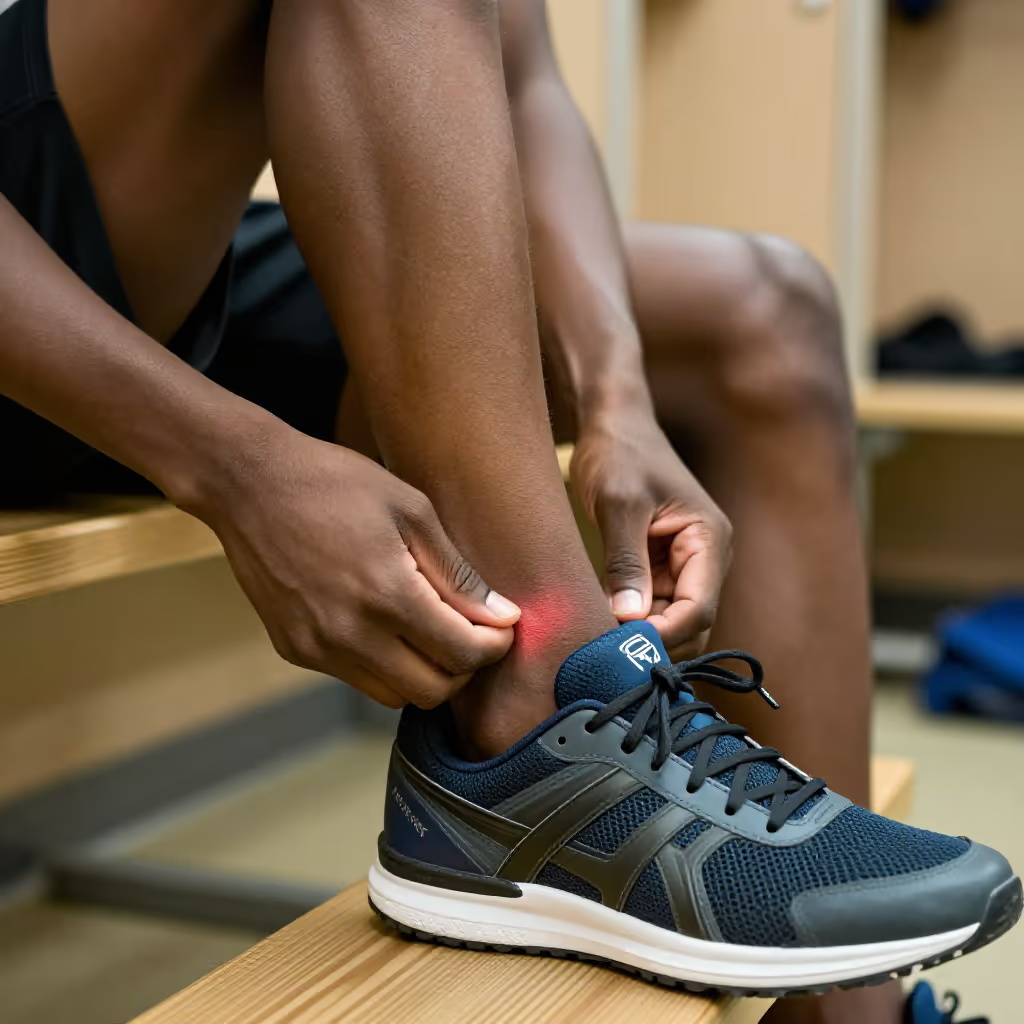
Describes an area of skin that is irritated, red, and painful due to friction, pressure, or an injury.
EXAMPLE
Nach der langen Wanderung hatte ich wunde Füße.
After the long hike, I had sore feet.
sore
Loading your saved state.
sore
Describes an area of skin that is irritated, red, and painful due to friction, pressure, or an injury.
Nach der langen Wanderung hatte ich wunde Füße.
After the long hike, I had sore feet.
to make sore
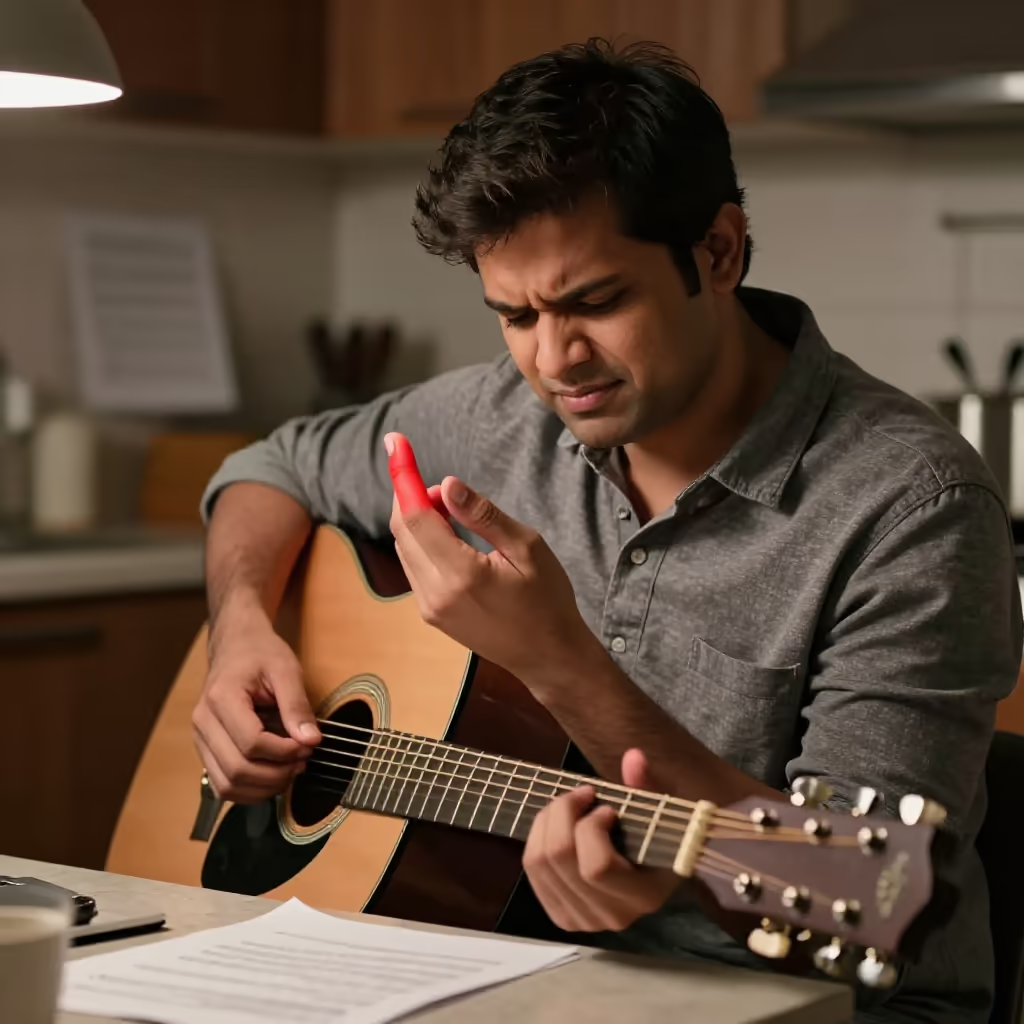
Used in combination with a verb to express that an activity is done excessively until pain or a sore spot develops.
Er hat sich die Hände beim Holzhacken wund gearbeitet.
He worked his hands sore chopping wood.

sore point
A topic or matter that is emotionally painful, sensitive, or unpleasant for a person.
Sprich ihn besser nicht auf seine Prüfungsergebnisse an, das ist ein wunder Punkt bei ihm.
It's better not to bring up his exam results; that's a sore point for him.
The adjective 'wund' (sore) is closely related to the noun 'die Wunde' (wound). Both words refer to an injury or a painful spot on the body.
Durch die Reibung des Schuhs ist meine Ferse jetzt ganz wund.
Because of the friction from the shoe, my heel is now really sore.
In its literal meaning, 'wund' (sore) is almost always combined with body parts or the skin. Typical examples are 'wunde Füße' (sore feet), 'eine wunde Nase' (a sore nose), or 'wunde Stellen auf der Haut' (sore spots on the skin).
Vom vielen Niesen hatte er eine ganz wunde Nase.
From sneezing so much, he had a really sore nose.
The construction 'sich wund + Verb' expresses an excessive action. It follows the pattern: subject + verb + sich (accusative) + body part (accusative) + wund.
Sie hat sich die Finger wund getippt, um den Bericht fertigzustellen.
She typed her fingers sore to finish the report.
The idiom 'ein wunder Punkt' (a sore point) is a fixed combination and means a sensitive, emotional topic. The word 'wund' (sore) is used here only in this combination.
Die finanzielle Situation der Firma ist momentan ein wunder Punkt.
The company's financial situation is currently a sore point.
tense
Angespannt describes tight, tense muscles, while wund describes an irritated and painful area of skin. Angespannt is appropriate for discomfort caused by muscle tension; wund is appropriate for pain caused by friction, pressure, or an injury.

Nach der langen Wanderung ist die Haut unter dem Rucksackgurt wund.
After the long hike, the skin under the backpack strap is sore.
Nach der langen Wanderung sind meine Schultermuskeln angespannt.
After the long hike, my shoulder muscles are tense.