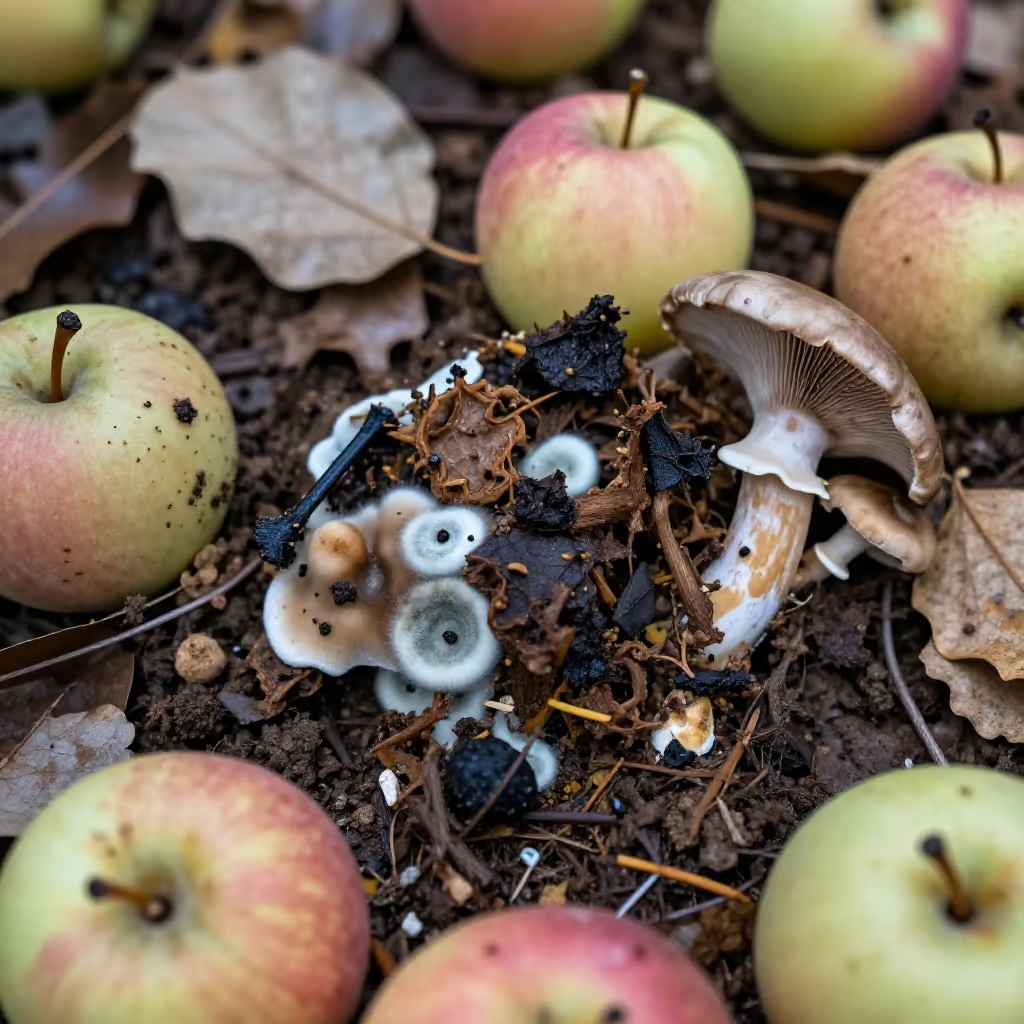
The process of decay or breaking down that an organic substance undergoes through natural influences such as bacteria or fungi. This is also referred to as rotting or decomposing.
example
Die Blätter auf dem Komposthaufen zersetzen sich langsam zu Humus.
The leaves on the compost heap slowly decompose into humus.

Usage tips
Inseparable prefix 'zer-'
The prefix 'zer-' is inseparable and almost always expresses destruction, decay, or breaking apart. In all meanings of 'zersetzen' (to decompose/undermine/break down), this prefix signals a destructive process.
EXAMPLE
Die Säure zersetzt das Material.
The acid breaks down the material.
Reflexive vs. transitive
In the biological meaning (to rot), the verb is used reflexively: 'etwas zersetzt sich' (something decomposes). In the social and chemical meanings, it is used transitively: 'jemand/etwas zersetzt etwas' (someone/something undermines or breaks down something).
EXAMPLE
Das alte Holz zersetzt sich im feuchten Keller.
The old wood is decomposing in the damp cellar.
Context clue: biology
This reflexive meaning is found in the context of nature and biology. Typical subjects are organic substances such as plants, food, or other biological materials.
EXAMPLE
Das Obst auf dem Kompost zersetzt sich und wird zu Erde.
The fruit on the compost decomposes and turns into soil.
Context clue: society
This figurative meaning is used in social or political contexts. It concerns abstract things such as trust, morale, a group, or an organization that are weakened from within.
EXAMPLE
Ständige Lügen zersetzten das Vertrauen in der Freundschaft.
Constant lies undermined the trust in the friendship.
Cultural context
The term 'Zersetzung' (undermining/subversion) has a special historical meaning in Germany. It referred to a psychological tactic used by the GDR secret police (Stasi) to undermine opposition groups.
EXAMPLE
In dem Buch wird die Methode der Zersetzung durch die Stasi beschrieben.
The book describes the Stasi's method of subversion.
Context clue: chemistry
This meaning is technical and belongs to the field of chemistry. It describes the deliberate splitting of a chemical compound into its individual elements or simpler components.
EXAMPLE
Hitze kann bestimmte chemische Verbindungen zersetzen.
Heat can break down certain chemical compounds.
Compare with
near_synonym · confusable
zersetzen vs zerlegen
to dismantle / analyze
'zerlegen' and 'zersetzen' both have to do with dividing something up or breaking something down. However, 'zerlegen' usually describes a deliberate action: someone takes a device apart or breaks a problem down into individual parts. 'zersetzen' is more likely to describe a process in which a substance breaks down, for example through bacteria, fungi, heat, or a chemical reaction. Learners may confuse the words because both ultimately refer to smaller parts. The important point is: a person actively 'zerlegt' something; a substance often 'zersetzt sich' by itself or is chemically broken down.
zersetzen
Die Blätter zersetzen sich im feuchten Boden langsam.
The leaves slowly decompose in the damp soil.
zerlegen
Die Technikerin zerlegt das Gerät vorsichtig auf dem Arbeitstisch.
The technician carefully dismantles the device on the workbench.