


zumachen
to close
To close an object, an opening, or a container so that nothing can get in or out anymore.
EXAMPLE
Kannst du bitte das Fenster zumachen? Es zieht.
Can you please close the window? There’s a draft.
to close / hurry up
Loading your saved state.
to close
To close an object, an opening, or a container so that nothing can get in or out anymore.
Kannst du bitte das Fenster zumachen? Es zieht.
Can you please close the window? There’s a draft.
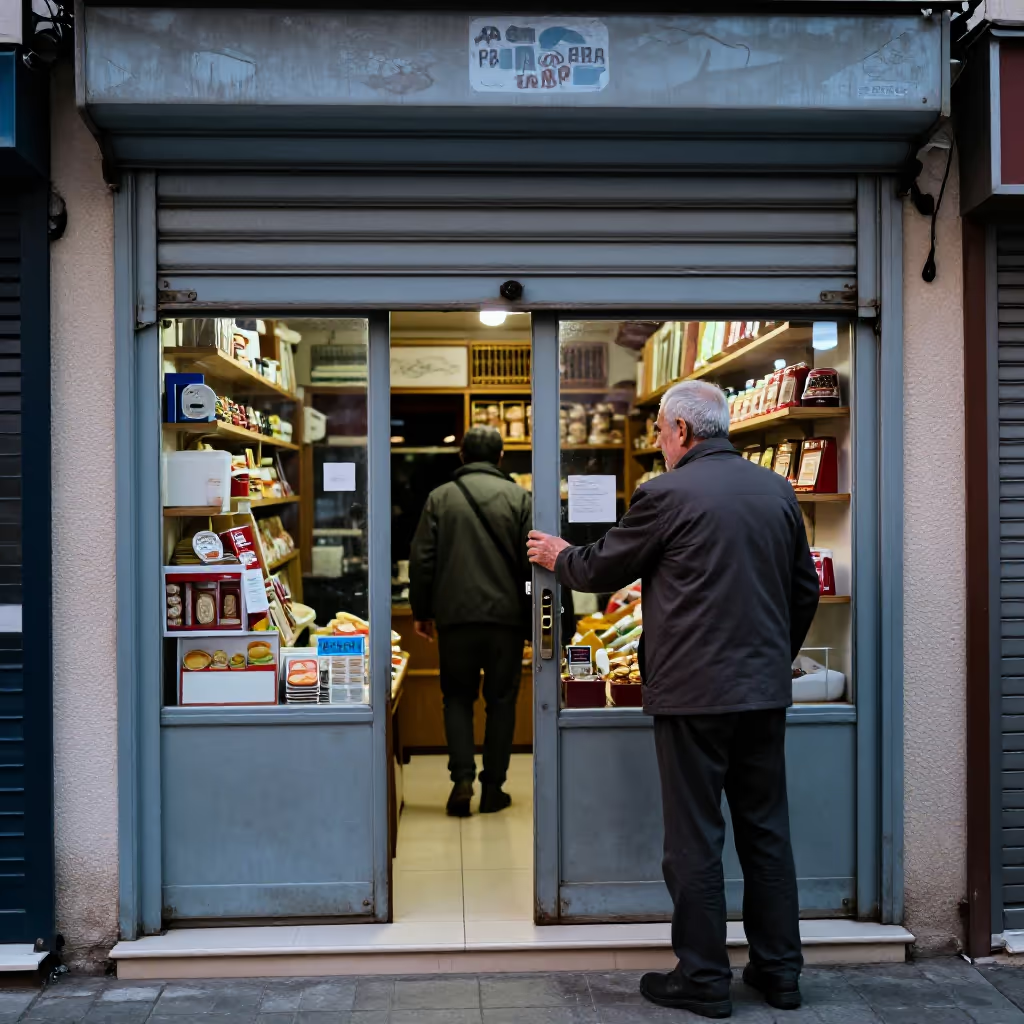
to close down
To close a shop, restaurant, or institution for the day or permanently.
Der kleine Buchladen an der Ecke musste leider zumachen.
Unfortunately, the small bookshop on the corner had to close down.

to hurry up
A colloquial command telling someone to hurry up.
Mach zu, der Zug fährt gleich ab!
Hurry up, the train is about to leave!
'Zumachen' (to close) is a separable verb. The prefix 'zu' goes to the end in main clauses. In subordinate clauses and in the infinitive with 'zu,' the verb stays together.
Ich mache schnell die Tür zu.
I’ll quickly close the door.
The verb 'zumachen' (to close) is very common in everyday spoken language. It often sounds more direct and informal.
Mach bitte die Jacke zu, es ist kalt draußen.
Please zip up your jacket; it’s cold outside.
Common things that you 'zumacht' (close) are openings or objects with openings. Typical examples are: 'die Augen zumachen' (to close one’s eyes), 'den Mund zumachen' (to close one’s mouth / shut one’s mouth), 'ein Buch zumachen' (to close a book), or 'einen Reißverschluss zumachen' (to zip up a zipper).
Wenn ich müde bin, kann ich kaum die Augen aufhalten und mache sie einfach zu.
When I’m tired, I can hardly keep my eyes open and just close them.
The command 'Mach zu!' is a fixed colloquial expression and means 'Hurry up!' It is used without an object and is very informal.
Mach endlich zu, wir kommen zu spät!
Hurry up already, we’re going to be late!
to lock / to complete
Both words can mean that a door is closed. „Zumachen“ usually only describes the fact that the door is no longer open, while „abschließen“ additionally emphasizes securing it with a key or bolt. If you only mean closing the door, use „zumachen“; if no one should be able to open it, use „abschließen“.
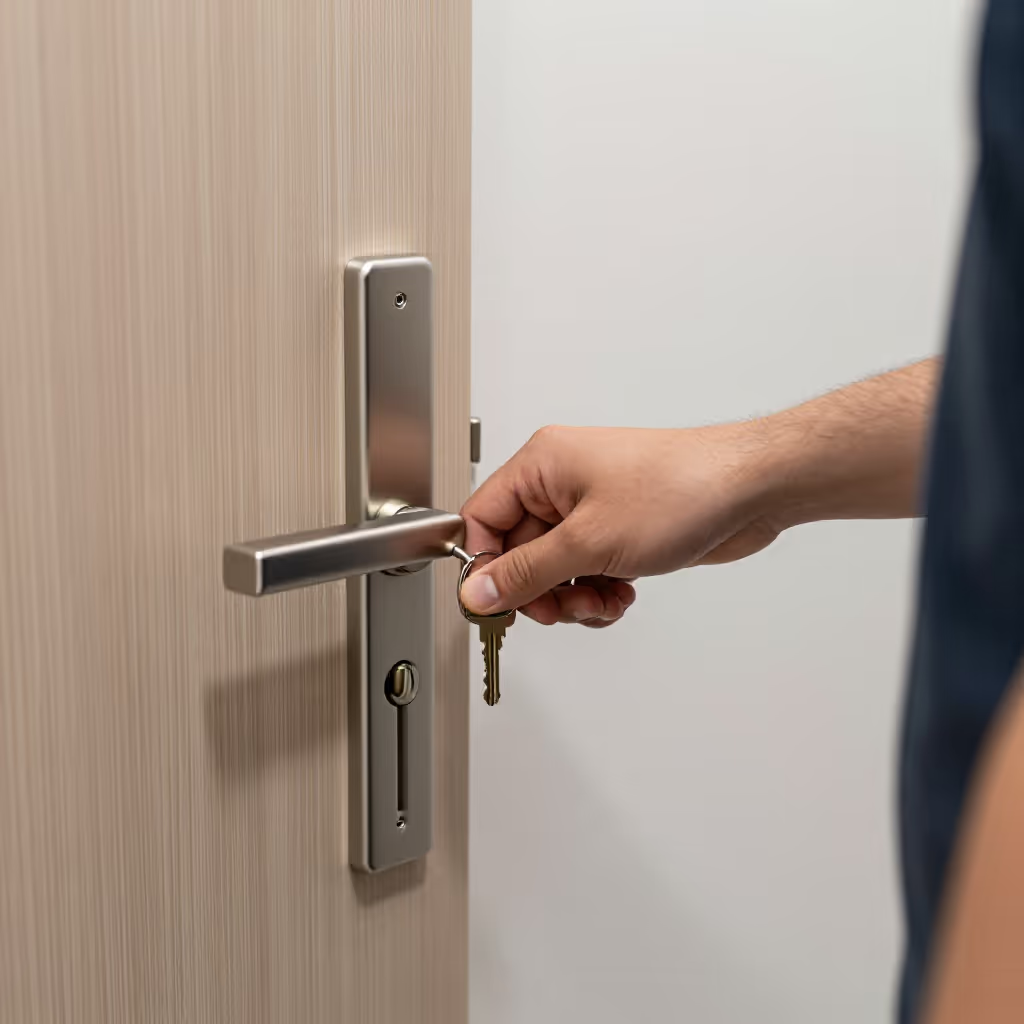
Bitte mach die Haustür zu, weil es im Flur kalt ist.
Please close the front door because the hallway is cold.
Bitte schließ die Haustür ab, damit niemand sie von außen öffnen kann.
Please lock the front door so that no one can open it from outside.