

schließen
to close
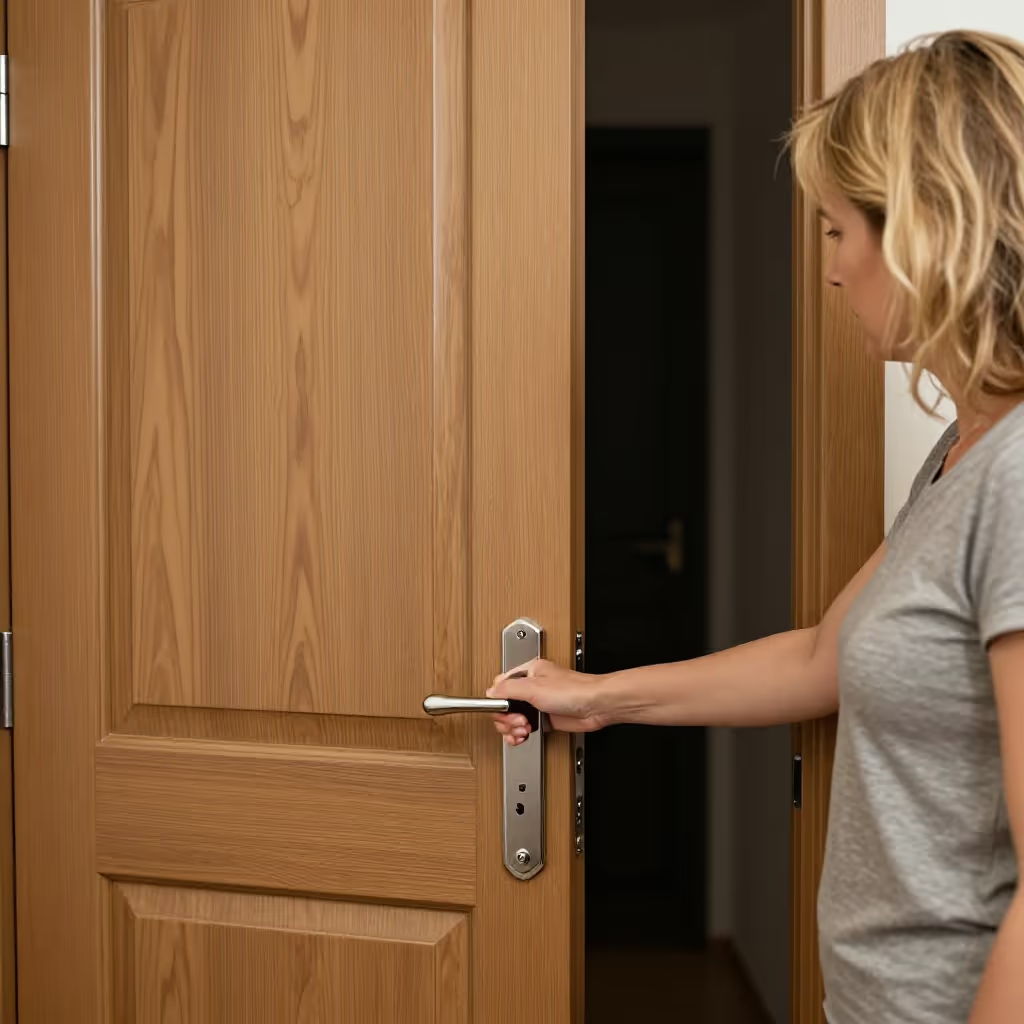
To shut an opening such as a door, window, or book so that passage is no longer possible.
EXAMPLE
Könntest du bitte das Fenster schließen? Es zieht.
Could you please close the window? There's a draft.
to close
Loading your saved state.
to close
To shut an opening such as a door, window, or book so that passage is no longer possible.
Könntest du bitte das Fenster schließen? Es zieht.
Could you please close the window? There's a draft.

to close
To end something or bring it to a conclusion, for example an event, a meeting, or a discussion.
Der Vorsitzende schloss die Sitzung um 17 Uhr.
The chairperson closed the meeting at 5 p.m.

to close down
To permanently cease the operation of a shop, company, or public institution.
Der kleine Buchladen an der Ecke musste letztes Jahr leider schließen.
The small bookshop on the corner unfortunately had to close down last year.
to conclude from
To draw a logical conclusion from certain information or signs.
Aus seinem Schweigen schließe ich, dass er mit dem Vorschlag nicht einverstanden ist.
From his silence, I conclude that he does not agree with the proposal.

to make an agreement
To make a formal agreement or enter into a pact.
Nach langen Verhandlungen konnten die beiden Länder endlich Frieden schließen.
After long negotiations, the two countries were finally able to make peace.
to close by itself
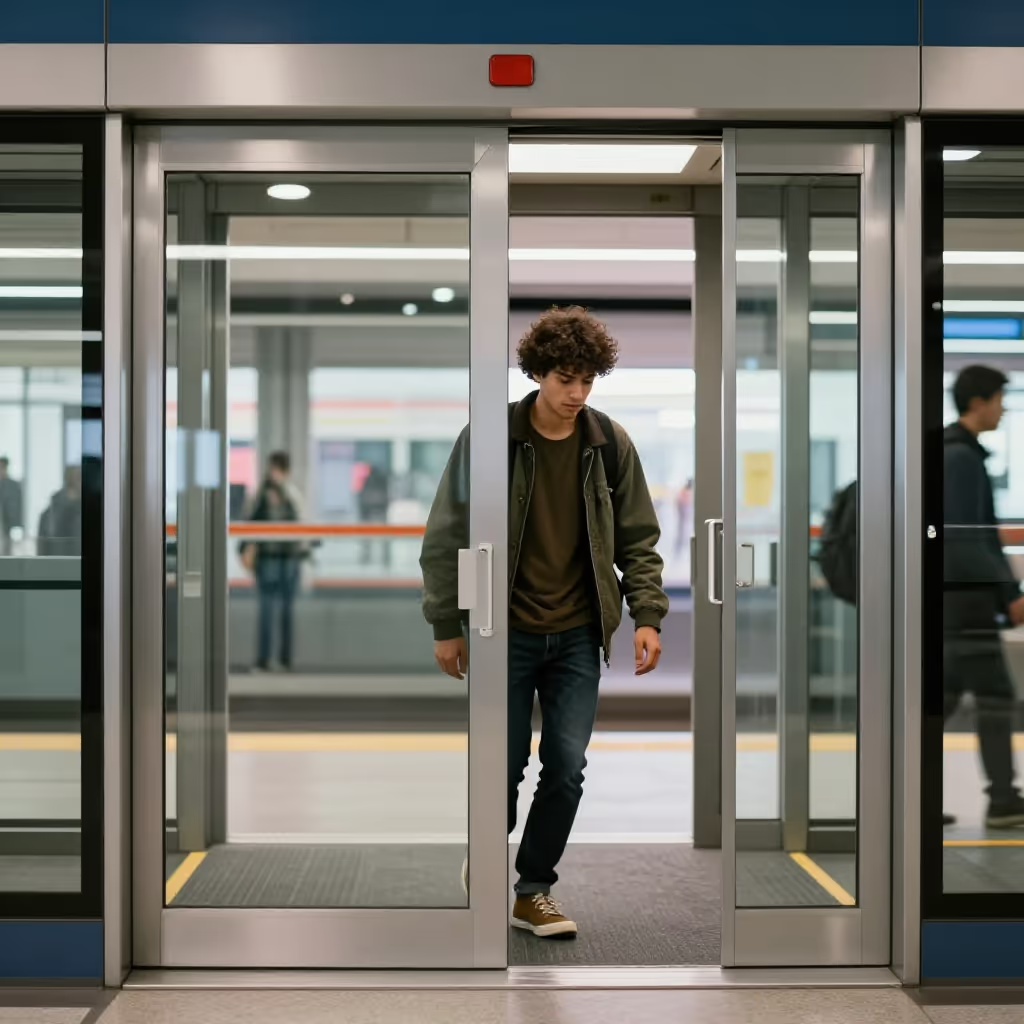
To shut by itself or automatically.
Die Türen des Aufzugs schließen sich in wenigen Sekunden.
The elevator doors will close in a few seconds.

to embrace someone
To hug someone, often as an expression of affection, comfort, or joy at seeing them again.
Als sie ihre Tochter nach langer Zeit wiedersah, schloss sie sie fest in die Arme.
When she saw her daughter again after a long time, she held her tightly in her arms.
The past participle 'geschlossen' (closed) is often used like an adjective to describe that something is shut. It describes the result of the action 'schließen' (to close).
Alle Fenster sind geschlossen.
All windows are closed.
'Eine Tür schließen' (to close a door) is an everyday, reversible action. 'Ein Geschäft schließen' (to close a business), on the other hand, often means the permanent end of operations. The object of the sentence (door vs. business) reveals the meaning.
Bitte schließ die Tür, es ist kalt.
Please close the door; it's cold.
In the meaning of 'beenden' (to end), 'schließen' (to close) is used mainly for formal occasions such as a meeting, debate, or event.
Der Redner schloss seinen Vortrag mit einem Zitat.
The speaker closed his talk with a quote.
When 'schließen' means 'folgern' (to conclude), it is always used with the preposition 'aus' + dative. The structure is: Aus [information] schließt man [conclusion].
Aus seiner Reaktion schließe ich, dass er überrascht war.
From his reaction, I conclude that he was surprised.
In the meaning of 'eine Vereinbarung treffen' (to make an agreement), 'schließen' is used in fixed combinations. Typical ones are: 'einen Vertrag schließen' (to conclude a contract), 'einen Kompromiss schließen' (to reach a compromise), 'Frieden schließen' (to make peace), or 'eine Ehe schließen' (to enter into a marriage).
Die beiden Parteien haben einen Kompromiss geschlossen.
The two parties reached a compromise.
The reflexive form 'sich schließen' (to close by itself) describes a process that happens without direct human action. It is often used for automatic or natural processes.
Die Blüte schließt sich in der Nacht.
The flower closes at night.
The expression 'jemanden in die Arme schließen' means 'to embrace someone'. The person being embraced is in the accusative.
Nach der langen Reise schloss die Mutter ihr Kind fest in die Arme.
After the long journey, the mother held her child tightly in her arms.
to lock / to complete
Schließen and abschließen both ensure that a door or window is not left open. Schließen simply means to close it; abschließen additionally means securing it with a key or bolt so that it cannot be opened.
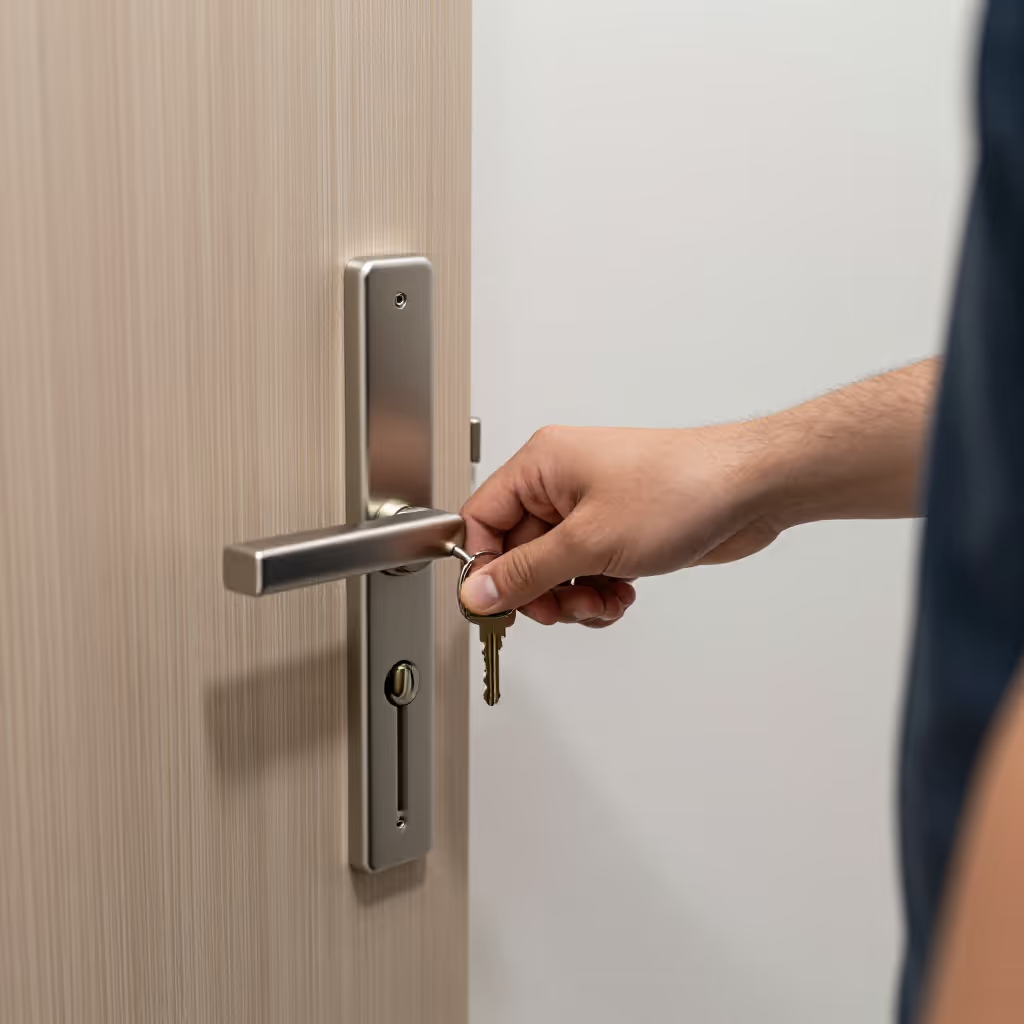
Mara schließt die Haustür, damit es nicht zieht.
Mara closes the front door so that there is no draft.
Mara schließt die Haustür ab, damit niemand hineinkommt.
Mara locks the front door so that no one can get in.