

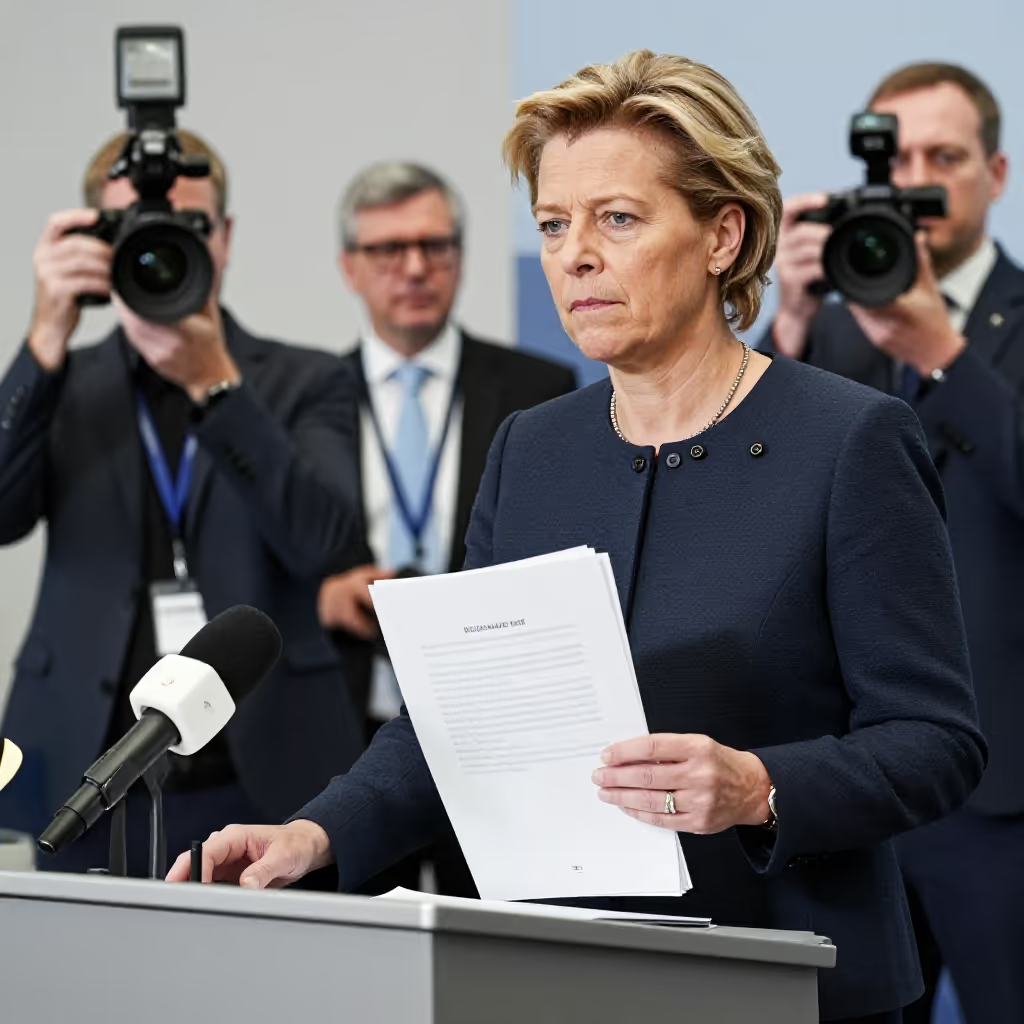
zurücktreten
to resign
To voluntarily give up an office, position, or function.
EXAMPLE
Der Minister ist nach dem Skandal von seinem Amt zurückgetreten.
The minister resigned from his office after the scandal.
to resign / step back
Loading your saved state.
to resign
To voluntarily give up an office, position, or function.
Der Minister ist nach dem Skandal von seinem Amt zurückgetreten.
The minister resigned from his office after the scandal.

to step back
To take one or more steps backward in order to create distance.
Bitte treten Sie einen Schritt zurück, damit der Zug einfahren kann.
Please step back one step so that the train can enter.

to withdraw from
To cancel or terminate a commitment, contract, or agreement.
Der Käufer ist vom Kaufvertrag zurückgetreten, weil das Auto Mängel hatte.
The buyer withdrew from the purchase contract because the car had defects.
'Zurücktreten' (to resign/step back) is a separable verb. The prefix 'zurück-' stands at the end in a main clause. In subordinate clauses or in the infinitive with 'zu', the verb is not separated.
Der Politiker tritt von seinem Amt zurück.
The politician is resigning from his office.
Since 'treten' (to step) expresses movement, the perfect tense of 'zurücktreten' (to resign/step back) is always formed with the auxiliary verb 'sein' (to be).
Der Präsident ist gestern überraschend zurückgetreten.
The president unexpectedly resigned yesterday.
When someone gives up an office, 'zurücktreten' (to resign) is often used with the preposition 'von' (+ dative) or 'als' (+ nominative). The context is usually political or professional.
Sie ist als Schatzmeisterin des Vereins zurückgetreten.
She resigned as treasurer of the association.
To express that one is canceling an agreement, the fixed expression 'von etwas zurücktreten' (to withdraw from something) is used. The noun after it is always in the dative.
Man kann innerhalb von 14 Tagen vom Online-Kauf zurücktreten.
You can withdraw from an online purchase within 14 days.
to terminate / to quit
Both kündigen and von einem Vertrag zurücktreten can end a contractual commitment. Kündigen generally ends a contractual relationship for the future, while zurücktreten reverses a promise or agreement. When referring to the ongoing termination of a contract, kündigen is the right choice; when the agreement is to be withdrawn, zurücktreten is appropriate.

Wegen der ausbleibenden Leistung treten wir von der Vereinbarung zurück.
Because the promised performance has not been delivered, we are withdrawing from the agreement.
Wegen der ausbleibenden Leistung kündigen wir den Vertrag zum Monatsende.
Because the promised performance has not been delivered, we are terminating the contract at the end of the month.