

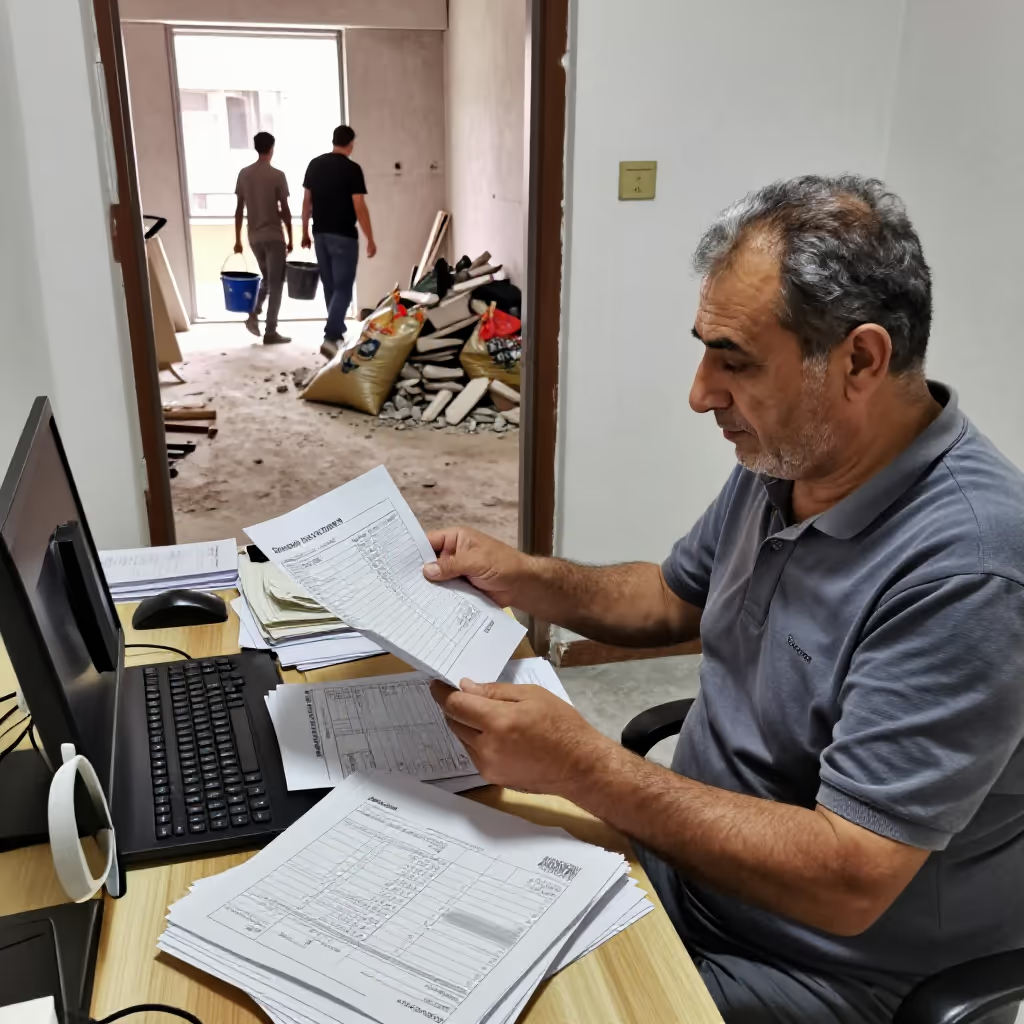
Describes something that arises, accumulates, or has to be dealt with. It is often used for costs, work, or waste.
example
Die anfallenden Reparaturkosten waren höher als erwartet.
The incurred repair costs were higher than expected.

Usage tips
Word structure
'Anfallend' is the present participle of the separable verb 'anfallen'. The verb means 'to arise' or 'to accumulate', so the adjective describes things that are currently arising or need to be dealt with.
EXAMPLE
Bitte listen Sie alle für das Projekt anfallenden Aufgaben auf.
Please list all tasks arising for the project.
Sentence structure and usage
This adjective is almost always used before a noun (attributive use). It describes a process that is currently taking place or will take place in the future.
EXAMPLE
Die anfallende Gartenarbeit dauert mehrere Stunden.
The arising garden work takes several hours.
Typical collocations
'Anfallend' is often used in combination with nouns that represent a kind of burden or task. Typical examples are 'anfallende Kosten' (incurred costs), 'anfallende Arbeiten' (work that needs to be done), 'anfallender Müll' (waste produced), or 'anfallende Gebühren' (incurred fees).
EXAMPLE
Der bei der Renovierung anfallende Bauschutt muss entsorgt werden.
The construction debris produced during the renovation must be disposed of.
Compare with
near_synonym · confusable
anfallend vs fällig
due
'fällig' and 'anfallend' can both have to do with tasks or costs that need attention. 'fällig' emphasizes the timing: an invoice, payment, or task has to be taken care of now or by a specific deadline. 'anfallend' is more about costs, work, or waste arising or accumulating. The words can be confused because both often appear in office or financial contexts. As a practical rule: if a deadline or payment is due, 'fällig' fits. If something arises over time, 'anfallend' fits better.
anfallend
Vor der Reise hat Laura die anfallenden Kosten genau aufgeschrieben.
Before the trip, Laura wrote down the costs that would arise in detail.