The process of adaptation in which a person or group adopts the language, culture, and habits of another, usually larger group or society.
example
Die soziologische Studie untersucht die Assimilation von Einwanderern in der zweiten Generation.
The sociological study examines the assimilation of second-generation immigrants.

Usage tips
Word family
'Assimilation' (assimilation) is the noun corresponding to the verb 'assimilieren' (to assimilate). The ending '-ion' often indicates a process or result. When someone assimilates, they go through a process of assimilation.
EXAMPLE
Es kann Jahre dauern, sich in einer neuen Kultur vollständig zu assimilieren.
It can take years to fully assimilate into a new culture.
Technical term
'Assimilation' (assimilation) is a technical term and is rarely used in everyday language. You mainly find it in academic texts in sociology, biology, or linguistics.
EXAMPLE
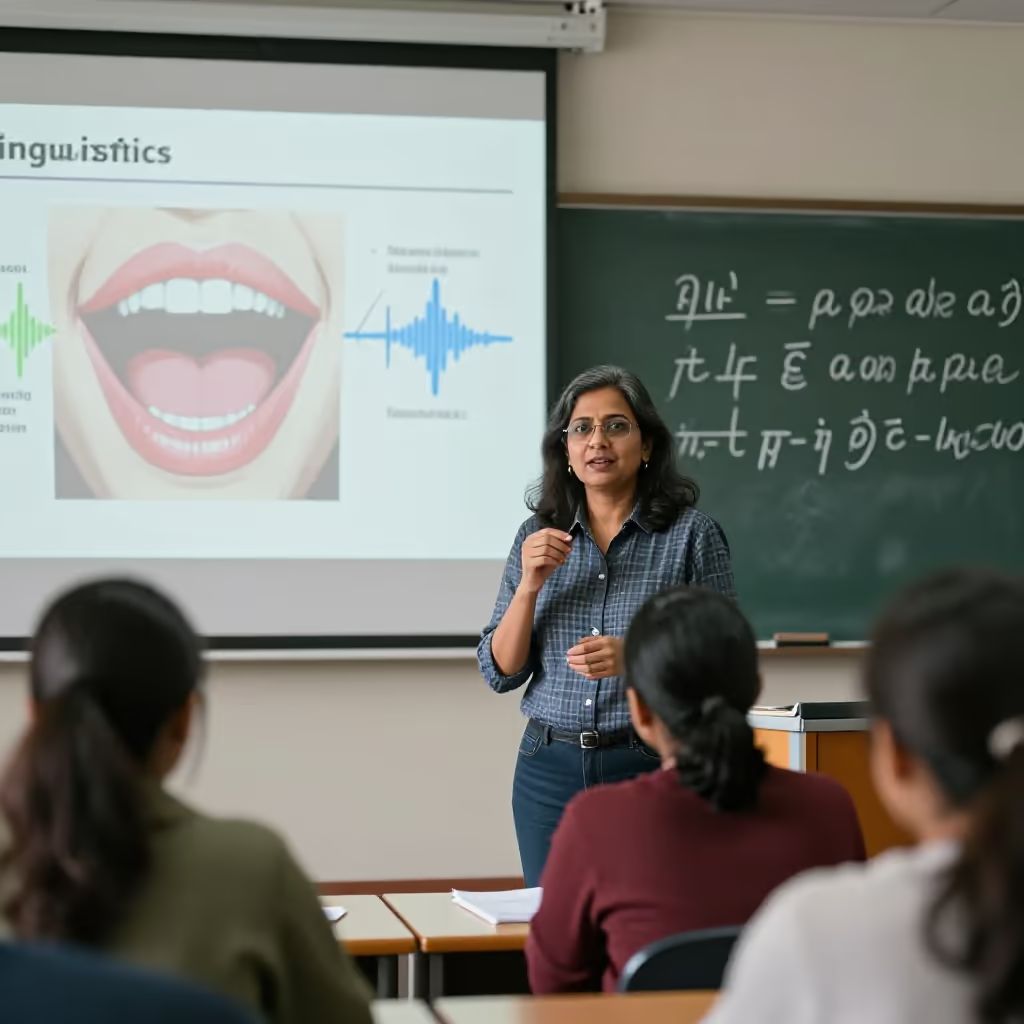
Der Professor erklärte den Begriff der phonetischen Assimilation.
The professor explained the concept of phonetic assimilation.
Context clues
You can recognize the meaning of 'Assimilation' (assimilation) from the context. If it is about 'Kultur' (culture) or 'Einwanderer' (immigrants), the sociological meaning is intended. With 'Nährstoffen' (nutrients) or 'Stoffwechsel' (metabolism), it is the biological meaning, and with 'Lauten' (sounds) or 'Aussprache' (pronunciation), it is the linguistic meaning.
EXAMPLE
Die Assimilation von Nährstoffen beginnt bereits im Magen.
The assimilation of nutrients begins in the stomach.
Typical combinations
In a sociological context, people often speak of 'kulturellen Assimilation' (cultural assimilation) or 'Assimilation von Migranten' (assimilation of migrants). The adaptation often happens 'an' (to) a society or culture.
EXAMPLE
Die Assimilation an die neue Gesellschaft fiel ihm anfangs schwer.
Assimilation into the new society was difficult for him at first.
Compare with
near_synonym · confusable
Assimilation vs Integration
integration
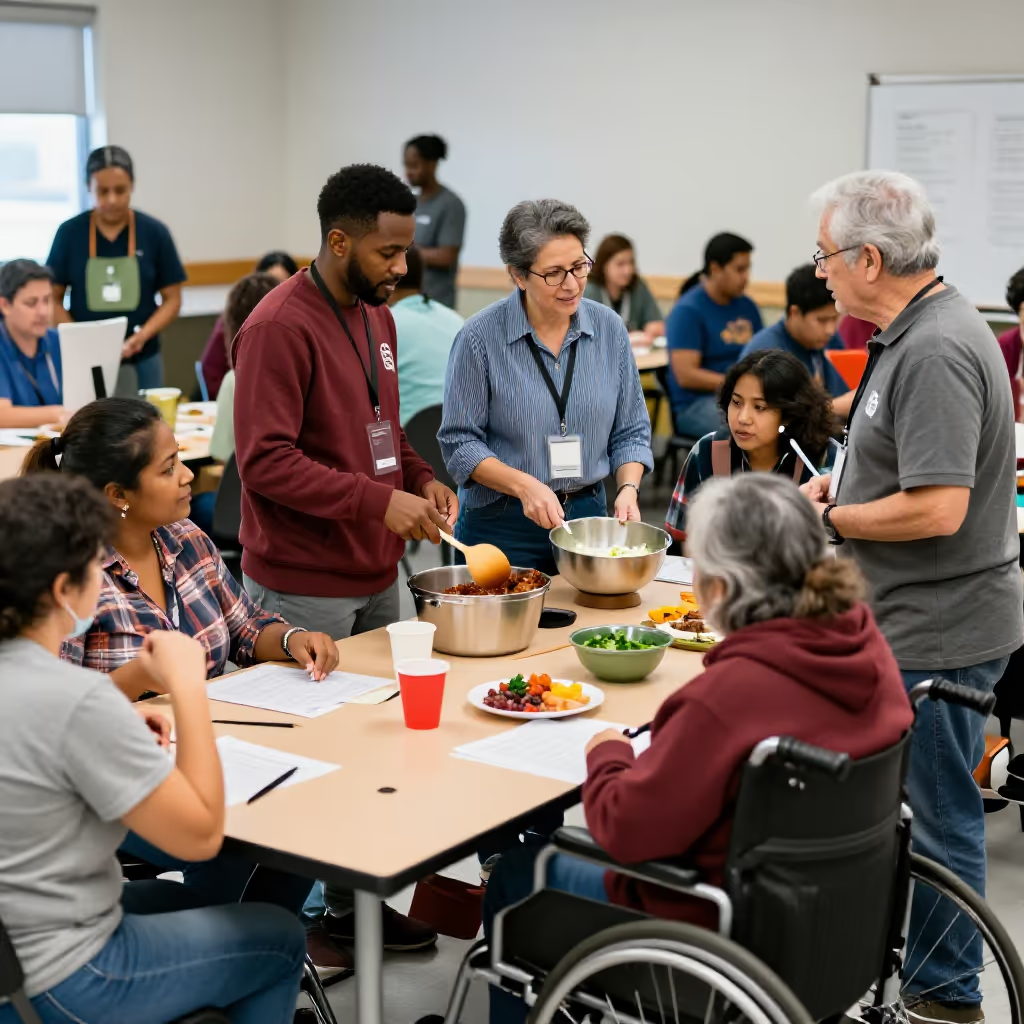
'Integration' and 'Assimilation' can both describe how people live in a society and adapt. The important difference is the focus. 'Integration' means that people participate and belong without completely giving up their own background or culture. 'Assimilation' means a stronger form of adaptation: a person or group adopts the language, culture, and habits of the larger group. The words are easy to confuse because both have to do with migration, culture, and society. When the focus is on participation and equal rights, 'Integration' is more natural; when the focus is on strong adaptation to another culture, 'Assimilation' is more precise.
Assimilation
Manche Menschen sehen Assimilation kritisch, weil dabei die eigene Kultur verloren gehen kann.
Some people view assimilation critically because one's own culture can be lost in the process.
Integration
Der Verein unterstützt die Integration neuer Familien im Stadtteil.
The association supports the integration of new families in the neighborhood.