

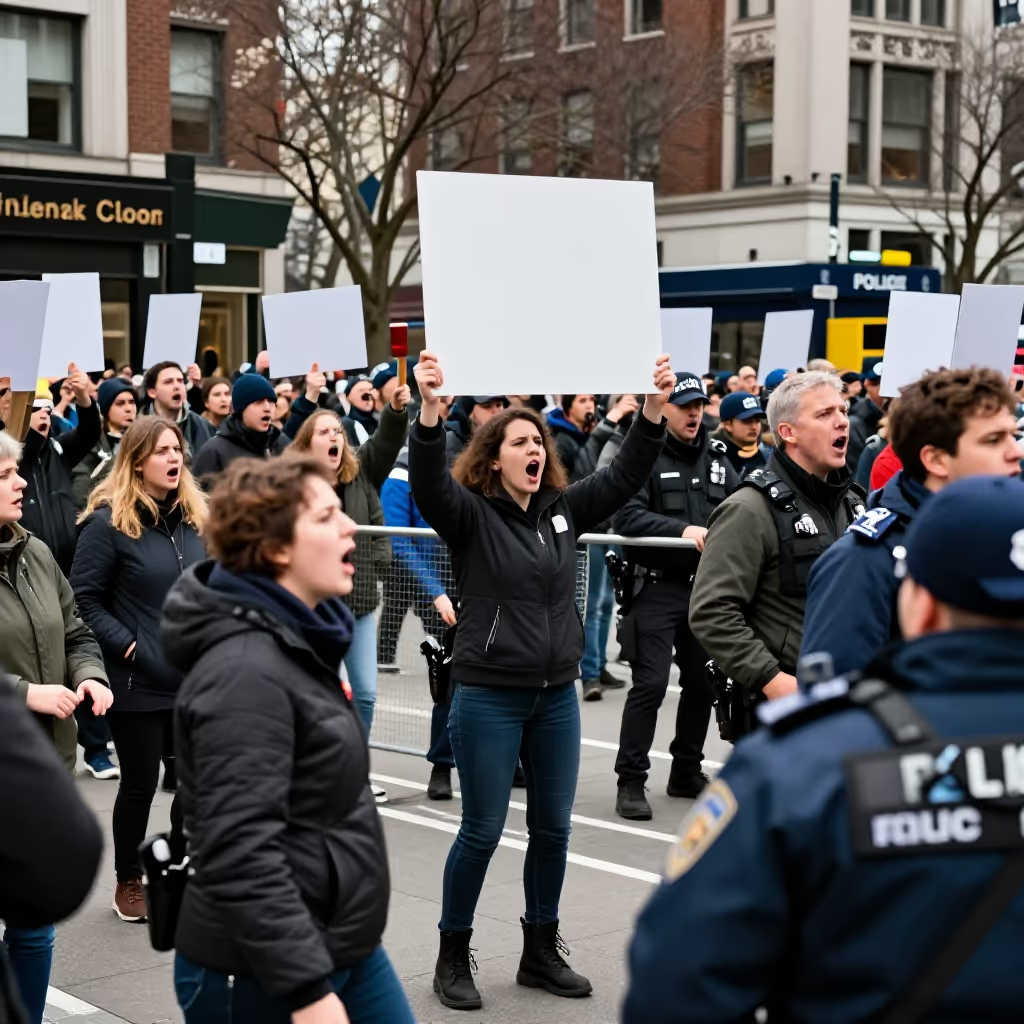
der Aufruhr
uproar
A state of great unrest, turmoil, or open protest in a crowd or among the public.
EXAMPLE
Die plötzliche Gesetzesänderung versetzte das ganze Land in Aufruhr.
The sudden change in the law threw the whole country into uproar.
uproar
Loading your saved state.
uproar
A state of great unrest, turmoil, or open protest in a crowd or among the public.
Die plötzliche Gesetzesänderung versetzte das ganze Land in Aufruhr.
The sudden change in the law threw the whole country into uproar.

to be in turmoil
To be in a state of strong emotional agitation, confusion, or inner unrest.
Nach dem unerwarteten Geständnis waren seine Gefühle in hellstem Aufruhr.
After the unexpected confession, his feelings were in complete turmoil.
The word 'Aufruhr' (uproar) is related to the verb 'rühren' (to stir). An 'Aufruhr' is a state in which a crowd or a person's feelings are strongly 'aufgerührt' (stirred up) or agitated.
Die Rede des Politikers rührte die Menge auf.
The politician's speech stirred up the crowd.
'Aufruhr' (uproar) is generally used as an uncountable noun in the singular. You do not speak of 'mehreren Aufruhren' (several uproars), but instead describe the state of unrest.
Überall in der Hauptstadt herrschte Aufruhr.
There was uproar everywhere in the capital.
A very common combination is 'jemanden oder etwas in Aufruhr versetzen' (to throw someone or something into uproar). It means to trigger unrest or protest in a person or group.
Die Gerüchte über die Werksschließung versetzten die ganze Belegschaft in Aufruhr.
The rumors about the factory closure threw the entire workforce into uproar.
For emotional unrest, the fixed expression 'in Aufruhr sein' (to be in turmoil) or 'in Aufruhr geraten' (to fall into turmoil) is used. A common intensifier is 'in hellem Aufruhr sein' (to be in great turmoil).
Nach der schockierenden Nachricht war sie innerlich in hellem Aufruhr.
After the shocking news, she was inwardly in great turmoil.
excitement / commotion
Aufregung can refer to general unrest or public interest surrounding an event. Aufruhr means a much stronger public disturbance, such as turmoil or open protest in a crowd. Aufregung fits a merely excited reaction, while Aufruhr fits chaotic protest.
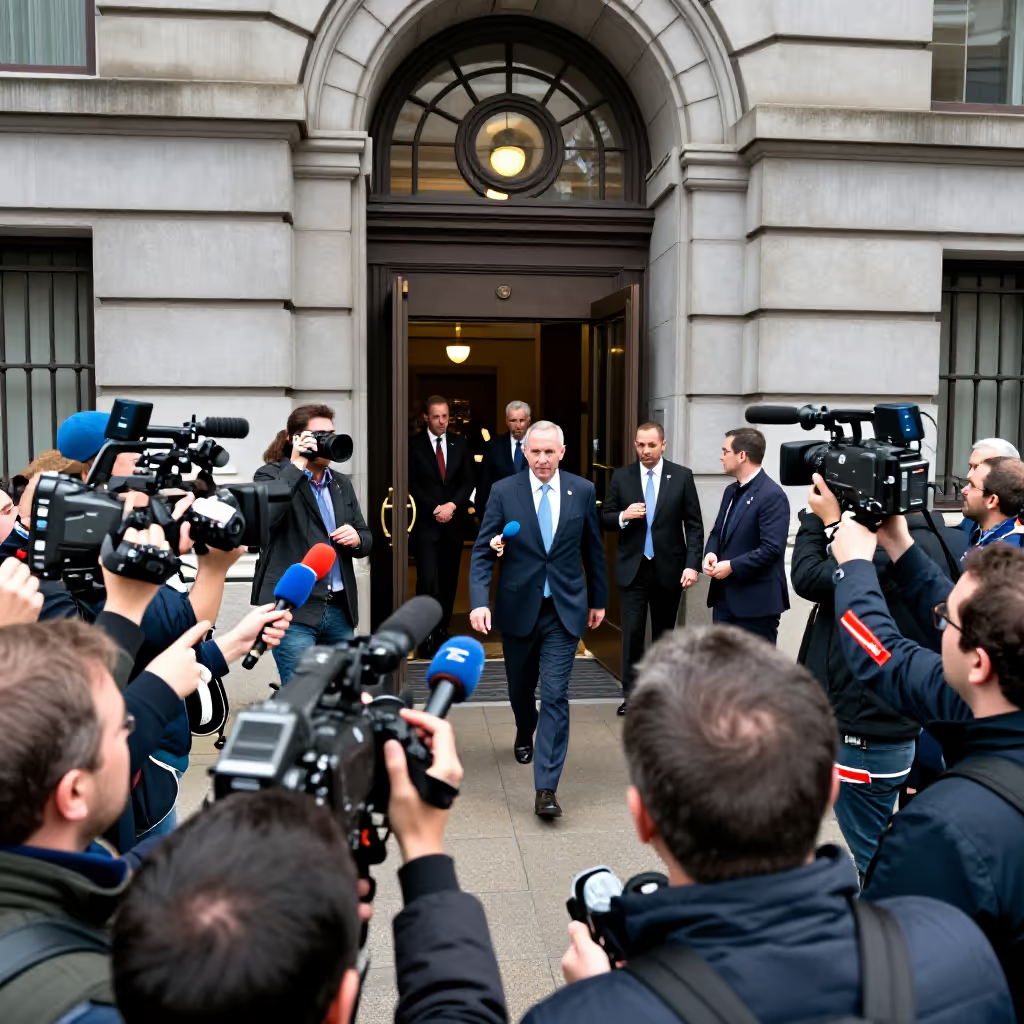
Die neue Entscheidung löste bei der Demonstration offenen Aufruhr aus.
The new decision sparked open turmoil at the demonstration.
Die neue Entscheidung sorgte unter den Bürgern für große Aufregung.
The new decision caused great excitement among the citizens.